Theopolis Logo

Writing

Explore our collection of theological essays, biblical studies, and reflections on faith and culture.

See all
giammarco-zeh-ljawhtg-unsplash
Biblical Horizons

OPEN BOOK: Views and Reviews

Isaac E. Mozeson, The Word: The Dictionary that Reveals the Hebrew Sources of English (Northvale, NJ: Jacob Aaronson Inc., 1995), 310 pp. Reviewed by James B. Jordan. Once there was only one language in the world, the language God spoke to Adam. At the Tower of Babel, there came to…

by James B. JordanJune 28, 1996
tim-wildsmith-j6jv-mkdzqs-unsplash
Esther

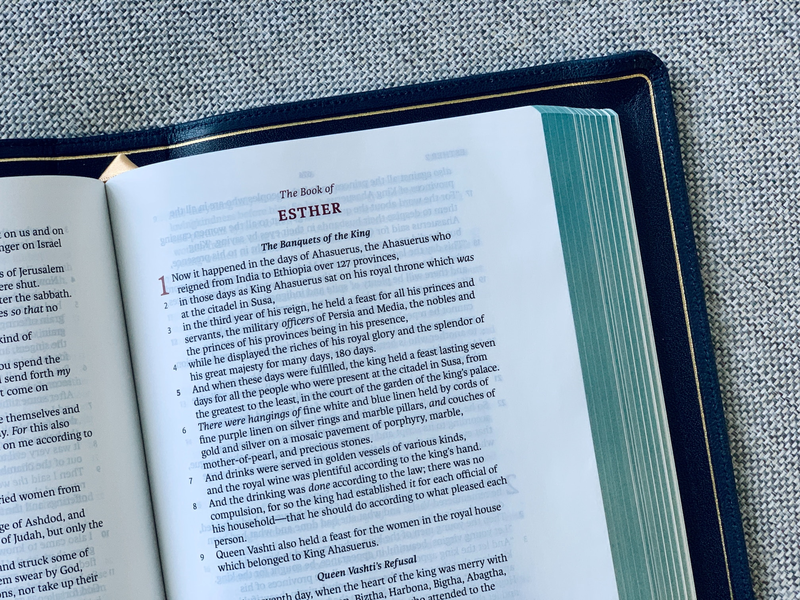
Esther: Historical & Chronological Comments (IV)

2. The Setting of the Book of Esther A. Xerxes (continued from previous issue) Ezra 6:14 says that the Jews finished building "according to the command of the God of Israel and the decree of Cyrus and Darius and Artaxerxes king of Persia." The problem with this verse is that…

by James B. JordanJune 28, 1996

ales-krivec-4mibe6zg5r0-unsplash
Acts

Jesus and Amalek

This essay goes with our previous study of the Amalek pattern back in Biblical Horizons No. 2. Since many do not have this essay, entitled "The Battle of Gog and Magog," let me cite the relevant paragraphs: Note in Genesis 12-15 that Abram moves into the land after escaping Pharaoh…

by James B. JordanJune 28, 1996

aaron-burden-1ebsmyrau-s-unsplash
Proverbs

The Strange Woman

Proverbs 7:6-23 is one of several passages early in the Proverbs in which Solomon warns his son about the wiles and dangers of the "strange woman." It is certainly quite proper to take these as straightforward warnings against sexual sins, and these are certainly warnings that need to be impressed…

by Peter LeithartJune 27, 1996
jan-kahanek-g3o5ztrk2e4-unsplash
Biblical Studies

Some Observations

1. In Luke 4:20 we read that after Jesus finished reading from Isaiah, "the eyes of all in the synagogue were fixed upon Him." This is usually taken in a psychological sense: They were amazed at Jesus somehow. I suggest that, as always, a merely psychological reading is a modern…

by James B. JordanMay 28, 1996
tim-wildsmith-j6jv-mkdzqs-unsplash
Esther

Esther: Historical & Chronological Comments (III)

2. The Setting of the Book of Esther Up to now we have assumed what we must prove, that the king in Esther is Darius the Great. While Biblical chronologists have usually taken this position, commentators on the book of Esther have often taken others as the king. One view,…

by James B. JordanMay 28, 1996

Showing page 265 of 309

See all

Showing page 13 of 43

See all

Structure in Revelation 11

The account of the two witnesses (Revelation 11:3-13) is arranged in a chiastic order: A. Two witnesses, olive trees, lampstands, vv 3-4 B. Devouring enemies with fire from mouth, v 5 C. Authority to shut up heaven, turn waters, smite earth, v 6 D. Beast from abyss makes war, overcomes,…

February 18, 2015

Who's Afraid of Modern Art?

“ W ho’s afraid of modern art? ” asks Daniel Siedell. He answers, “I am.” As critic and curator, Siedell is passionately devoted to modern art. It frightens him because that is what it’s supposed to do. Munch’s The Scream , for instance, doesn’t just express the painters own anxieties.…

February 17, 2015

Rejoicing in Lament

I n the terrible trial scene in Till We Have Faces , the gods strip away layer after layer of Queen Orual’s self-justification, and when she has been laid bare, she finally has something to say to them: “Lightly men talk of saying what they mean. Often when he was…

February 17, 2015

On Missing the Main Thing

In his 1959 Luther the Expositor , Jaroslav Pelikan remarked on the tendency of church historians to neglect the main thing in theologians of the past: “Entire histories have been written - histories of a whole section of the church, of an era in church history or of a major…

February 17, 2015

God and Constantine

According to Augustine, all of Constantine’s achievements were gifts of God ( City of God , 5.25): He “gave to the Emperor Constantine, who was not a worshipper of demons, but of the true God Himself, such fulness of earthly gifts as no one would even dare wish for. To…

February 17, 2015

Reforming Council

Donald Norwood reminds us in Reforming Rome that the Reformers were eager for a ecumenical council to resolve the conflicts sparked by the Reformation. In 1560, Calvin writes, “In order to put an end to the divisions which exist in Christianity, there is need to have a free and universal…

February 16, 2015

Showing page 462 of 2212

Browse by Category

In Medias Res

Your weekly digest for all things Theopolis.

Donate

Theopolis is nearly 100% donor-supported. Consider joining us on our mission.