Theopolis Logo

Writing

Explore our collection of theological essays, biblical studies, and reflections on faith and culture.

See all
tanner-mardis-xuxghzhibn4-unsplash-1-2
Biblical Studies

Tweets-turned-Notes on the Bible’s Chronology

Summary In what follows, I will consider the “year-stamps” employed in Scripture, i.e., statements of the form, “Such-and-such an event took place in the Xth year of Y.” In the process, I will suggest some ways in which the Biblical narrative might relate to events in the extra-Biblical world, though…

by James BejonJuly 16, 2019
durer-prodigal-son-2
Luke

Perspectives on the Prodigal, (Part 2)

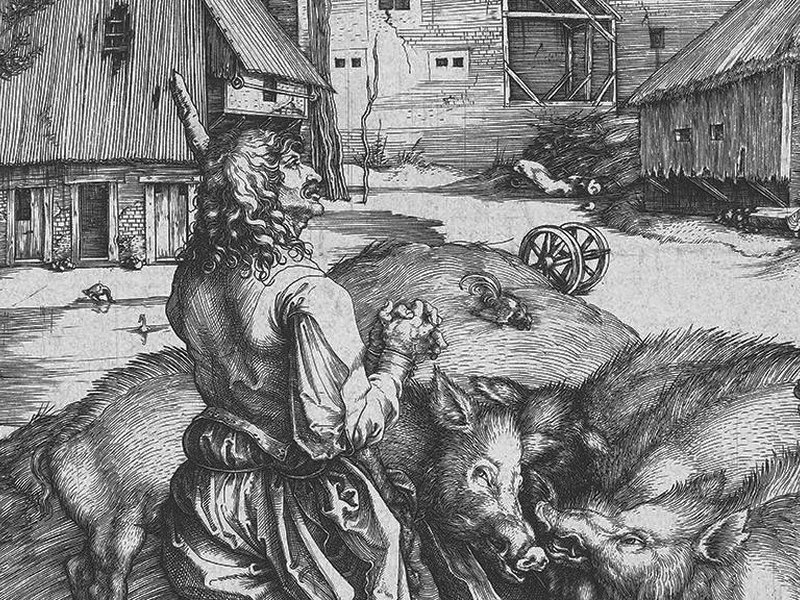
In the first essay on the parable of the Prodigal Son, I suggested that the problems commentators and others encounter in interpreting Jesus three-part parable are not accidental. These are not just problems in our ignorance of cultural background. They are intentional features of the stories —stories designed to poke…

by Ralph Allan SmithJuly 11, 2019
durer-prodigal-son-2
Luke

Perspectives on the Prodigal, (Part 1)

The story of the Prodigal Son is perhaps the most well-known story in the Bible. As others have observed, it may also be one of the most misunderstood. In two short essays, I will point out features of this story that are commonly neglected, aspects of Jesus’ parable that might…

by Ralph Allan SmithJuly 9, 2019
de-rijke-man-en-de-arme-lazarus-by-jacopo-da-ponte-16th-century
Luke

Lazarus and the Rich Man

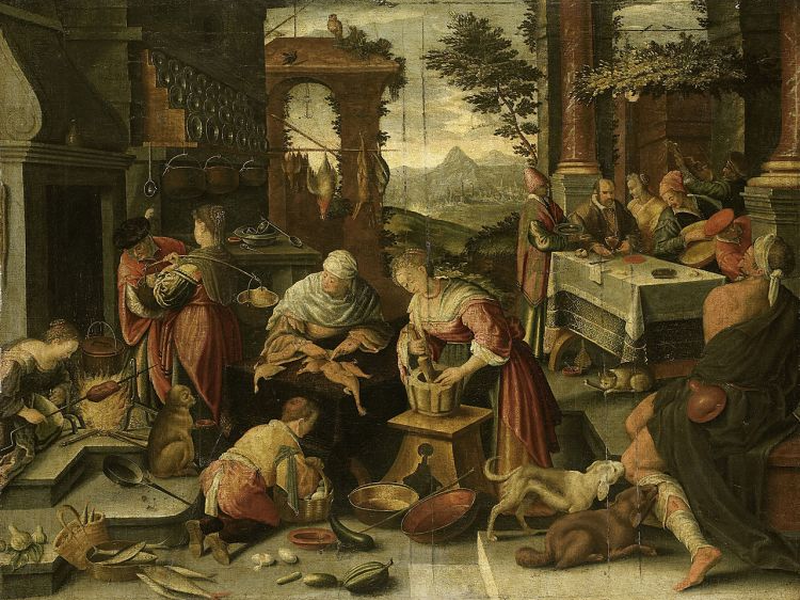
The parable of Lazarus and the nameless rich man is not an independent story. It is part of a long context that begins in Luke 15:1, where Jesus is eating with tax collectors and sinners and the scribes and Pharisees grumble. In response to their hardheartedness, Jesus tells a three-part…

by Ralph Allan SmithJuly 4, 2019
aaron-burden-uynrnfdkjwg-unsplash
Luke

Everybody has Dropsy - Luke 14:1-24

The Bible is written so that even when a reader cannot pick up on what might be deeper or more detailed aspects of a text, there is virtually always a message to be heard. In the ancient world, where the “reader” of Scripture would likely be a church official facing…

by Ralph Allan SmithJuly 2, 2019
communion
Biblical Theology

Fruit Trees and Grain Plants

The distinction between garden (or vineyard) and field begins in Genesis 2. This relates to the ordering of the formless world. Plants of the field are contrasted with the garden planted by God in Genesis 2:5&8. Later on, under the Old Covenant the Israelites will be required to keep their…

by James B. JordanJune 27, 2019

Showing page 77 of 309

See all

Showing page 13 of 43

See all

Rahab

Andrzej Toczyski's The "Geometrics" of the Rahab Story offers an insightful, multi-layered close reading of Joshua 2. His syntactical analysis of the chapter examines the features of the text that steer the reader's involvement in the story. His aim is to show how Joshua has been and is a "vehicle…

July 6, 2018

Crazy Talk on China

David Goldman is a conservative and a patriot, and is not given to hyperbole. But he describes the current US attitude toward Chinas a "xenophobic" and "ugly," and accuses fellow conservative Victor Davis Hanson of "crazy talk" about China. In response to Trump's tariffs on Chinese goods, "Chinese officials are…

July 5, 2018

Paul's Theology of Glory

Haley Goranson Jacob's Conformed to the Image of His Son is an exploration of Paul's theology of glory. Jacob's focus is on the meaning of the phrase in her title, drawn from Romans 8. She finds the several common interpretations of the phrase wanting: Conformity to the Son isn't physical…

July 3, 2018

Bloomsbury in a Secular Age

The late nineteenth and early twentieth centuries witnessed, Charles Taylor argues, the development of the "nova." At that time, "the alternatives open to unbelief are multiplied and enriched." After World War II, these options are diffused to the whole of Western societies, and this produces a "super-nova" ( A Secular…

July 2, 2018

Postmodern Times

In his contribution to The Future of Hope , John Milbank offers a description of postmodernity and suggests ways for the church to respond. Postmodernism may be a thing of the past; we're supposed to be in post-postmodernity nowadays. Still, much of what Milbank describes is still with us, and…

June 28, 2018

Empty Name

The Third Word assumes that we carry the Lord’s name. What it prohibits is bearing, carrying, or lifting that name “in vain” or “emptily.” The word can mean “false,” and bearing the name “falsely” is one of the sins that the Lord prohibits here. That does involve speech. This phrasing…

June 27, 2018

Showing page 66 of 2212

Browse by Category

In Medias Res

Your weekly digest for all things Theopolis.

Donate

Theopolis is nearly 100% donor-supported. Consider joining us on our mission.