Theopolis Logo

Writing

Explore our collection of theological essays, biblical studies, and reflections on faith and culture.

See all
tanner-mardis-xuxghzhibn4-unsplash-1-2
Biblical Studies

Tweets-turned-Notes on the Bible’s Chronology

Summary In what follows, I will consider the “year-stamps” employed in Scripture, i.e., statements of the form, “Such-and-such an event took place in the Xth year of Y.” In the process, I will suggest some ways in which the Biblical narrative might relate to events in the extra-Biblical world, though…

by James BejonJuly 16, 2019
durer-prodigal-son-2
Luke

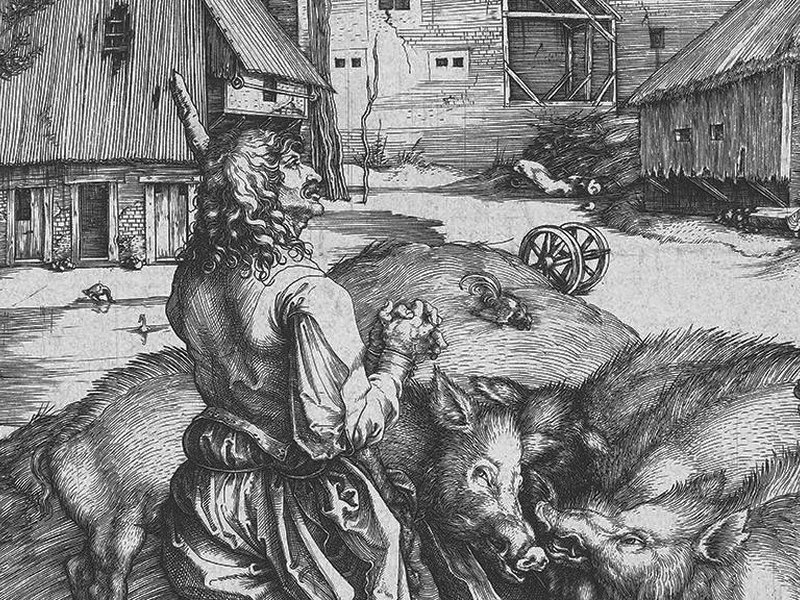
Perspectives on the Prodigal, (Part 2)

In the first essay on the parable of the Prodigal Son, I suggested that the problems commentators and others encounter in interpreting Jesus three-part parable are not accidental. These are not just problems in our ignorance of cultural background. They are intentional features of the stories —stories designed to poke…

by Ralph Allan SmithJuly 11, 2019
durer-prodigal-son-2
Luke

Perspectives on the Prodigal, (Part 1)

The story of the Prodigal Son is perhaps the most well-known story in the Bible. As others have observed, it may also be one of the most misunderstood. In two short essays, I will point out features of this story that are commonly neglected, aspects of Jesus’ parable that might…

by Ralph Allan SmithJuly 9, 2019
de-rijke-man-en-de-arme-lazarus-by-jacopo-da-ponte-16th-century
Luke

Lazarus and the Rich Man

The parable of Lazarus and the nameless rich man is not an independent story. It is part of a long context that begins in Luke 15:1, where Jesus is eating with tax collectors and sinners and the scribes and Pharisees grumble. In response to their hardheartedness, Jesus tells a three-part…

by Ralph Allan SmithJuly 4, 2019
aaron-burden-uynrnfdkjwg-unsplash
Luke

Everybody has Dropsy - Luke 14:1-24

The Bible is written so that even when a reader cannot pick up on what might be deeper or more detailed aspects of a text, there is virtually always a message to be heard. In the ancient world, where the “reader” of Scripture would likely be a church official facing…

by Ralph Allan SmithJuly 2, 2019
communion
Biblical Theology

Fruit Trees and Grain Plants

The distinction between garden (or vineyard) and field begins in Genesis 2. This relates to the ordering of the formless world. Plants of the field are contrasted with the garden planted by God in Genesis 2:5&8. Later on, under the Old Covenant the Israelites will be required to keep their…

by James B. JordanJune 27, 2019

Showing page 77 of 309

See all

Showing page 14 of 43

See all

Twenty-Something Radical Orthodoxy

A couple of years ago, Kyle Nicholas summed up "The Progress and Future of Radical Orthodoxy ," now entering its early adulthood. Though the movement has waned, he argues for "its continuing relevance." "Amidst scathing critiques from every corner," he points out, "Radical Orthodoxy has continued to bear fruit on…

September 22, 2017
Eucharist

Homily on Grain

In his Material Eucharist (30), David Grumett summarizes the "Homily on the Grain" from the Syrian poet Cyrillonas: "Alluding to the incarnation and to Christ's two natures,. he describes the grain falling into the earth and its kernel encased within a dual outer husk. This echoes the image that Jesus…

September 22, 2017

On the Structure of Leviticus

Leviticus is divided into thirty-seven speeches, each introduced by "Yahweh spoke to Moses" (see Warning, Literary Artistry in Leviticus ). The 19th speech - the central one - is Leviticus 16, instruction for the "day of coverings." From this, one can derive a simple chiastic outline of the book (I've…

September 21, 2017

The Cross of Eugen Rosenstock-Huessy, 4

IV. Cross of Reality Christianity’s history is the story of the cross’s penetra­tion into human experience and society. New epochs are formed when the cross begins to mark a new “sphere of our minds or bodies” ( CF , p.165). In the new era that Rosenstock-Huessy saw coming, the cross…

September 21, 2017

Post-Confederate Memorials

Joseph Bottum offers a Girardian analysis of the current craze for knocking down monuments ( Weekly Standard ). Along the way, he explores the origins of the Confederate memorials, observing that "The list of removed statues and memorials seems mostly to prove what busy beavers the United Daughters of the…

September 21, 2017

The Cross of Eugen Rosenstock-Huessy, 3

III. The Cross and Civilization Jesus gives abundant life. As the Crucified and Risen Man, he also creates new possibilities for history, forms a new epoch of history, the Christian era, and forms the possibil­ity of a new civilization. To understand fully what Rossen­stock-Huessy means by this, we need to…

September 20, 2017

Showing page 142 of 2212

Browse by Category

In Medias Res

Your weekly digest for all things Theopolis.

Donate

Theopolis is nearly 100% donor-supported. Consider joining us on our mission.