Theopolis Logo

Writing

Explore our collection of theological essays, biblical studies, and reflections on faith and culture.

See all
sixteen-miles-out-al48tflf4e8-unsplash
Food

Gluttony In The Bible (As Opposed To Gluttony In The American Church)

In the Bible, fatness is such a blessing, that it is especially hard to understand why wicked men are permitted to enjoy such a state. It requires a theodicy and faith in God. Thus: “For they have no pangs until death; their bodies are fat and sleek . They are…

by Mark HorneAugust 12, 2013

jeremy-yap-j39x2xx_8cq-unsplash
How to Worship

Biblical Worship (Video with James B. Jordan)

[fve]http://vimeo.com/71901553[/fve]

by Peter LeithartAugust 8, 2013
chris-bair-ndczc5739ck-unsplash
Deuteronomy

Holy Things for Holy People

The allusion to the Exodus story is contained in the first words of Deuteronomy 14:1 — “ye are the sons of Yahweh your God” — as well as in 14:2 in the use of the technical term translated “treasured possession,” “His own possession,” “peculiar people,” “precious people,” and so forth.…

by Ralph Allan SmithAugust 5, 2013
adam-and-eve-in-the-garden-of-eden-wenzel-peter
Deuteronomy

Forbidden Foods

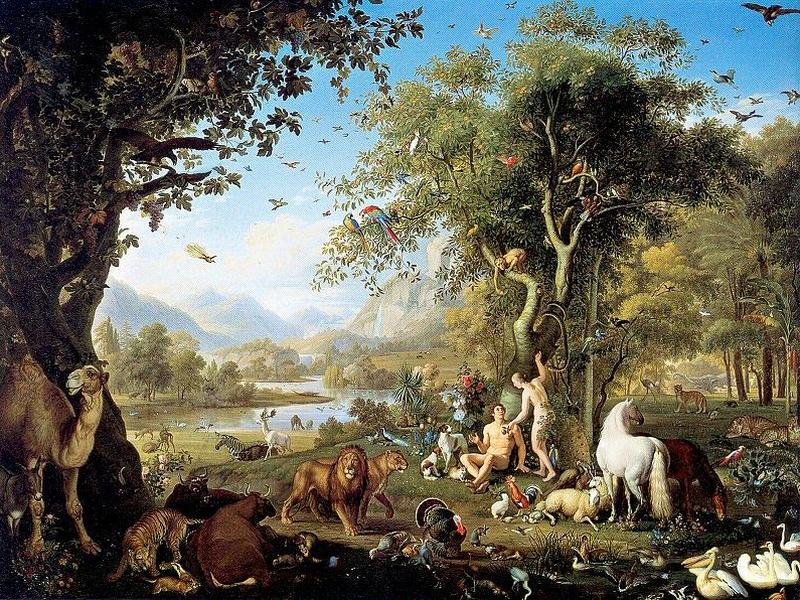
I have argued that Deuteronomy 14:1-21 is an independent literary unit that applies the Third Word to the lives of Israelites from the time of Moses and Joshua. In this short pericope, Moses suggests broad and deep meaning by means of literary allusion to the stories of the creation and…

by Ralph Allan SmithJuly 31, 2013
david-weber-fwuo_zluhnw-unsplash
How to Worship

Pro-Sacramental Reformation

In his recently republished The New Creation , the late, delightful Herbert McCabe defends the priesthood of the plebs as roundly as anyone could want. Citing Hebrews, he claims that "there is an essential difference between the Christian community and the community of the Old Law, or any other religious…

by Peter LeithartJuly 29, 2013
eric-ward-7kqe_8meex8-unsplash
Augustine

Sexual Idolatry

Augustine famously prayed, “Our hearts our restless until they rest in You.” True indeed. Being creatures, we inherently sense our ontological poverty—our innate condition of dependence—and are compelled to find a sense of security. And it is also true—as Augustine’s own narrative painfully illustrates—that one of the things we most…

by Gerald HiestandJuly 24, 2013

Showing page 190 of 309

See all

Showing page 14 of 43

See all

Wrath of the Lamb

Between Revelation 6:16-17, which speak of the “wrath of the Lamb” and “the great day of their wrath,” and 11:18, which says that the wrath came against the enraged nations, there is no reference to the wrath ( orge ) of God. As the seals come to a conclusion, the…

March 26, 2015

Dominion

“Dominion” has a bad rap these days. The creation mandate to “have dominion, fill, subdue, and rule” the earth is regarded with suspicion: It gives human beings religious justification for environmental rapacity, domination of the other, sexism and racism. The Bible recognizes this possibility. The first king in Scripture is…

March 26, 2015

Revelation and Empire

Over the centuries, readers have assumed that Revelation was written in, or predicting, a period of intense persecution. Irenaeus seems to say that Revelation was written in the reign of Domitian, and commentators have gone to lengths to show that Domitian fits the profile of the beast. Scholars today widely…

March 25, 2015

After Babel

Scientists are human. They need to communicate with each other. For centuries, science has been an international, now a global, enterprise. How do scientists communicate? Once, French was, well, the lingua franca , so dominant in the discourses of high culture and science of the late 18th century that even…

March 25, 2015

Descent, Ascent

The action of Revelation 12-15 moves from the sky to earth to the sea and then back up. In 11:19, the temple of God in heaven is opened, revealing the heavenly ark. Then there is a sign in heaven, in the firmament where the sun, moon, and stars are, the…

March 25, 2015

Apocalypse and Eschatology

Apocalypse is also supposed to describe a particular form of eschatology, particularly beliefs about the end of the world. This is the sense in which the word is used in Ernst Kasemann’s famous claim that apocalyptic is the mother of Christian theology. Kasemann meant that early Christians believed in the…

March 24, 2015

Showing page 448 of 2212

Browse by Category

In Medias Res

Your weekly digest for all things Theopolis.

Donate

Theopolis is nearly 100% donor-supported. Consider joining us on our mission.