Theopolis Logo

Writing

Explore our collection of theological essays, biblical studies, and reflections on faith and culture.

See all
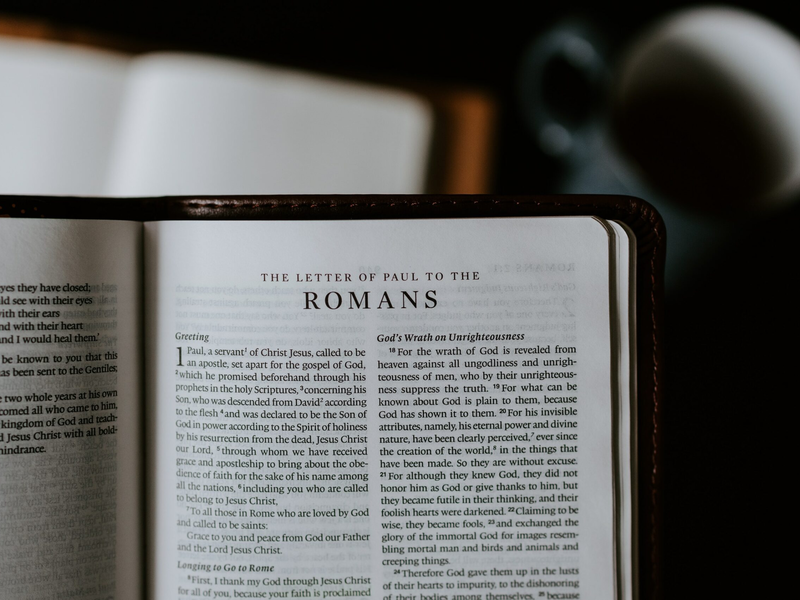
kelly-sikkema-gpoh17dxqdm-unsplash
Romans

Paul’s Gospel & the Theme of Romans

Paul, a bond-servant of Christ Jesus, called as an apostle, set apart for the gospel of God, which He promised beforehand through His prophets in the holy Scriptures, concerning His Son, who was born of a descendant of David according to the flesh, who was declared the Son of God…

by Mark HorneJune 6, 2003

screenshot-2023-07-27-at-10-25-35-am
History

The Nelda Boswell Scroll: The Apostle Paul’s Town Hall Meeting in Iconium

With the surprising discovery of the Nelda Boswell scroll historians have deciphered its contents and concluded that the apostle Paul returned to the region of Galatia shortly after he wrote the letter that we call Galatians. The evidence suggests that a number of local pastors, elders, and deacons, along with…

by Jeff MeyersJune 6, 2003
aaron-burden-qjdzyt_k8xg-unsplash
Jonah

Jonah, the Judaizers, and the Gospel

Second Temple Judaism was a form of covenantal nomism, according to E. P. Sanders’ terminology. This means that Torah-observance was a way of expressing loyalty to the Lord of the covenant who had graciously elected Israel. I think Sanders’ view (taken up in bits and pieces and with some modifications…

by Rich LuskJune 6, 2003
Theologia

Gratitude or Faith?

We often hear that the key to Christian obedience is thankfulness for what God has done. But the Bible stresses faith and hope much more than gratitude. The Baptist pastor and author John Piper has written, “Nowhere in the Bible is gratitude connected explicitly with obedience as a motivation. We…

by Mark HorneJune 6, 2003
aaron-burden-qjdzyt_k8xg-unsplash
Federal Vision

God’s Righteousness & Our Justification

One of the questions that is commonly asked about Tom Wright regards his teaching about how Paul uses the term “the righteousness of God.” Since Wright’s interpretation of the term in Paul’s epistles is commonly mentioned in passing but rarely analyzed, it seems like a good idea to explicitly spell…

by Mark HorneJune 6, 2003
jordan-wozniak-xp_agmeea6s-unsplash
Genesis

Forever Means Forever: God’s Promises to the Jews

If God promised a certain land to the seed of Abraham, saying that it would be theirs “forever” (Gen. 13:15), why do Reformed churches teach that the Jews permanently lost their right to the land? What about all these Old Testament “forever” promises and prophesies made to the Jews? How…

by Jeff MeyersJune 6, 2003

Showing page 230 of 309

See all

Showing page 14 of 43

See all

History of Disgust

Norbert Elias’s The Civilizing Process traces modern standards of disgust and cleanliness to the development of court society during the Renaissance. Drawing on Elias, William Miller ( Anatomy of Disgust ) suggests sensitivity to disgust and being civilized are directly proportional. Martha Nussbaum ( Hiding from Humanity , 115-6) disagrees…

December 15, 2014

Islamic Revolutionaries

In his brilliant Earthly Powers (3), Michael Burleigh cites a passage from Tocqueville’s book on the French Revolution. Taking a note from Schiller about “how early modern religious wars spilled across political boundaries, which reminded Tocqueville of the ideological struggle between Jacobins and counter-revolutionaries in late-eighteenth-century Europe,” Tocqueville drew a…

December 12, 2014

Sacrificial Politics

Semyon Frank was a Russian emigre to London. Michael Burleigh ( Sacred Causes , 39) sums up his life: “Born in 1877 into a Russian-Jewish family, he had quickly outgrown a juvenile Marxism, converting to Orthodox Christianity in 1912, on the ground that the Jewish God was as remote from…

December 12, 2014
Modernity

Un-Secular Age

Our secular age can be sustained only if the secular has been carefully distinguished from the sacred, and only if the boundary between the two is vigorously, not to say violently, guarded. But boundary-drawing between the sacred and profane is the work of a priest. It is the sacred act…

December 12, 2014

Pure Aesthetics

Hugh Grady opens his Shakespeare and Impure Aesthetics (6-10) with a brief and illuminating discussion of Kant’s aesthetics of purity. By “pure” here is meant the freedom of aesthetic experience from cognitive reason and teleological judgments, from practical or moral interests. This disinterested experience of art is an encounter with…

December 12, 2014

After the Temple

Jonathan Klawans is a great one for cutting through nonsense. In his Purity, Sacrifice, and the Temple , he points to the oddity that “documents composed three, four, or even five centuries after the destruction are labeled as delayed responses to the destruction. . . the suggestion that it took…

December 11, 2014

Showing page 487 of 2212

Browse by Category

In Medias Res

Your weekly digest for all things Theopolis.

Donate

Theopolis is nearly 100% donor-supported. Consider joining us on our mission.