Theopolis Logo

Writing

Explore our collection of theological essays, biblical studies, and reflections on faith and culture.

See all
e99a2994
Creation

Why Genesis Matters

Creationism is debated widely in the US, especially when it comes to teaching creation as an alternative theory of origins in public schools. Every few months, there’s another poll showing that many Americans still believe Ussher’s claim that the world was created around 4000 BC, which always elicits a contemptuous…

by Peter LeithartAugust 20, 2014
walker-percy
Books

Canary in the Coal Shaft

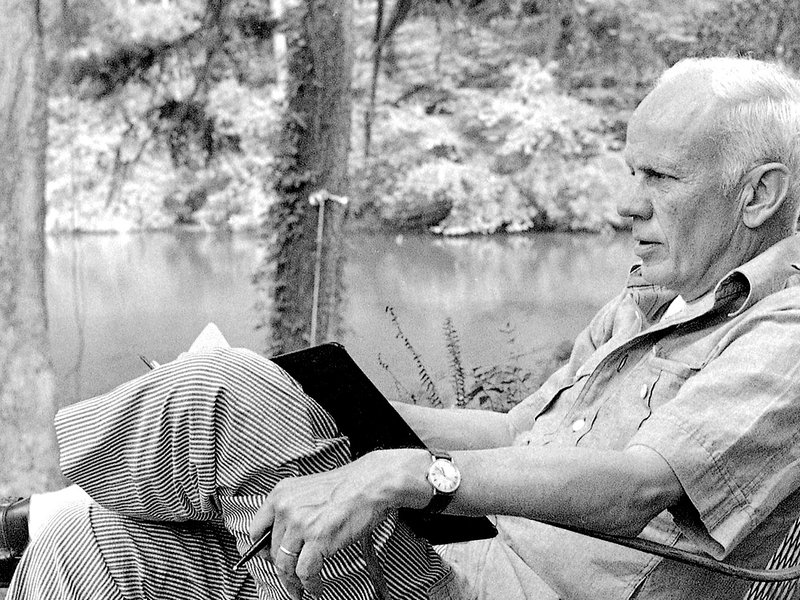
Walker Percy died in 1990, but his six published novels and his collections of essays are more relevant than when he wrote them. Percy was an American Dostoevsky, and that was no accident. “The European novels,” he says in a 1974 interview, “are more philosophical, more novels of ideas.” Dostoevsky,…

by Peter LeithartAugust 18, 2014
e99a0159
Children

Parenting in the Spirit

The Spirit is God’s agent for renewing the creation, for restoring bonds between nations, for knitting together people into the body of Christ. The Spirit is the renewer of the world, and the bond of all relations. That means that if you want your family to be knit together, if…

by Peter LeithartAugust 13, 2014
francesco-zxnkxnr32ng-unsplash
Revelation

Hunter Into Prey

In their basic physical sense , the verbs translated as "persecute" in the Bible mean “chase” or “pursue,” and that fits the context quite naturally. As Pharaoh “pursued” (LXX, dioko ; Heb. radaph ) Israel into the wilderness, for example, so the dragon chases the woman back to her place…

by Peter LeithartAugust 11, 2014
the-resolutions-of-jonathan-edwards-me4czyke-copy
Books

Edwards Our Contemporary

Seng-Kong Tan’s Fullness Received and Returned is a densely argued, thoroughly researched, contextually sensitive study of participation in the soteriology of Jonathan Edwards. Along the way, Tan deals with many of the central themes in Edwards’s theology. As with many recent studies of Edwards, Tan’s monograph demonstrates both Edwards’s creativity…

by Peter LeithartAugust 6, 2014
trnava-university-beeyeib-am8-unsplash
Art

Portrait of the Artist as Aesthetic Martyr

The title of James Joyce’s first novel, Portrait of the Artist as a Young Man indicates that it is a bildungsroman , a story of formation that describes the formative experiences of a poet who aspires to artistic greatness. The education described is Joyce’s own. The novel recounts the failing…

by Peter LeithartAugust 4, 2014

Showing page 170 of 309

See all

Showing page 15 of 43

See all
Philosophy

Hermeneutics v. Semiology

According to Michel Foucault, what Marx, Nietzsche, and Freud introduce is an age of interpretation. He develops one of the implications of this by suggesting there is a “fierce war” between semiology and hermeneutics, between treating words as signs and treating them as interpretations. Nietzsche in particular, Foucault claims, develops…

August 26, 2006
Literature

Shakespeare and Bible

Steven Marx’s Shakespeare and the Bible (Oxford, 2000), purports to be the “first book to explore the pattern and significance” of Shakespeare’s biblical allusions. Perhaps. The results are mixed. Each chapter of Marx’s book attempts to show structural, plot, and thematic parallels between a section of Scripture and a play…

August 26, 2006
Literature

Ubiquitous Shakespeare

Exploring Lake Superior in 1840, one Charles W Penny wrote, “We read the Bible I dare say much more than we would have done had we been in Detroit. Shakespeare was duly honoured, as he is every day when we travel. When on the water, some one of the party…

August 26, 2006

Divine Love

The Persons of the Trinity live out an eternal round of self-sacrificing love. If a proof text is needed, John 15 supplies it. 1) Jesus says, “as the Father loved Me, I have also loved you” (v. 9). Jesus’ love for the disciples is modeled on the Father’s for Him.…

August 26, 2006

Queen of the Sciences

John Stuart Mill declared at the beginning of his book on logic that “Logic is the common judge and arbiter of all particulars investigations. It does not undertake to find evidence, but to determine whether it has been found. Logic neither observes, nor invents, nor discovers; it judges.”

August 24, 2006
History

New

Hans Jonas writes in an essay on technological and scientific advance that one of the key cultural shifts in the sixteenth and seventeenth centuries was a, well, new understanding of “new,” and a corresponding revision of traditional ways of thinking about history: “A sign of this spreading mood is the…

August 24, 2006

Showing page 1804 of 2212

Browse by Category

In Medias Res

Your weekly digest for all things Theopolis.

Donate

Theopolis is nearly 100% donor-supported. Consider joining us on our mission.