Theopolis Logo

Writing

Explore our collection of theological essays, biblical studies, and reflections on faith and culture.

See all
tanner-mardis-xuxghzhibn4-unsplash-1-2
Biblical Studies

Tweets-turned-Notes on the Bible’s Chronology

Summary In what follows, I will consider the “year-stamps” employed in Scripture, i.e., statements of the form, “Such-and-such an event took place in the Xth year of Y.” In the process, I will suggest some ways in which the Biblical narrative might relate to events in the extra-Biblical world, though…

by James BejonJuly 16, 2019
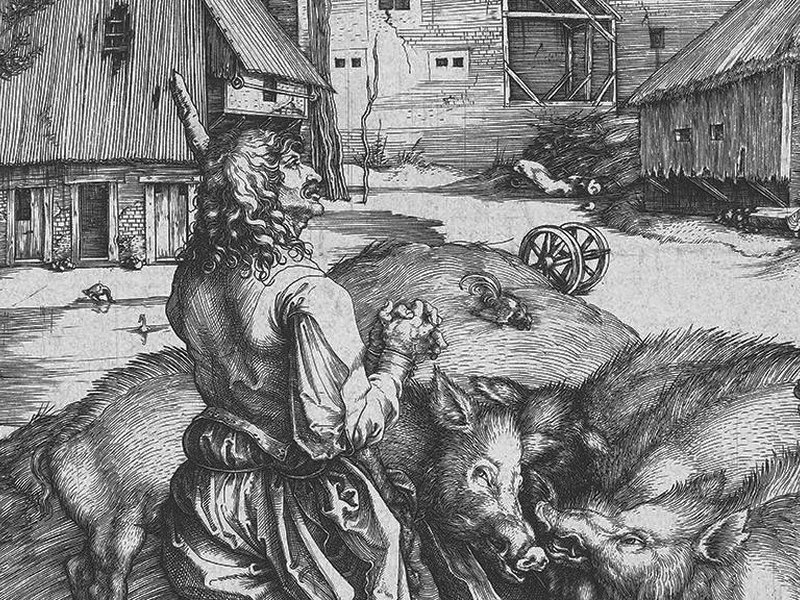
durer-prodigal-son-2
Luke

Perspectives on the Prodigal, (Part 2)

In the first essay on the parable of the Prodigal Son, I suggested that the problems commentators and others encounter in interpreting Jesus three-part parable are not accidental. These are not just problems in our ignorance of cultural background. They are intentional features of the stories —stories designed to poke…

by Ralph Allan SmithJuly 11, 2019
durer-prodigal-son-2
Luke

Perspectives on the Prodigal, (Part 1)

The story of the Prodigal Son is perhaps the most well-known story in the Bible. As others have observed, it may also be one of the most misunderstood. In two short essays, I will point out features of this story that are commonly neglected, aspects of Jesus’ parable that might…

by Ralph Allan SmithJuly 9, 2019
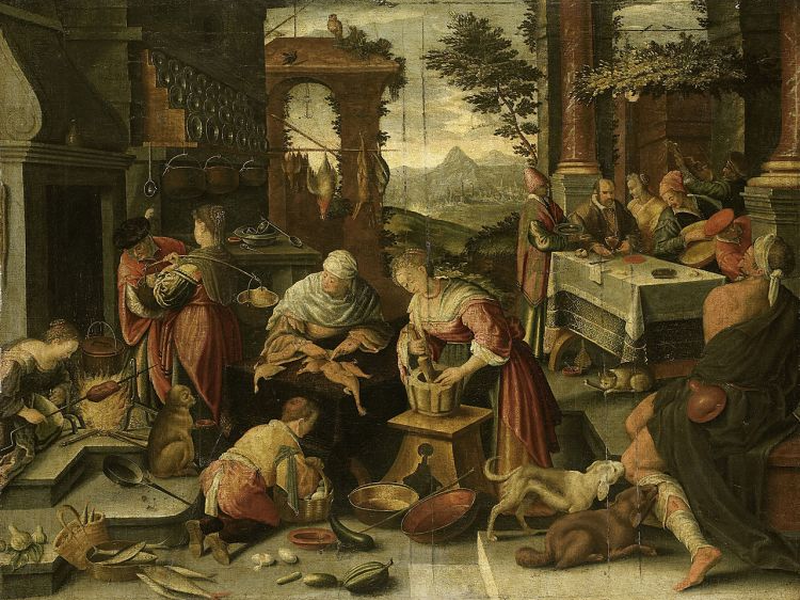
de-rijke-man-en-de-arme-lazarus-by-jacopo-da-ponte-16th-century
Luke

Lazarus and the Rich Man

The parable of Lazarus and the nameless rich man is not an independent story. It is part of a long context that begins in Luke 15:1, where Jesus is eating with tax collectors and sinners and the scribes and Pharisees grumble. In response to their hardheartedness, Jesus tells a three-part…

by Ralph Allan SmithJuly 4, 2019
aaron-burden-uynrnfdkjwg-unsplash
Luke

Everybody has Dropsy - Luke 14:1-24

The Bible is written so that even when a reader cannot pick up on what might be deeper or more detailed aspects of a text, there is virtually always a message to be heard. In the ancient world, where the “reader” of Scripture would likely be a church official facing…

by Ralph Allan SmithJuly 2, 2019
communion
Biblical Theology

Fruit Trees and Grain Plants

The distinction between garden (or vineyard) and field begins in Genesis 2. This relates to the ordering of the formless world. Plants of the field are contrasted with the garden planted by God in Genesis 2:5&8. Later on, under the Old Covenant the Israelites will be required to keep their…

by James B. JordanJune 27, 2019

Showing page 77 of 309

See all

Showing page 15 of 43

See all

Counter-Temple Movement

Elijah is leading a counter-temple movement in 1 Kings 17-18. Israel’s worship has become so corrupt that a new temple is needed. Elijah is setting up the new temple; in fact, he is the new temple, a human, mobile, tabernacular alternative to Dan and Bethel. Consider: Ravens bring Elijah (sacrificial)…

February 9, 2005

Proverbs 1:1-19

Some notes for a Bible Study on Proverbs 1, heavily dependent on Bruce Waltke’s recent fine commentary (NICOT). INTRODUCTION This passage is part of the opening preamble and prologue of Proverbs (Waltke?s terms). It divides neatly into two sections: The first, verses 1-7, describe the purpose of the Proverbs as…

February 9, 2005

Sermon Notes, February 13

INTRODUCTION When Israel is pursuing Canaanite worship and culture with full force, Yahweh acts. Elijah, a new Moses, bursts into Israel?s history and single-handedly leads the people to renew the covenant they had made at Sinai (1 Kings 17-19). Then Elisha, a new Joshua, leads a reconquest of the land…

February 9, 2005
Literature

Titus Andronicus

Notes on Titus Andronicus , drawn from various sources, mainly Robert Miola, ?Titus Andronicus: Rome and the Family,?Ein Titus Andronicus: Critical Essays . 1) Titus Andronicus is sometimes seen as an anomaly among Shakespeare?s Roman plays in that it is set in Rome but shows little interest in Rome itself.…

February 8, 2005

Eucharistic Meditation, February 6

Now Elah was in Tirzah drinking himself drunk. We noted in the sermon this morning that the kings of Israel get worse and worse as time goes by. Jeroboam is the worst king, until Omri. Omri is the worst king ever, until Ahab his son. Jeroboam?s son Nadab is an…

February 6, 2005

Exhortation, February 6

The author of Kings tells us that Ahab considered it a ?trivial thing for him to walk in the sins of Jeroboam the son of Nebat.?ENo wonder. Israel has been worshiping golden calves at Dan and Bethel for generations. It?s become customary, traditional. No one is shocked by it anymore.…

February 6, 2005

Showing page 2009 of 2212

Browse by Category

In Medias Res

Your weekly digest for all things Theopolis.

Donate

Theopolis is nearly 100% donor-supported. Consider joining us on our mission.