Theopolis Logo

Writing

Explore our collection of theological essays, biblical studies, and reflections on faith and culture.

See all
tanner-mardis-xuxghzhibn4-unsplash-1-2
Biblical Studies

Tweets-turned-Notes on the Bible’s Chronology

Summary In what follows, I will consider the “year-stamps” employed in Scripture, i.e., statements of the form, “Such-and-such an event took place in the Xth year of Y.” In the process, I will suggest some ways in which the Biblical narrative might relate to events in the extra-Biblical world, though…

by James BejonJuly 16, 2019
durer-prodigal-son-2
Luke

Perspectives on the Prodigal, (Part 2)

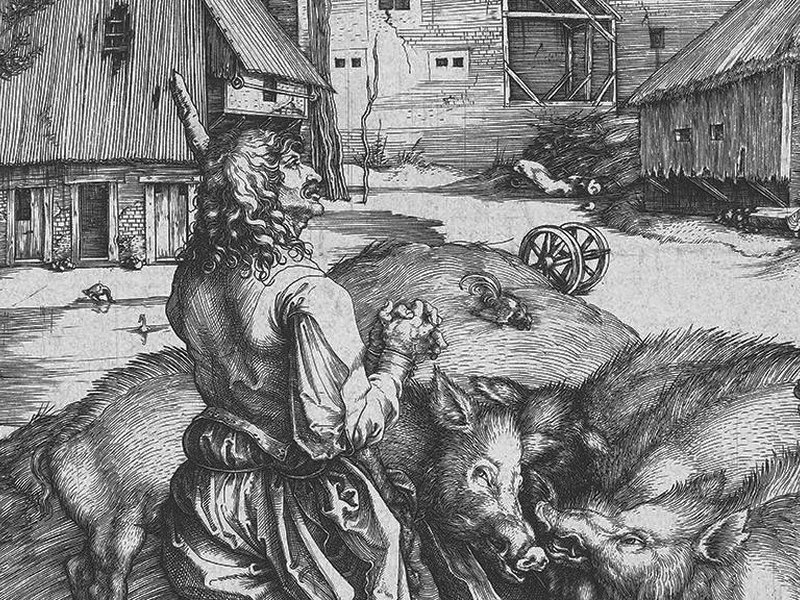
In the first essay on the parable of the Prodigal Son, I suggested that the problems commentators and others encounter in interpreting Jesus three-part parable are not accidental. These are not just problems in our ignorance of cultural background. They are intentional features of the stories —stories designed to poke…

by Ralph Allan SmithJuly 11, 2019
durer-prodigal-son-2
Luke

Perspectives on the Prodigal, (Part 1)

The story of the Prodigal Son is perhaps the most well-known story in the Bible. As others have observed, it may also be one of the most misunderstood. In two short essays, I will point out features of this story that are commonly neglected, aspects of Jesus’ parable that might…

by Ralph Allan SmithJuly 9, 2019
de-rijke-man-en-de-arme-lazarus-by-jacopo-da-ponte-16th-century
Luke

Lazarus and the Rich Man

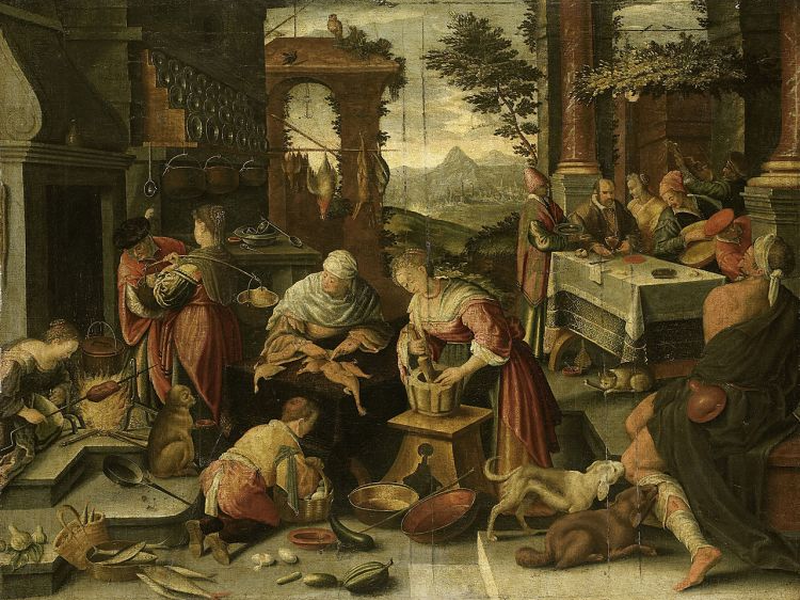
The parable of Lazarus and the nameless rich man is not an independent story. It is part of a long context that begins in Luke 15:1, where Jesus is eating with tax collectors and sinners and the scribes and Pharisees grumble. In response to their hardheartedness, Jesus tells a three-part…

by Ralph Allan SmithJuly 4, 2019
aaron-burden-uynrnfdkjwg-unsplash
Luke

Everybody has Dropsy - Luke 14:1-24

The Bible is written so that even when a reader cannot pick up on what might be deeper or more detailed aspects of a text, there is virtually always a message to be heard. In the ancient world, where the “reader” of Scripture would likely be a church official facing…

by Ralph Allan SmithJuly 2, 2019
communion
Biblical Theology

Fruit Trees and Grain Plants

The distinction between garden (or vineyard) and field begins in Genesis 2. This relates to the ordering of the formless world. Plants of the field are contrasted with the garden planted by God in Genesis 2:5&8. Later on, under the Old Covenant the Israelites will be required to keep their…

by James B. JordanJune 27, 2019

Showing page 77 of 309

See all

Showing page 15 of 43

See all

Luther on Adam

A wonderful quotation from Luther’s late commentary on Genesis. He notes that law exists already in Eden, but he also makes it clear that this does not make the Edenic situation a “covenant of works”: “And so when Adam had been created in such a way that he was, so…

December 31, 2003
Philosophy

Hegel on Love

Hegel’s Lectures on the Philosophy of Religion includes the following: “Love is a distinguishing of the two, who nevertheless are absolutely not distinguished for each other. The consciousness or feeling of the identity of the two - to be outside of myself and in the other ?Ethis is love. I…

December 31, 2003
Philosophy

Thoughts Inspired by Dollimore

Some thoughts inspired by Dollimore’s book: It would seem that desire is inherently tragic. First, because desire arises from lack. We only desire what we do not yet have. But when our desires our satisfied, our lack is filled. When ALL our desires are satisfied, then all lack is filled,…

December 31, 2003
History

Dollimore on Christianity

As I suspected, Dollimore gives Christianity’s cultural influence short shrift. He has a lot of insightful things to say about the ancients, but then he sees almost total continuity through early Christianity ?Ethe same links of desire and death, the same kind of anguish in the face of mutability. Maybe…

December 30, 2003

Temptation and Passion

J. Neyrey points out the links between the temptation of Jesus early in Luke and the passion narratives later in Luke. Luke’s account of the temptation ends with Satan leaving until a more opportune moment, and it is commonly noted that Satan reappears in the passion narrative, entering Judas (Lk…

December 30, 2003

Chiasm in Luke 3:1-7:35

There appears to be a chiastic structure at work in Luke 3:1-7:35. Not everything fits, but there is enough to be suggestive: A. Ministry of John, 3:1-17 B. Jesus preaching and teaching in Nazareth, 4:16-30 (1. Quotes Is 61 2. Refers to Elijah’s aid to a widow and her son…

December 30, 2003

Showing page 2145 of 2212

Browse by Category

In Medias Res

Your weekly digest for all things Theopolis.

Donate

Theopolis is nearly 100% donor-supported. Consider joining us on our mission.