Theopolis Logo

Writing

Explore our collection of theological essays, biblical studies, and reflections on faith and culture.

See all
hebrew-manuscript-2
Hebrews

The Unseen Things

Now faith is the substance of things hoped for, the evidence of things not seen (Hebrews 11:1). The famous definition of faith with which the eleventh chapter of Hebrews opens has received a number of different interpretations. The crux of the problem is the interpretation of the words translated in…

by Peter LeithartJune 26, 2018
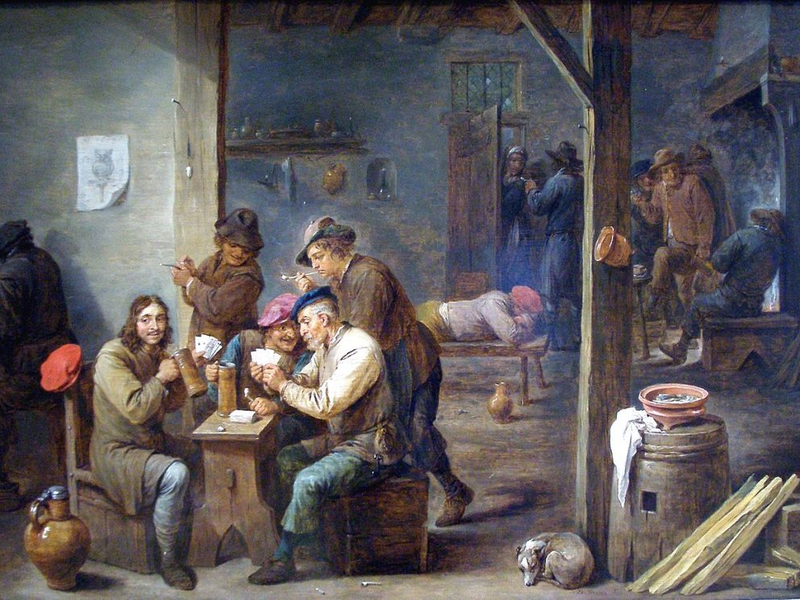
1200px-tavern_scene-1658-david_teniers_ii
John

The Gospel of John, Friendship, and the Homoerotic

This essay is an exploration of one element of the final of the four Gospels, the Gospel of John. My thesis is that the Gospel of John answers the issue of "friendship" being a homoerotic category. It challenges the "Greek Way of Love and Friendship" 1 It is indeed the…

by Richard BledsoeJune 21, 2018
e99a2225
Matthew

Building the Church

"And I also way to you that you are Peter, and upon this rock I will build My church; and the gates of Hades shall not overpower it" (Matthew 16:18). Matthew 16:13ff. has historically been one of the most oft-cited passages of Scripture. Throughout the Middle Ages, it was used…

by Peter LeithartJune 19, 2018
screenshot-2023-08-30-at-11-50-23-am
Matthew

Funerals and Flutes

Matthew 8-9 records three clusters of miracles, interspersed with snatches of Jesus’ teaching about various aspects of discipleship. Just as the Sermon on the Mount displays the authority of Jesus’ Word in teaching, these chapters display the authority of Jesus’ Word over sickness, uncleanness, the creation, demons, and death. In…

by Peter LeithartJune 14, 2018
screen-shot-2018-06-12-at-10-23-11-am
Biblical Theology

The Ecclesiology of Wells

The association of women and wells in the Scriptures has long been noted by theologians, a symbolism closely connected to marriage which begins in Genesis and climaxes in Revelation. There is a lesson drawn in the water of wells that I’d like to explore, but before that I must trace…

by Remy WilkinsJune 12, 2018
sleep
Proverbs

Was Solomon Paleo? Primal Reality and the Wisdom of Proverbs

Of course, since the Israelites had agriculture, Solomon was not paleolithic as that term is used today. But "paleo" is simply a prefix meaning old or previous , the opposite of "neo." In that sense, I wonder if we might understand Solomon better if we interpret his statements and riddles…

by Mark HorneJune 7, 2018

Showing page 92 of 309

See all

Showing page 15 of 43

See all
Modernity

Multiple Modernities

“Classic theories of modernization, from the 1950s,” write the editors of Reflections on Multiple Modernities , “identified the core of modernity, of modern social structure, as the decomposition of older ‘closed' formations and . . . of the growing potential for social mobilization, and the concomitant development of new structural,…

May 3, 2016

Signs of the Times

In a 2009 University of Michigan dissertation, Richard Persky explores the cultural meaning of time in ancient Greece, focusing on the concept of kairos . According to Persky, “a kairos is a moment of opportunity, the right time to do some particular thing. The allegorical sculpture made by Lysippos and…

May 2, 2016

Jerusalem's Jasper Walls

Jerusalem descends from heaven a jeweled bride, with the luminosity of a precious stone, a “crystal-clear jasper” (v. 11; hos litho iaspidi krustallizonti ). She is also surrounded by a jasper wall (v. 18). How might the city be related to the wall? The structure of 21:18-22 gives us a…

May 2, 2016

Shakespeare and Chivalry

In the Weekly Standard , Paul Cantor explains that both Shakespeare and Cervantes aimed their writing at a common target: Chivalry. He describes chivalry as “a noble ideal and at its best it did much to refine an otherwise coarse and brutal world, but it rested on shaky foundations and…

May 2, 2016

Liturgy and Charity

Susan Holman ( The Hungry Are Dying ) draws on recent scholarship to argue that “food doles, communal religious feasts, public works, or subsidized public entertainment prior to the Christianization of Graeco-Roman culture did not function out of any concern to alleviate poverty per se.” These “public works” or leitourgia…

April 29, 2016

Bring Us To God

Peter tells us that Jesus was the “just” man who suffered for the sins of the “unjust,” and that the purpose of this suffering was to “bring us to God.” William Dalton ( Christ's Proclamation to the Spirits ) points out that the verb prosago has technical legal meaning in…

April 29, 2016

Showing page 294 of 2212

Browse by Category

In Medias Res

Your weekly digest for all things Theopolis.

Donate

Theopolis is nearly 100% donor-supported. Consider joining us on our mission.