Theopolis Logo

Writing

Explore our collection of theological essays, biblical studies, and reflections on faith and culture.

See all
sixteen-miles-out-al48tflf4e8-unsplash
Food

Gluttony In The Bible (As Opposed To Gluttony In The American Church)

In the Bible, fatness is such a blessing, that it is especially hard to understand why wicked men are permitted to enjoy such a state. It requires a theodicy and faith in God. Thus: “For they have no pangs until death; their bodies are fat and sleek . They are…

by Mark HorneAugust 12, 2013

jeremy-yap-j39x2xx_8cq-unsplash
How to Worship

Biblical Worship (Video with James B. Jordan)

[fve]http://vimeo.com/71901553[/fve]

by Peter LeithartAugust 8, 2013
chris-bair-ndczc5739ck-unsplash
Deuteronomy

Holy Things for Holy People

The allusion to the Exodus story is contained in the first words of Deuteronomy 14:1 — “ye are the sons of Yahweh your God” — as well as in 14:2 in the use of the technical term translated “treasured possession,” “His own possession,” “peculiar people,” “precious people,” and so forth.…

by Ralph Allan SmithAugust 5, 2013
adam-and-eve-in-the-garden-of-eden-wenzel-peter
Deuteronomy

Forbidden Foods

I have argued that Deuteronomy 14:1-21 is an independent literary unit that applies the Third Word to the lives of Israelites from the time of Moses and Joshua. In this short pericope, Moses suggests broad and deep meaning by means of literary allusion to the stories of the creation and…

by Ralph Allan SmithJuly 31, 2013
david-weber-fwuo_zluhnw-unsplash
How to Worship

Pro-Sacramental Reformation

In his recently republished The New Creation , the late, delightful Herbert McCabe defends the priesthood of the plebs as roundly as anyone could want. Citing Hebrews, he claims that "there is an essential difference between the Christian community and the community of the Old Law, or any other religious…

by Peter LeithartJuly 29, 2013
eric-ward-7kqe_8meex8-unsplash
Augustine

Sexual Idolatry

Augustine famously prayed, “Our hearts our restless until they rest in You.” True indeed. Being creatures, we inherently sense our ontological poverty—our innate condition of dependence—and are compelled to find a sense of security. And it is also true—as Augustine’s own narrative painfully illustrates—that one of the things we most…

by Gerald HiestandJuly 24, 2013

Showing page 190 of 309

See all

Showing page 15 of 43

See all

Losing Face

In his 2013 book, Saving Face , Stephen Pattison observes that infants very quickly begin to notice and recognize faces, and to imitate the expressions they see. “To be and to become human socially and emotionally,” he writes, “is to engage in real, nuanced, face-to-face visual relations.” When a child…

April 1, 2016

De-Aristotelianizing Plato

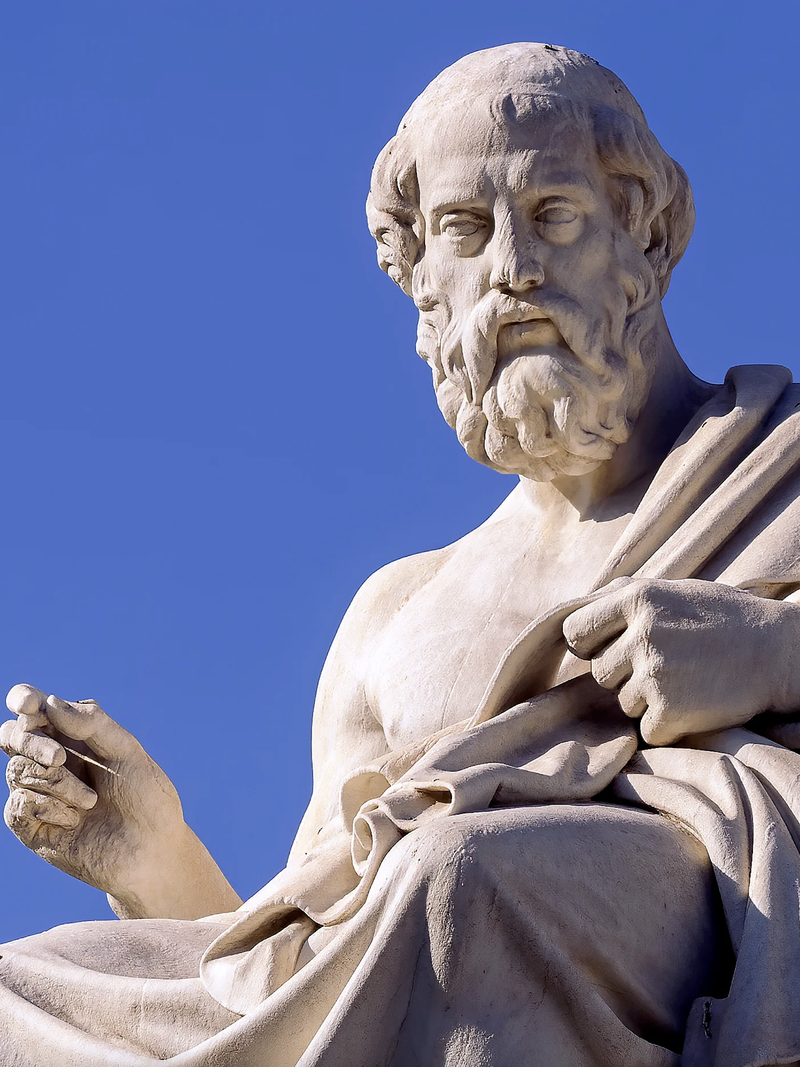
Between 1900 and 1960, scholars believed that Plato held to a “cosmological” view of the divine, the notion that gods are “personified forces responsible for bringing order to the sensible world.” Since then, scholars have adopted a “metaphysical” interpretation, arguing that Plato's god is finally a metaphysical principle. So argues…

April 1, 2016

Breaking the Contract

Ryan Leif Hansen ( Silence and Praise ) describes Roman imperial religion as a social contract that bound the gods, the emperor, and the Roman people in a stable, peaceful order: “ Cultic ritual, sacrifice, and the related economic exchange were integral for sustaining the order of the cosmos ,…

March 31, 2016

Son of Pain

Sara Japhet ( I and II Chronicles ) notes the “unusual” structure of the etiological story behind the name “Jabez” in 1 Chronicles 4:9-10. Typically, “an aetiology offers an explanation for a given datum (commonly, but not always, a name) by recounting the causes from which it arose and demonstrating…

March 31, 2016
daniel-james-dhw68hz9kba-unsplash

Sterilizing Marriage

In his powerful manifesto, Nation of Bastards , Douglas Farrow argues that the Kulturkampf in which we find ourselves began in the early part of the 20th century with “the promotion of sterilization, eugenics, and the contraceptive mentality.” In short, it started “as an attack on children,” more horrifically in…

March 31, 2016

Art of Politics

In his reflections on Carl Schmitt, Paul W. Kahn ( Political Theology ) contrasts Enlightenment political rationalism to Schmitt's political voluntarism. Kant stands as the representative of the rationalist tradition: “For Kant, the question of freedom was that of how a subject could determine his own action in a causally…

March 30, 2016

Showing page 304 of 2212

Browse by Category

In Medias Res

Your weekly digest for all things Theopolis.

Donate

Theopolis is nearly 100% donor-supported. Consider joining us on our mission.