Theopolis Logo

Writing

Explore our collection of theological essays, biblical studies, and reflections on faith and culture.

See all
tanner-mardis-xuxghzhibn4-unsplash-1-2
Biblical Studies

Tweets-turned-Notes on the Bible’s Chronology

Summary In what follows, I will consider the “year-stamps” employed in Scripture, i.e., statements of the form, “Such-and-such an event took place in the Xth year of Y.” In the process, I will suggest some ways in which the Biblical narrative might relate to events in the extra-Biblical world, though…

by James BejonJuly 16, 2019
durer-prodigal-son-2
Luke

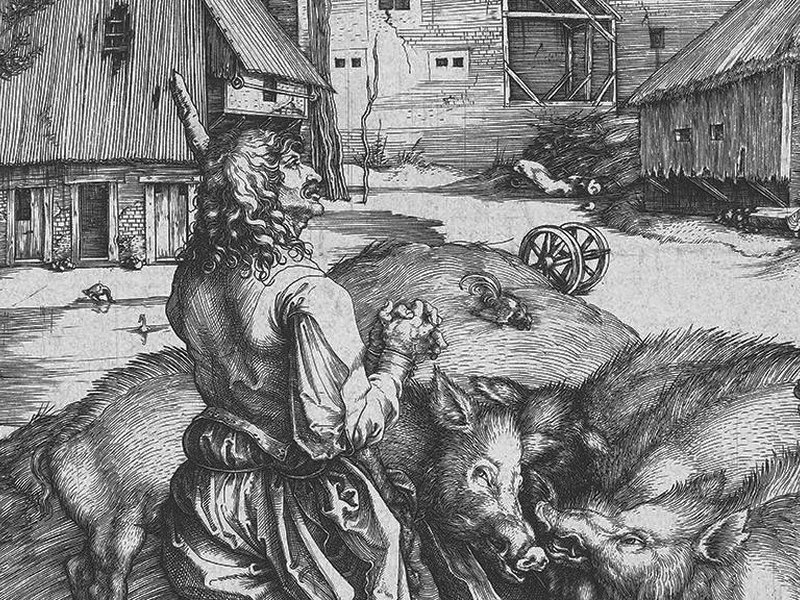
Perspectives on the Prodigal, (Part 2)

In the first essay on the parable of the Prodigal Son, I suggested that the problems commentators and others encounter in interpreting Jesus three-part parable are not accidental. These are not just problems in our ignorance of cultural background. They are intentional features of the stories —stories designed to poke…

by Ralph Allan SmithJuly 11, 2019
durer-prodigal-son-2
Luke

Perspectives on the Prodigal, (Part 1)

The story of the Prodigal Son is perhaps the most well-known story in the Bible. As others have observed, it may also be one of the most misunderstood. In two short essays, I will point out features of this story that are commonly neglected, aspects of Jesus’ parable that might…

by Ralph Allan SmithJuly 9, 2019
de-rijke-man-en-de-arme-lazarus-by-jacopo-da-ponte-16th-century
Luke

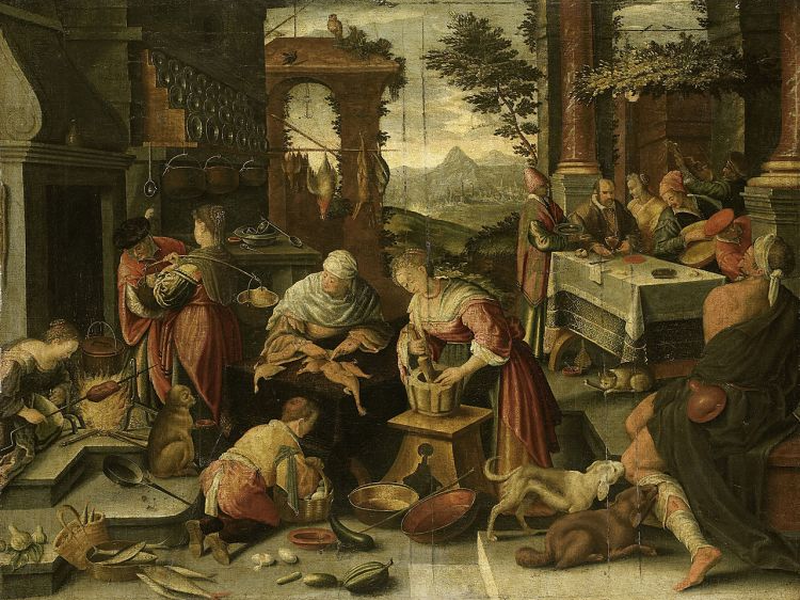
Lazarus and the Rich Man

The parable of Lazarus and the nameless rich man is not an independent story. It is part of a long context that begins in Luke 15:1, where Jesus is eating with tax collectors and sinners and the scribes and Pharisees grumble. In response to their hardheartedness, Jesus tells a three-part…

by Ralph Allan SmithJuly 4, 2019
aaron-burden-uynrnfdkjwg-unsplash
Luke

Everybody has Dropsy - Luke 14:1-24

The Bible is written so that even when a reader cannot pick up on what might be deeper or more detailed aspects of a text, there is virtually always a message to be heard. In the ancient world, where the “reader” of Scripture would likely be a church official facing…

by Ralph Allan SmithJuly 2, 2019
communion
Biblical Theology

Fruit Trees and Grain Plants

The distinction between garden (or vineyard) and field begins in Genesis 2. This relates to the ordering of the formless world. Plants of the field are contrasted with the garden planted by God in Genesis 2:5&8. Later on, under the Old Covenant the Israelites will be required to keep their…

by James B. JordanJune 27, 2019

Showing page 77 of 309

See all

Showing page 15 of 43

See all

Typical Beauty

Ruskin's concept of "typical beauty" is a piece of theological aesthetics. In the second volume of Modern Painters , Ruskin distinguished kinds of beauty, the typical and the vital. Of the first, he says: "that external quality of bodies already so often spoken of, and which, whether it occur in…

July 26, 2018

Of Subject and Objects

In the third volume of Modern Painters , Ruskin addresses the "German dulness, and English affectation" that has "multiplied among us the use of two of the most objectionable words that were ever coined by the troublesomeness of metaphysicians,—namely, 'Objective,' and 'Subjective.'" The words are "exquisitely . . . useless"…

July 25, 2018

Hopkins and Typology

George Landow argues ( Victorian Types, Victorian Shadows ) that the poetry of Gerald Manley Hopkins would look less bizarre, though no less innovative, if we placed Hopkins more firmly in the poetics of his time. Which is to say, placed him in the context of a typological poetics. Hopkins's…

July 24, 2018

Architecture of Sacrifice

Architecture, Ruskin claims ( Seven Lamps of Architecture ), isn’t the same as building. Architecture refers to the specifically artistic features of a building, and the specifically artistic features have to do with adornment and not function: “Architecture concerns itself only with those characters of an edifice which are above…

July 23, 2018

Types of Color

John Ruskin was the main art critic of his time; he was an artists himself, and also wrote on a variety of other topics, especially on the state of English politics and economy. He abandoned explicit attachment to Evangelical Christianity but remained deeply indebted. He provides an excellent example of…

July 19, 2018

The Typological Imagination

Typological forms of thought weren't confined to sermons and commentaries, but made their way into 19 th -century English poetry. -Some poets put typology to orthodox uses, though here we can see divergent deployments of a similar typology. Elizabeth Barrett Browning wrote a poem, Casa Guidi Windows (1851) about the…

July 18, 2018

Showing page 64 of 2212

Browse by Category

In Medias Res

Your weekly digest for all things Theopolis.

Donate

Theopolis is nearly 100% donor-supported. Consider joining us on our mission.