Theopolis Logo

Writing

Explore our collection of theological essays, biblical studies, and reflections on faith and culture.

See all
tanner-mardis-xuxghzhibn4-unsplash-1-2
Biblical Studies

Tweets-turned-Notes on the Bible’s Chronology

Summary In what follows, I will consider the “year-stamps” employed in Scripture, i.e., statements of the form, “Such-and-such an event took place in the Xth year of Y.” In the process, I will suggest some ways in which the Biblical narrative might relate to events in the extra-Biblical world, though…

by James BejonJuly 16, 2019
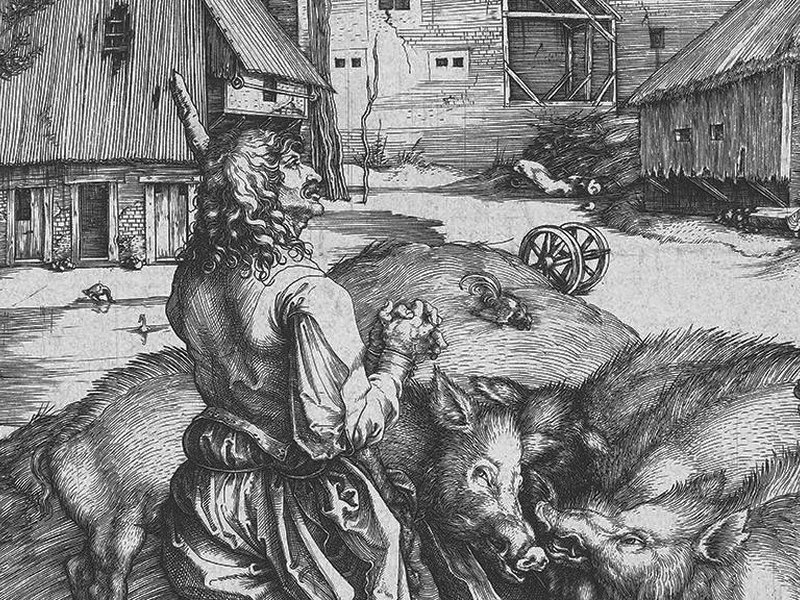
durer-prodigal-son-2
Luke

Perspectives on the Prodigal, (Part 2)

In the first essay on the parable of the Prodigal Son, I suggested that the problems commentators and others encounter in interpreting Jesus three-part parable are not accidental. These are not just problems in our ignorance of cultural background. They are intentional features of the stories —stories designed to poke…

by Ralph Allan SmithJuly 11, 2019
durer-prodigal-son-2
Luke

Perspectives on the Prodigal, (Part 1)

The story of the Prodigal Son is perhaps the most well-known story in the Bible. As others have observed, it may also be one of the most misunderstood. In two short essays, I will point out features of this story that are commonly neglected, aspects of Jesus’ parable that might…

by Ralph Allan SmithJuly 9, 2019
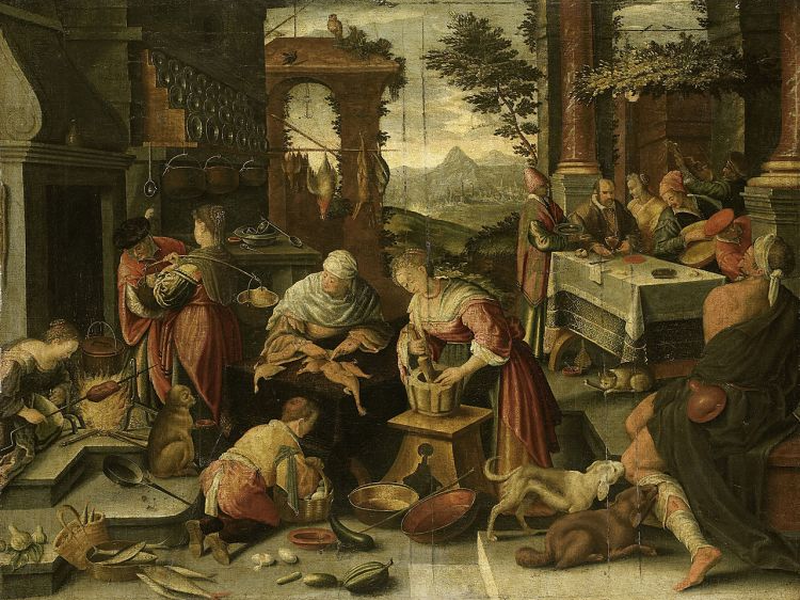
de-rijke-man-en-de-arme-lazarus-by-jacopo-da-ponte-16th-century
Luke

Lazarus and the Rich Man

The parable of Lazarus and the nameless rich man is not an independent story. It is part of a long context that begins in Luke 15:1, where Jesus is eating with tax collectors and sinners and the scribes and Pharisees grumble. In response to their hardheartedness, Jesus tells a three-part…

by Ralph Allan SmithJuly 4, 2019
aaron-burden-uynrnfdkjwg-unsplash
Luke

Everybody has Dropsy - Luke 14:1-24

The Bible is written so that even when a reader cannot pick up on what might be deeper or more detailed aspects of a text, there is virtually always a message to be heard. In the ancient world, where the “reader” of Scripture would likely be a church official facing…

by Ralph Allan SmithJuly 2, 2019
communion
Biblical Theology

Fruit Trees and Grain Plants

The distinction between garden (or vineyard) and field begins in Genesis 2. This relates to the ordering of the formless world. Plants of the field are contrasted with the garden planted by God in Genesis 2:5&8. Later on, under the Old Covenant the Israelites will be required to keep their…

by James B. JordanJune 27, 2019

Showing page 77 of 309

See all

Showing page 15 of 43

See all

Dialectic of Physics

Jason Josephson-Storm ( Myth of Disenchantment ) offers this potted history of modern physics: "Even as Descartes liberated an autonomous realm for the thinking subject, his mechanism denied action at a distance and rejected the concept of the void. But this form of corpuscular mechanism was disrupted by Newton's emphasis…

May 4, 2018

People Without History

"The habit of treating named entities such as Iroquois, Greece, Persia, or the United States as fixed entities opposed to one another by stable internal architecture and external boundaries interferes with our ability to understand their mutual encounter and confrontation," writes Eric Wolf in Europe and the People Without History…

May 4, 2018
Masculinity

Pretense of Masculinity

"Human life is radical, constituent insecurity," writes Julian Marias ( Metaphysical Anthropology ). "It consists in having to do something, in a frequently hostile, always problematical, and largely latent circumstance, and in not knowing what to hold to. This is man's condition: his insecurity, his neediness, his ignorance, his indecision,…

May 4, 2018

What Is Disenchantment?

Jason Josephson-Storm tells us what Weber's disenchantment is not : It doesn't mean that magic is eliminated. Protestants "were against magic and superstitious rituals" but they never doubted the reality of magic or the crowdedness of the universe ( Myth of Disenchantment , 280). Disenchantment also "is not a new…

May 4, 2018

Greek Temple Architecture

Mary Emerson's Greek Sanctuaries and Temple Architecture is a concise, informative introduction to her topic. After introductory chapters explaining the meaning, uses, architecture and artistic adornments of sanctuaries in the Greek world, Emerson devotes a chapter to the major cultic sites of Greece - Delphi, Athens, the sanctuary of Apollo…

May 4, 2018

Abstraction and Image

In his recently published Lewis on the Christian Life , Joe Rigney devotes a few pages to expounding Lewis's understanding of the relation between abstract theological statements and the images of Scripture. He endorses the abstractions as a caution against false inferences that might be drawn from the images, but…

May 3, 2018

Showing page 72 of 2212

Browse by Category

In Medias Res

Your weekly digest for all things Theopolis.

Donate

Theopolis is nearly 100% donor-supported. Consider joining us on our mission.