Theopolis Logo

Writing

Explore our collection of theological essays, biblical studies, and reflections on faith and culture.

See all
tanner-mardis-xuxghzhibn4-unsplash-1-2
Biblical Studies

Tweets-turned-Notes on the Bible’s Chronology

Summary In what follows, I will consider the “year-stamps” employed in Scripture, i.e., statements of the form, “Such-and-such an event took place in the Xth year of Y.” In the process, I will suggest some ways in which the Biblical narrative might relate to events in the extra-Biblical world, though…

by James BejonJuly 16, 2019
durer-prodigal-son-2
Luke

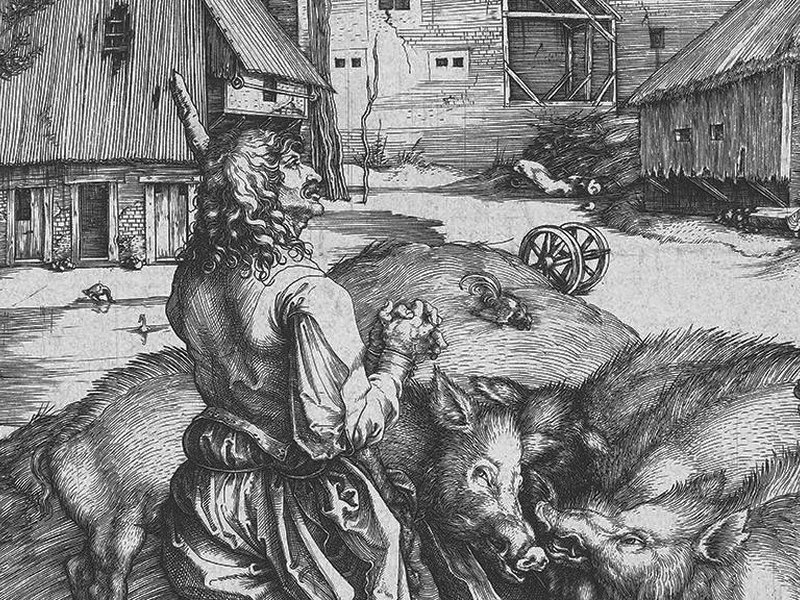
Perspectives on the Prodigal, (Part 2)

In the first essay on the parable of the Prodigal Son, I suggested that the problems commentators and others encounter in interpreting Jesus three-part parable are not accidental. These are not just problems in our ignorance of cultural background. They are intentional features of the stories —stories designed to poke…

by Ralph Allan SmithJuly 11, 2019
durer-prodigal-son-2
Luke

Perspectives on the Prodigal, (Part 1)

The story of the Prodigal Son is perhaps the most well-known story in the Bible. As others have observed, it may also be one of the most misunderstood. In two short essays, I will point out features of this story that are commonly neglected, aspects of Jesus’ parable that might…

by Ralph Allan SmithJuly 9, 2019
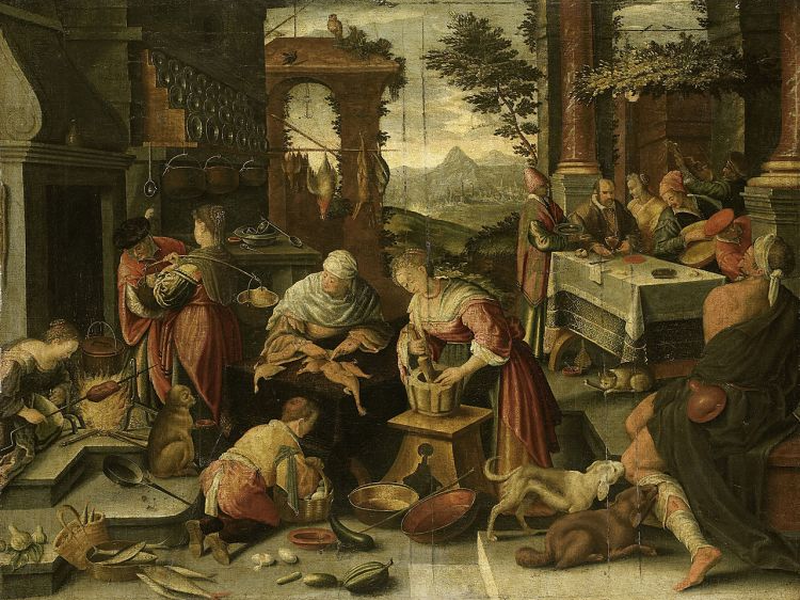
de-rijke-man-en-de-arme-lazarus-by-jacopo-da-ponte-16th-century
Luke

Lazarus and the Rich Man

The parable of Lazarus and the nameless rich man is not an independent story. It is part of a long context that begins in Luke 15:1, where Jesus is eating with tax collectors and sinners and the scribes and Pharisees grumble. In response to their hardheartedness, Jesus tells a three-part…

by Ralph Allan SmithJuly 4, 2019
aaron-burden-uynrnfdkjwg-unsplash
Luke

Everybody has Dropsy - Luke 14:1-24

The Bible is written so that even when a reader cannot pick up on what might be deeper or more detailed aspects of a text, there is virtually always a message to be heard. In the ancient world, where the “reader” of Scripture would likely be a church official facing…

by Ralph Allan SmithJuly 2, 2019
communion
Biblical Theology

Fruit Trees and Grain Plants

The distinction between garden (or vineyard) and field begins in Genesis 2. This relates to the ordering of the formless world. Plants of the field are contrasted with the garden planted by God in Genesis 2:5&8. Later on, under the Old Covenant the Israelites will be required to keep their…

by James B. JordanJune 27, 2019

Showing page 77 of 309

See all

Showing page 15 of 43

See all

Theological Language

In a discussion of God's transcendence, Jeremy Begbie ( Redeeming Transcendence in the Arts ) observes that some accounts of transcendence leave the impression "that language is something by its very nature that God would long to escape, that something so finite and susceptible to corruption could have no integral…

March 9, 2018

Cappadocian Rupture

In his "Person" in Christian Tradition , Stephen Hipp notes that the "originality" of Cappadocian Trinitarian theology "lies in using the word hypostasis to designate the person in distinction from the substance. The distinction between hypostasis and ousia had not been instituted during apostolic times; the Greek Fathers are the…

March 9, 2018

One Will?

William Hasker ( Metaphysics and the Tri-Personal God ) cites Carl Mosser's objection to social Trinitarianism's claim that the three Persons are "distinct centers of willing": "If the divine persons cannot differ because they necessarily act in concert with one another, then attributing distinct wills is superfluous. Attributing distinct wills…

March 9, 2018

When Left Meets Right

Shannon Hayes is a different kind of feminist, a feminist who has not only broken from the patriarchy but from she views as a global capitalist system that buttresses the patriarchy. She is a Radical Homemaker . She explains that “Radical Homemakers are men and women who have chosen to…

March 9, 2018

Simplicity and Divine Properties

William Mann has argued that when medievals identify God with His attributes, they identify Him with "property instances," specific individuals in a relationship of instantiation with the universals that they instantiate. Jeffrey Brower ("Making Sense of Divine Simplicity," Faith and Philosophy 25: 1 [2008]: 3-30) explains, "As Mann sees it,…

March 9, 2018

Model Nation

Robert Tombs ( The English and Their History ) observes that many intellectuals have pondered the character of nations for the past two centuries, asking "whether nations are ancient or modern phenomena; whether they have some organic existence as cultural, genetic or geographical entities; whether they are political and ideological…

March 9, 2018

Showing page 87 of 2212

Browse by Category

In Medias Res

Your weekly digest for all things Theopolis.

Donate

Theopolis is nearly 100% donor-supported. Consider joining us on our mission.