Theopolis Logo

Writing

Explore our collection of theological essays, biblical studies, and reflections on faith and culture.

See all
woman-bw
Grace

Never Be Dismayed

I'm afraid of messing up. Not just of messing up in general, but of messing this up—the big This that is the story that is my life, the story that God is attempting to tell with me as His material. The question casts its shadow over all my decisions. Can…

by Leta SundetOctober 6, 2015
jesus-with-sword
Revelation

Greater Phinehas

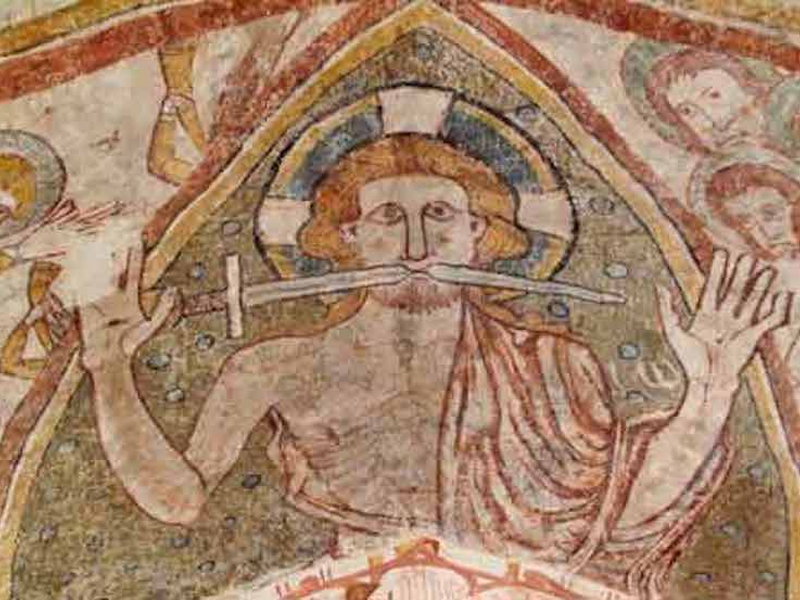
Jesus’ letter to Pergamum mentions Balaam and Balak (Revelation 2:14), and that is a signal that the whole message is running along the lines of Numbers 22-25. The death of the high priest is a sacrificial moment in the life of Israel. According to the rules of the cities of…

by Peter LeithartOctober 1, 2015
marriage
Marriage

The Glory of Self-Giving: A Wedding Homily

As you come to be joined in marriage today, I want to take a moment to focus on one important dimension of what it means to be married as Christians: that is as those who know Jesus and are being made into His likeness. This is a glorious day, full…

by Joshua AppelSeptember 29, 2015
jesus-centurion
Authority

Authority and Faith

When Jesus was entered into Capernaum, there came unto him a centurion, beseeching him, saying, “Lord, my servant lieth at home sick of the palsy, grievously tormented.” Jesus saith unto him, “I will come and heal him.” The centurion answered and said, “Lord, I am not worthy that thou shouldest…

by Lindsey TollefsonSeptember 24, 2015
creation-eve-2
Genesis

The Two Shall Become One Flesh: A Wedding Homily

Philosophers have measured mountains, Fathom'd the depths of seas, of states, and kings, Walk'd with a staff to heaven, and traced fountains But there are two vast, spacious things, The which to measure it doth more behove: Yet few there are that sound them; Sin and Love. The Agonie –…

by Joshua AppelSeptember 22, 2015
john-baptist-pointing
Luke

Of Sandals and Heroes

The third chapter of Luke famously opens with a list of mighty men, seven mighty men, potential heroes of the Mediterranean world. Beginning with Tiberius Caesar and Pontius Pilate, passing on to Herod the Tetrarch and his brothers, and ending with two High Priests, Luke says that the word of…

by Toby SumpterSeptember 17, 2015

Showing page 143 of 309

See all

Showing page 16 of 43

See all
Art

Aesthetic enjoyment

Adorno writes that enjoyment is not the be-all of art.  Certainly it isn’t for the producers of art: “If you ask a musician if he enjoys playing his instrument, he will probably reply: ‘I hate it’ . . . People who have a genuine relation to art would rather immerse…

September 24, 2009

Soteriology in time

Soteriology is eschatology, and that means soteriology  has to have an already/not yet structure.  Rejecting either justification by faith or judgment according to works breaks the bond of eschatology and soteriology.  Another way to say this is soteriology is about what happens in time . The alternatives are: 1) Antinomian:…

September 23, 2009

God acknowledging God

Commenting on the “seal” in Song of Songs 4:12, Luther writes, “In the same way we Christians are now sealed by the Word, Baptism, and the Sacramental of the Altar, by which we are distinguished from all other races, not just before the world, but rather in God’s own judgment.”…

September 23, 2009

Film, actors and audience

In his classic essay on the “work of art in the age of mechanical reproduction,” Walter Benjamin made some trenchant observations on the way film affects actors and audiences.   Importantly, he believes these effects are not the result of some perversion of the medium of film, but inherent in…

September 23, 2009

Adam and Elohim

Paul Niskanen has an insightful analysis of Genesis 1:27 in the latest JBL .  He starts with the question of whether Barth’s view that the image of God is found in relationality and specifically in sexual difference has any exegetical support.  He reviews the current discussion, and notes that there…

September 23, 2009

Heidegger’s hermeneutics

Ouch!  Schaeffer again, this time on Heidegger’s interpretive methods: “Paraphrase, translation, dismantling of the syntax, making the text autonomous with regard to the concrete subject who utters it, absolute silence regarding the poetic form: to these five characteristics we must add hermeneutic authoritarianism,” the last of which “postulates an opposition…

September 22, 2009

Showing page 1346 of 2212

Browse by Category

In Medias Res

Your weekly digest for all things Theopolis.

Donate

Theopolis is nearly 100% donor-supported. Consider joining us on our mission.