Theopolis Logo

Writing

Explore our collection of theological essays, biblical studies, and reflections on faith and culture.

See all
tanner-mardis-xuxghzhibn4-unsplash-1-2
Biblical Studies

Tweets-turned-Notes on the Bible’s Chronology

Summary In what follows, I will consider the “year-stamps” employed in Scripture, i.e., statements of the form, “Such-and-such an event took place in the Xth year of Y.” In the process, I will suggest some ways in which the Biblical narrative might relate to events in the extra-Biblical world, though…

by James BejonJuly 16, 2019
durer-prodigal-son-2
Luke

Perspectives on the Prodigal, (Part 2)

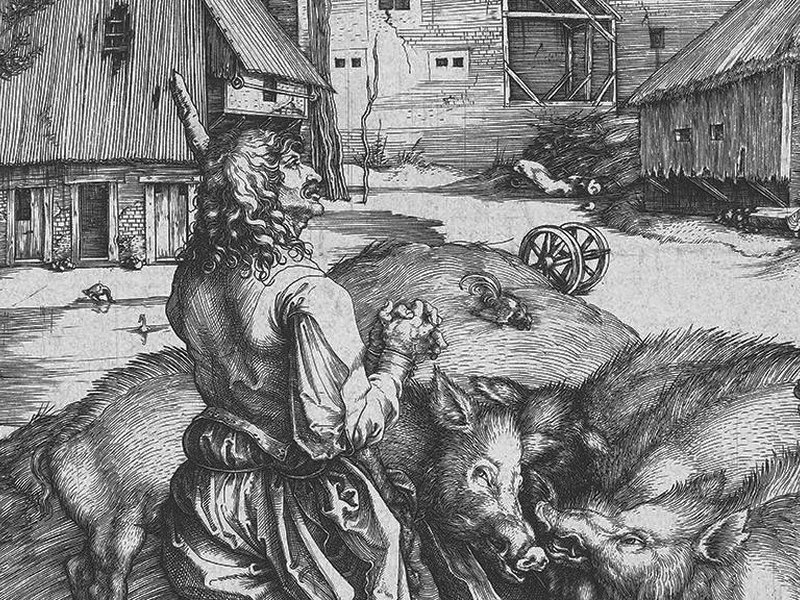
In the first essay on the parable of the Prodigal Son, I suggested that the problems commentators and others encounter in interpreting Jesus three-part parable are not accidental. These are not just problems in our ignorance of cultural background. They are intentional features of the stories —stories designed to poke…

by Ralph Allan SmithJuly 11, 2019
durer-prodigal-son-2
Luke

Perspectives on the Prodigal, (Part 1)

The story of the Prodigal Son is perhaps the most well-known story in the Bible. As others have observed, it may also be one of the most misunderstood. In two short essays, I will point out features of this story that are commonly neglected, aspects of Jesus’ parable that might…

by Ralph Allan SmithJuly 9, 2019
de-rijke-man-en-de-arme-lazarus-by-jacopo-da-ponte-16th-century
Luke

Lazarus and the Rich Man

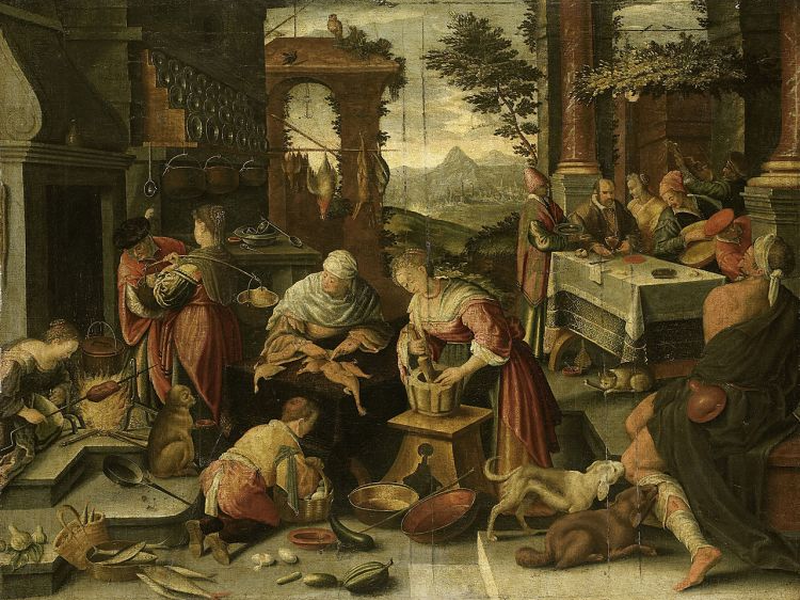
The parable of Lazarus and the nameless rich man is not an independent story. It is part of a long context that begins in Luke 15:1, where Jesus is eating with tax collectors and sinners and the scribes and Pharisees grumble. In response to their hardheartedness, Jesus tells a three-part…

by Ralph Allan SmithJuly 4, 2019
aaron-burden-uynrnfdkjwg-unsplash
Luke

Everybody has Dropsy - Luke 14:1-24

The Bible is written so that even when a reader cannot pick up on what might be deeper or more detailed aspects of a text, there is virtually always a message to be heard. In the ancient world, where the “reader” of Scripture would likely be a church official facing…

by Ralph Allan SmithJuly 2, 2019
communion
Biblical Theology

Fruit Trees and Grain Plants

The distinction between garden (or vineyard) and field begins in Genesis 2. This relates to the ordering of the formless world. Plants of the field are contrasted with the garden planted by God in Genesis 2:5&8. Later on, under the Old Covenant the Israelites will be required to keep their…

by James B. JordanJune 27, 2019

Showing page 77 of 309

See all

Showing page 16 of 43

See all
Gratitude

What Is Thanks? Daily Eucharist

We can fill out Paul's exhortation to give thanks for all things in all circumstances concretely by bringing it more explicitly into connection with the liturgy of the todah and the Eucharist. Giving thanks is a pattern of acknowledgement, recital, memorial, and feast. Or: we give thanks when we take,…

September 14, 2017

What Is Thanks? Eucharist in the Church

The combined sacrificial-verbal todah (thank offering) carries over directly into the Christian Supper. The main elements of the ancient Israelite rite are present, either in the New Testament or in very early post-apostolic celebrations of the Eucharist. 1) Jesus instructs his disciples to “do this” – not only to eat…

September 13, 2017

What Is Thanks? Rite and Speech Act

Most English translations introduce the terminology of “thanks” in of Leviticus, as a translation of todah (Lev 7:11-15), a noun derived from yadah . In the Levitical system, todah does not refer to emotions or verbal expressions of gratitude but to a sacrificial ritual, a specific form of the peace…

September 12, 2017

Walking In Light

The following is an excerpt from my commentary on 1-3 John, From Behind the Veil . The chapter division in our Bibles does not follow the flow of John’s argument in 1 John, which slips past the end of chapter 1 and flows into the beginning of chapter 2. The…

September 12, 2017
Gratitude

What Is Thanks? A Name

“What is thanks?” Scripture answers that thanks is neither an emotion nor a virtue. [1] It is accompanied by emotions, and as we get to the New Testament it broadens to become a tone or stance of life, something like a meta-virtue. Fundamentally, thanks is a name, a ritual, and…

September 11, 2017

Capitalism and Community

Brian Jones argues that defenses of capitalism are anthropologically thin. They "need a more humane anthropology, sensitive to man’s social and communal nature, lest they forget to ask the crucial question of what economics is for." He cites a 2002 article from the American Spectator to illustrate the reductive character…

September 8, 2017

Showing page 145 of 2212

Browse by Category

In Medias Res

Your weekly digest for all things Theopolis.

Donate

Theopolis is nearly 100% donor-supported. Consider joining us on our mission.