Theopolis Logo

Writing

Explore our collection of theological essays, biblical studies, and reflections on faith and culture.

See all
sinitta-leunen-dvibhmzsy8e-unsplash
Epistemology

A Cheer for the Mystics

Mystical theologians are often unguarded, extreme, un-nuanced, pressing to the edges of heresy, sometimes beyond. Still, the mystics are worthy of study. Why? Many reasons. Unlike some late medieval and post-Reformation dogmaticians, mystical theologians are often instinctively and richly Trinitarian. Historical-critical approaches to Scripture left mystical theologians virtually untouched; mystics…

by Peter LeithartSeptember 2, 2013
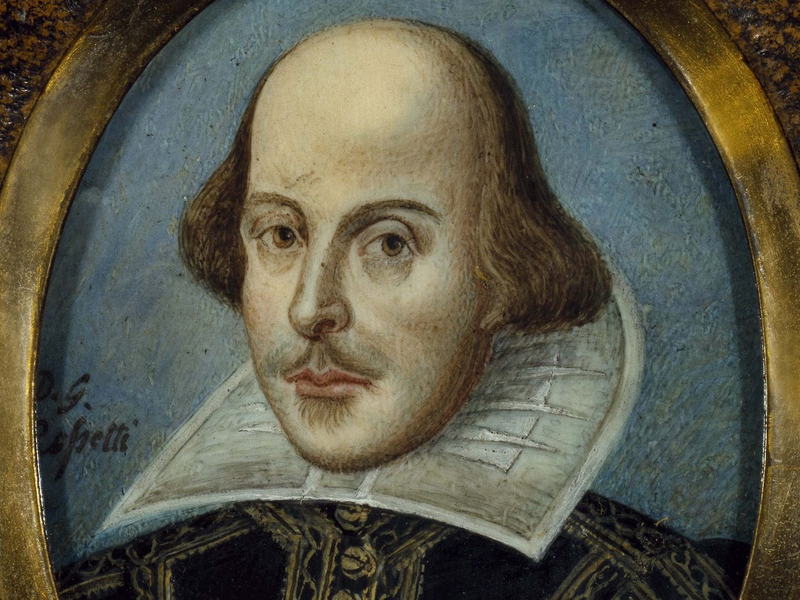
portrait-of-william-shakespeare-1564-1616-ca-1865
Literature

Shadow and Substance in Shakespeare's Venice

Portia of Belmont is a “lady richly left,” as Bassanio says of her in the first Act of The Merchant of Venice . Plus, she’s beautiful and wise. Suitors clamber to Belmont in hope. Her father knew it would be so, and in his will set up a fairy-tale test…

by Peter LeithartAugust 28, 2013
carlo-alberto-burato-smdx3gleu_m-unsplash
Liturgy

Liturgy Traps

[fve]http://vimeo.com/72195198[/fve]

by James B. JordanAugust 26, 2013
screen-shot-2022-05-12-at-12-07-23-pm
Deuteronomy

Victory Food

In the nature of the case, “the” Christian meditation on Deuteronomy 14:1-21 cannot be written. Meditation offers too many possibilities, opens too many doors. There is not one and only one correct set of associations for a Christian to consider when thinking of Deuteronomy 14:1-21. We could, for example, consider…

by Ralph Allan SmithAugust 21, 2013
aaron-burden-1ebsmyrau-s-unsplash
Romans

David's Sin and Israel's Salvation, Part I

Having retold the story of the cumulative sin of Israel leading to the great atonement on the cross, Paul then reemphasizes that, just as both Jew and Gentiles were locked into sin and judgment, now they are both justified by faith: Then what becomes of our boasting? It is excluded.…

by Mark HorneAugust 20, 2013
ben-white-w8qqn1pmqh0-unsplash
Deuteronomy

You are what you eat

Deuteronomy 14 is full of allusions to events of Israel’s history and other portions of Scripture. What would an Israelite learn by mediation on these allusions? The answer, I believe, is at least fourfold. Faith, Worship, War For the ancient Israelite first hearing Moses’ sermon, or perhaps hearing it read…

by Ralph Allan SmithAugust 15, 2013

Showing page 189 of 309

See all

Showing page 16 of 43

See all
Literature

Sigurd’s New Order

Perhaps Sigurd, like Orestes, marks the beginning of a new order. Before Sigurd, the only absolute loyalties in the world of the Volsungs were family loyalties, loyalties of blood. Signy has no loyalty to her husband and encourages Sigmund to kill her sons. But Sigurd seems as loyal to his…

October 31, 2003

Religion in Europe

In Italy, there is a raging debate over a judge’s ruling that crucifixes need to be removed from schools. Seems that Europe, where religion (or religions) is still often a part of government education and where state churches still exist, is beginning to play catch up with American secularism.

October 31, 2003
Literature

Sigurd and the Dragon

In the introduction to his translation of the Volsung Saga, Jesse Byock points out that the scene of Sigurd slaying the dragon was employed on numerous churches throughout Scandinavian countries. The Christological dimensions of a dragon-slayer are obvious, but there is even more going on with Sigurd: He not only…

October 31, 2003

Differance

In an essay on “The Hermeneutics of Difference” in a volume edited by Merold Westphal, Garrett Green offers this helpful summary of Derrida’s conception of supplement: “The fundamental hermeneutical situation in which we all find ourselves as users of signs, which Derrida indicates by the word DIFFERANCE, means that no…

October 31, 2003

Oats

From Dr. Johnson’s dictionary, a definition of “Oats”: “A grain, which in England is generally given to horses, but in Scotland supports the people.”

October 31, 2003

Nothing Outside the Text

In his book “Is There A Meaning in This Text?” Kevin Vanhoozer explains Derrida’s dictum that “there is nothing outside the text” by saying that everything is part of a signifying system or classification system that is constituted by differences. He offers this illuminating illustration: “a Ford has its particular…

October 31, 2003

Showing page 2174 of 2212

Browse by Category

In Medias Res

Your weekly digest for all things Theopolis.

Donate

Theopolis is nearly 100% donor-supported. Consider joining us on our mission.