Theopolis Logo

Writing

Explore our collection of theological essays, biblical studies, and reflections on faith and culture.

See all
tanner-mardis-xuxghzhibn4-unsplash-1-2
Biblical Studies

Tweets-turned-Notes on the Bible’s Chronology

Summary In what follows, I will consider the “year-stamps” employed in Scripture, i.e., statements of the form, “Such-and-such an event took place in the Xth year of Y.” In the process, I will suggest some ways in which the Biblical narrative might relate to events in the extra-Biblical world, though…

by James BejonJuly 16, 2019
durer-prodigal-son-2
Luke

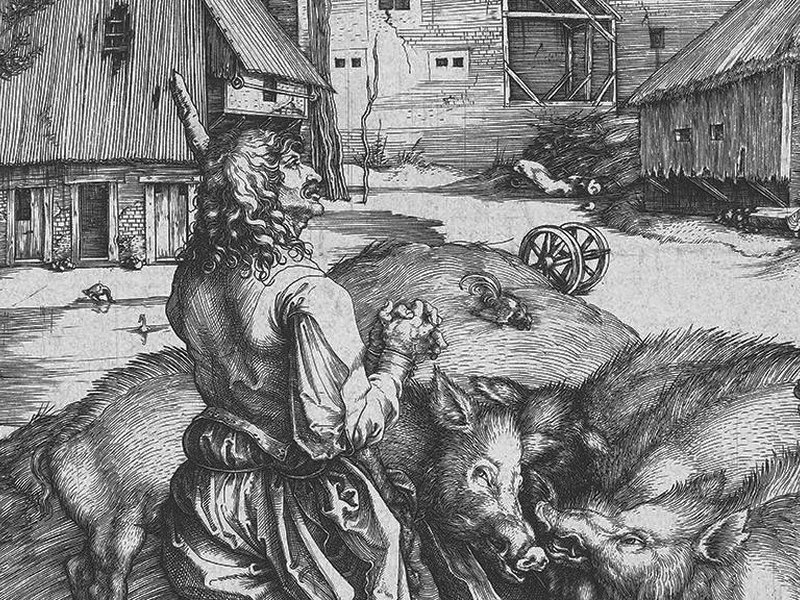
Perspectives on the Prodigal, (Part 2)

In the first essay on the parable of the Prodigal Son, I suggested that the problems commentators and others encounter in interpreting Jesus three-part parable are not accidental. These are not just problems in our ignorance of cultural background. They are intentional features of the stories —stories designed to poke…

by Ralph Allan SmithJuly 11, 2019
durer-prodigal-son-2
Luke

Perspectives on the Prodigal, (Part 1)

The story of the Prodigal Son is perhaps the most well-known story in the Bible. As others have observed, it may also be one of the most misunderstood. In two short essays, I will point out features of this story that are commonly neglected, aspects of Jesus’ parable that might…

by Ralph Allan SmithJuly 9, 2019
de-rijke-man-en-de-arme-lazarus-by-jacopo-da-ponte-16th-century
Luke

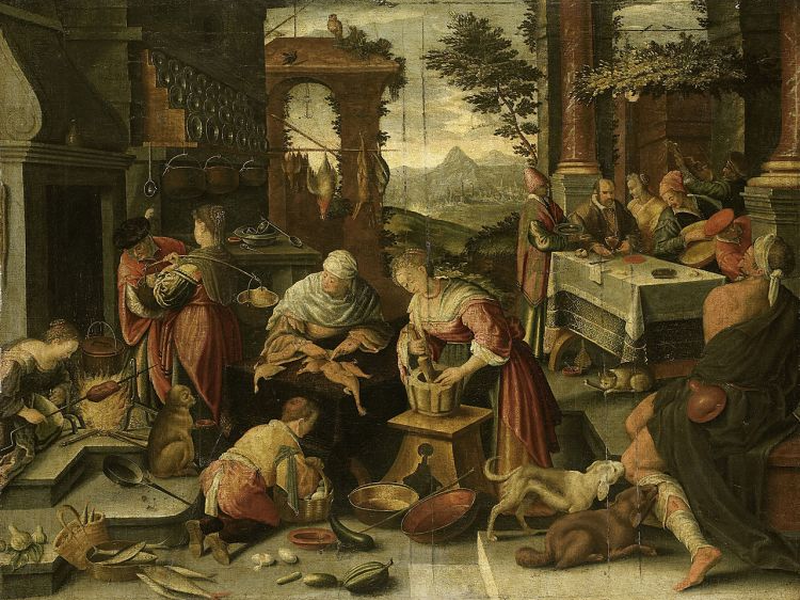
Lazarus and the Rich Man

The parable of Lazarus and the nameless rich man is not an independent story. It is part of a long context that begins in Luke 15:1, where Jesus is eating with tax collectors and sinners and the scribes and Pharisees grumble. In response to their hardheartedness, Jesus tells a three-part…

by Ralph Allan SmithJuly 4, 2019
aaron-burden-uynrnfdkjwg-unsplash
Luke

Everybody has Dropsy - Luke 14:1-24

The Bible is written so that even when a reader cannot pick up on what might be deeper or more detailed aspects of a text, there is virtually always a message to be heard. In the ancient world, where the “reader” of Scripture would likely be a church official facing…

by Ralph Allan SmithJuly 2, 2019
communion
Biblical Theology

Fruit Trees and Grain Plants

The distinction between garden (or vineyard) and field begins in Genesis 2. This relates to the ordering of the formless world. Plants of the field are contrasted with the garden planted by God in Genesis 2:5&8. Later on, under the Old Covenant the Israelites will be required to keep their…

by James B. JordanJune 27, 2019

Showing page 77 of 309

See all

Showing page 16 of 43

See all
Trinity

Contracting the Trinity

Trinitarian theology blossomed in English theology in the post-Reformation period, evidenced by the creative development of the vestigia trinitatis . During the seventeenth century, though, Trinitarian theology began to contract and wither. According to Philip Dixon ( Nice and Hot Disputes ), there were two dynamics at work. First, Trinitarian…

February 25, 2016

Structure in 1 Chronicles

1 Chronicles begins with a list of 13 names, from Adam to Japheth. From Genesis 10, we know that the list is broken into two lists, 10 + 3. The first ten names mark generations from Adam to Noah; the list of three names are all from the same generation,…

February 25, 2016

Economy of Force

Patricia Owens summarizes her recent Economy of Force in a symposium at The Disorder of Things . Her book is a history of modern counterinsurgency, but that history has much broader implications for the history of political thought and scholarship on international relations. As Owens puts it, “The book is…

February 24, 2016

Liturgical Orientalism

Robert Taft ( “Eastern Presuppositions” and Western Liturgical Reform ) credits the Melkite patriarch and bishops with exercising a disproportionate influence on the direction of reform at Vatican II, due to their “remarkable imaginative and universal vision.” They were the first to state that the council should avoid definitions and…

February 24, 2016

Separability and Situatedness

Marcia Pally's Commonwealth and Covenant is a study of the “economics, politics, and theologies of relationality.” She works through these topics using the categories of “separability” and “situatedness.” Separability is “the ability to leave one's place and develop oneself differently from past and neighbors” (3). She thinks that the contemporary…

February 24, 2016

Debtor Nation

“In 2010, Americans had total debt outstanding of $52.4 trillion, more than three-and-a-half times the country's gross domestic product,” writes Rowena Olegario in The Engine of Enterprise (1). Over $13 trillion is household debt, $24.5 is business debt, and 24% or $12.4 trillion is government debt, mostly federal debt. Each…

February 23, 2016

Showing page 317 of 2212

Browse by Category

In Medias Res

Your weekly digest for all things Theopolis.

Donate

Theopolis is nearly 100% donor-supported. Consider joining us on our mission.