Theopolis Logo

Writing

Explore our collection of theological essays, biblical studies, and reflections on faith and culture.

See all
cross-2
Church Calendar

The Good Friday Paradise Party

I grew up in the 1950s. This was before the "Sixties" and the democratization, informalization, and general cheapening of the church and her worship. Ministers were Father Donovan, Pastor Eckhart, Reverend MacPherson, Mister (Episcopal) Parker, and Brother Smith. Liturgical speech was high language, sounding kind of like the King James…

by James B. JordanMarch 25, 2016
music-violin
Hermeneutics

A Musical Case for Typological Realism, (Part 1)

Metaphor exerts a surprisingly powerful influence within our thinking. Although it is easily dismissed as little more than a figure of speech, when we attend more closely to the ways in which we use it, metaphor’s importance swiftly becomes more apparent. Although many of our metaphors have become quite invisible…

by Alastair RobertsMarch 24, 2016
tree-2
Creation

True Science

What is a tree, scientifically speaking? A mere googling gives the following answer: “a woody perennial plant, typically having a single stem or trunk growing to a considerable height and bearing lateral branches at some distance from the ground.” We can increase detail by describing its family, genus, species and…

by Remy WilkinsMarch 22, 2016
fasting
Church Calendar

Food for Thought from Ethiopia

The majority of Western evangelical Christians rarely, if ever, fast as a form of spiritual discipline. In our culture, fasting is more connected with dieting than worship, the other side of our deeply ambiguous fascination with food. Food is everywhere. We eat more than ever before, at greater speed, and…

by Sam BusseyMarch 17, 2016
unnamed
Biblical Theology

What is Systematic Typology? – Part Two

A Grammar of Creation An understanding of the visual-musical language of the Bible must begin with Genesis 1. This is fortunate, because when explaining biblical types to academics, as opposed to children, one is repeatedly forced to start from scratch. From birth, a healthy child is attuned to rhythm and…

by Mike BullMarch 15, 2016
wall_e_by_mrcanavan-d3f92cn
Art

Wall-E and the New Creation

In an inverse Eden, a land laid waste, one works alone tending the trash. There are none like him in all the earth, inquisitive, playful and most drawn to those mysterious, dancing bipedal creatures who lost earth and left it to go wandering the vast wilderness of space. Humans have…

by Remy WilkinsMarch 10, 2016

Showing page 134 of 309

See all

Showing page 16 of 43

See all

Battle of the Soul

Prudentius’s Psychomachia (5 th century AD) is one of the first and one of the most influential of medieval allegories. It is the source of the battle of Virtue and Vice that was one of the key themes of medieval allegory, which carries right into the Elizabethan allegory of Spenser's…

April 27, 2015
johann_gottfried_von_herder_by_john_sartain
Nationalism

Nations: Grown or Imagined?

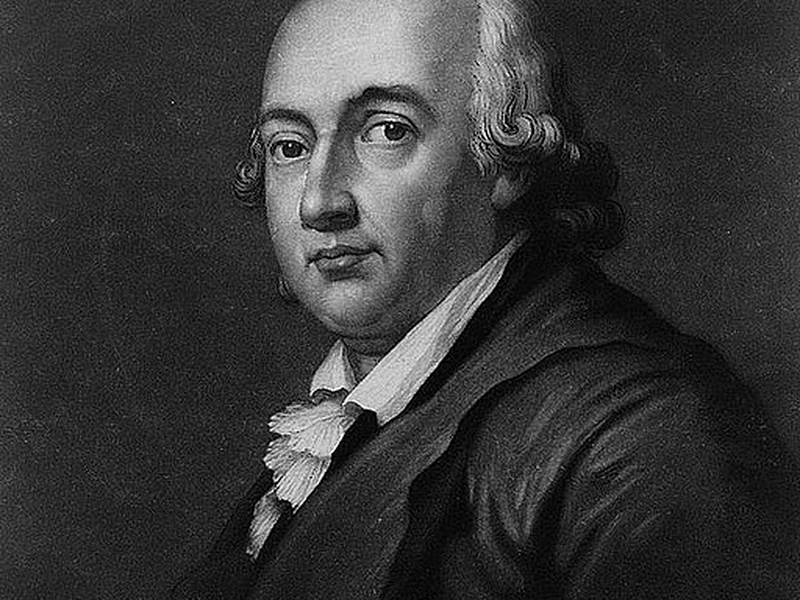
R omantic thinkers like Johann Gottfried Herder, developed an organic conception of nationhood. For Herder, a nation is an extended family, and so a perfect nation, the most natural state, is “one nation, an extended family with one national character." (I rely on this essay by Richard White.) People have…

April 27, 2015

Imagining Finland

Nations are “imagined communities,” and one of the ways nations imagine themselves is to imagine themselves as very, very old. The Finnish epic, the Kalevala , serves as an illustration of the nexus between ancient literature and national identity. Anderson writes ( Imagined Communities , 74-5), “In the eighteenth century…

April 27, 2015

The Un-Dante

In a contribution to Petrarch: A Critical Guide to the Complete Works Teodolinda Barolini contrasts the love poetry of Petrarch's Rerum vulgarium fragmenta (also known as the Canzoniere ) with that of Dante. Petrarch continues the courtly paradigm. His interest is in the shifting psychology and drama of the male…

April 27, 2015

Deflating Humanism

In his E nglish Literature in the Sixteenth Century , CS Lewis makes two deflationary comments about the effects of Renaissance humanism. First, “The ‘barbarous’ books [of medieval Latin] have survived in the only sense that really matters: they are used as their authors meant them to be used. It…

April 24, 2015

Mystic Ark

Conrad Rudolph's The Mystic Ark is the product of impressive scholarship. Its focus is on the image of the mystic ark, a complex cosmic portrait showing “the Majesty” (looking like Jesus) enthroned, flanked by angels, holding a large disk, inscribed with a square turned sideways like a diamond. Inside the…

April 24, 2015

Showing page 435 of 2212

Browse by Category

In Medias Res

Your weekly digest for all things Theopolis.

Donate

Theopolis is nearly 100% donor-supported. Consider joining us on our mission.