Theopolis Logo

Writing

Explore our collection of theological essays, biblical studies, and reflections on faith and culture.

See all
tanner-mardis-xuxghzhibn4-unsplash-1-2
Biblical Studies

Tweets-turned-Notes on the Bible’s Chronology

Summary In what follows, I will consider the “year-stamps” employed in Scripture, i.e., statements of the form, “Such-and-such an event took place in the Xth year of Y.” In the process, I will suggest some ways in which the Biblical narrative might relate to events in the extra-Biblical world, though…

by James BejonJuly 16, 2019
durer-prodigal-son-2
Luke

Perspectives on the Prodigal, (Part 2)

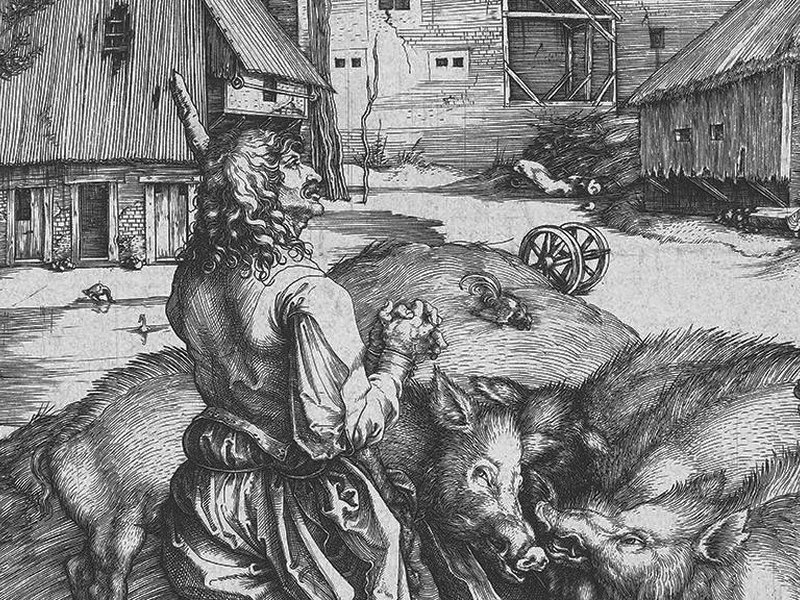
In the first essay on the parable of the Prodigal Son, I suggested that the problems commentators and others encounter in interpreting Jesus three-part parable are not accidental. These are not just problems in our ignorance of cultural background. They are intentional features of the stories —stories designed to poke…

by Ralph Allan SmithJuly 11, 2019
durer-prodigal-son-2
Luke

Perspectives on the Prodigal, (Part 1)

The story of the Prodigal Son is perhaps the most well-known story in the Bible. As others have observed, it may also be one of the most misunderstood. In two short essays, I will point out features of this story that are commonly neglected, aspects of Jesus’ parable that might…

by Ralph Allan SmithJuly 9, 2019
de-rijke-man-en-de-arme-lazarus-by-jacopo-da-ponte-16th-century
Luke

Lazarus and the Rich Man

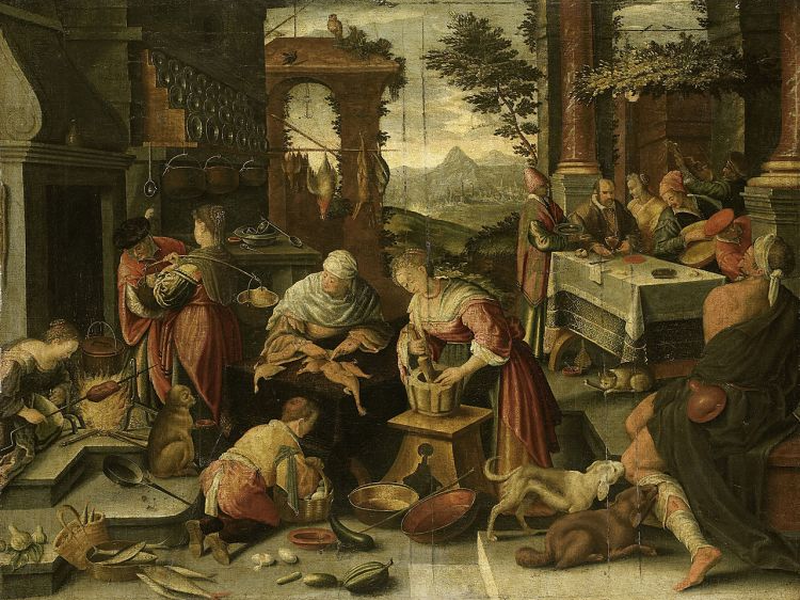
The parable of Lazarus and the nameless rich man is not an independent story. It is part of a long context that begins in Luke 15:1, where Jesus is eating with tax collectors and sinners and the scribes and Pharisees grumble. In response to their hardheartedness, Jesus tells a three-part…

by Ralph Allan SmithJuly 4, 2019
aaron-burden-uynrnfdkjwg-unsplash
Luke

Everybody has Dropsy - Luke 14:1-24

The Bible is written so that even when a reader cannot pick up on what might be deeper or more detailed aspects of a text, there is virtually always a message to be heard. In the ancient world, where the “reader” of Scripture would likely be a church official facing…

by Ralph Allan SmithJuly 2, 2019
communion
Biblical Theology

Fruit Trees and Grain Plants

The distinction between garden (or vineyard) and field begins in Genesis 2. This relates to the ordering of the formless world. Plants of the field are contrasted with the garden planted by God in Genesis 2:5&8. Later on, under the Old Covenant the Israelites will be required to keep their…

by James B. JordanJune 27, 2019

Showing page 77 of 309

See all

Showing page 16 of 43

See all

Abominable Commerce

Balances were essential to commerce in ancient Israel, weighing not only commodities to be bought and sold but in some cases weighing the gold and silver that served as the medium of exchange. A merchant could cheat customers by adjusting the scales to his advantage. According to Proverbs 11:1, such…

January 21, 2015

Why Conserve?

“Do not move an ancient landmark,” Solomon says in Proverbs 23:10. Just what a king would say: Kings want to keep things just as they are, and convince everyone that they have always been so, so long as they can sit on top of the heap. But the sequel of…

January 21, 2015

Political Augustinianism

Michael Bruno’s Political Augustinianism is a thorough examination of recent interpretations of Augustine’s political thought, starting with French scholars like H.I. Marrou and H. X. Arquillière, whose 1933 L’Augustinianisme Politique set the terms for much subsequent discussion, through the realist uses of Augustine in Niebuhr and the “secularist” interpretation of…

January 21, 2015

Unfulfilled Promises

George Friedman has written that the promise of the European union was not merely prosperity and peace, but joy: “the joy of joining men into a single brotherhood, overcoming the divisions of mere custom.” But here’s the rub: Europeans have to be willing to share the same fate if they…

January 21, 2015

Empty Ideas

The TLS reviewer of Peter Unger’s Empty Ideas is not much impressed with Unger’s critique of analytic philosophy. According to Unger, “Contemporary analytic metaphysicians see themselves as theorizing boldly and systematically about the deepest and most general nature of reality. In Peter Unger’s view, they are deluded: far from resuming…

January 20, 2015
Liturgy

Revelatory Liturgy

Philip Caldwell’s Liturgy As Revelation is a successful book on several levels. Caldwell fills out recent accounts of twentieth-century Catholicism by attending to some lesser-known figures associated in various ways with the nouvelle theologie : Rene Latourelle, Salvatore Marsili, Gustave Martelet, and, a later figure, Avery Dulles. Caldwell’s analyses of…

January 20, 2015

Showing page 474 of 2212

Browse by Category

In Medias Res

Your weekly digest for all things Theopolis.

Donate

Theopolis is nearly 100% donor-supported. Consider joining us on our mission.