Theopolis Logo

Writing

Explore our collection of theological essays, biblical studies, and reflections on faith and culture.

See all
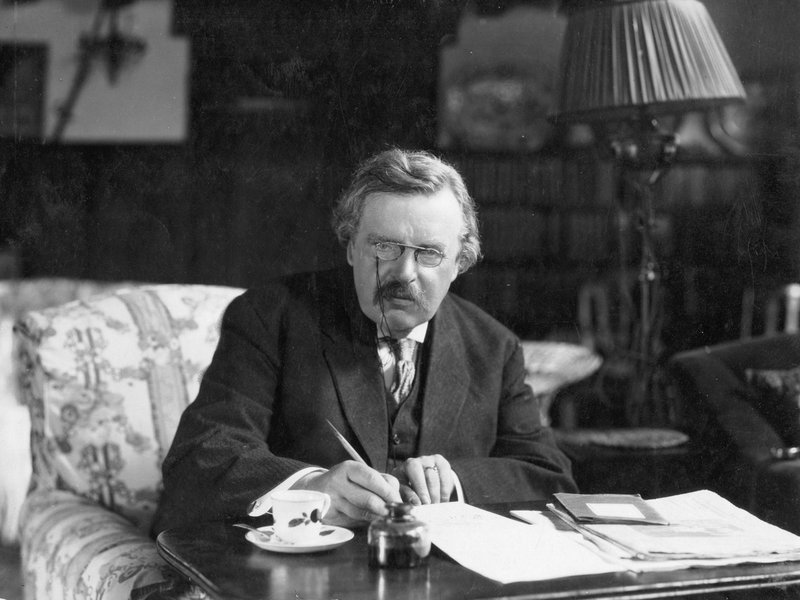
g-_k-_chesterton_at_work
Books

Interpreting "The Man Who Was Thursday"

I just finished re-reading G. K. Chesterton’s The Man Who Was Thursday . I have in the past had the temerity to say that I believe it to be the best novel of the 20th century. Be that as it may, I still maintain that it is at least one…

by Richard BledsoeJanuary 7, 2022
10779-istockgetty-images-plusredletterw
Hebrews

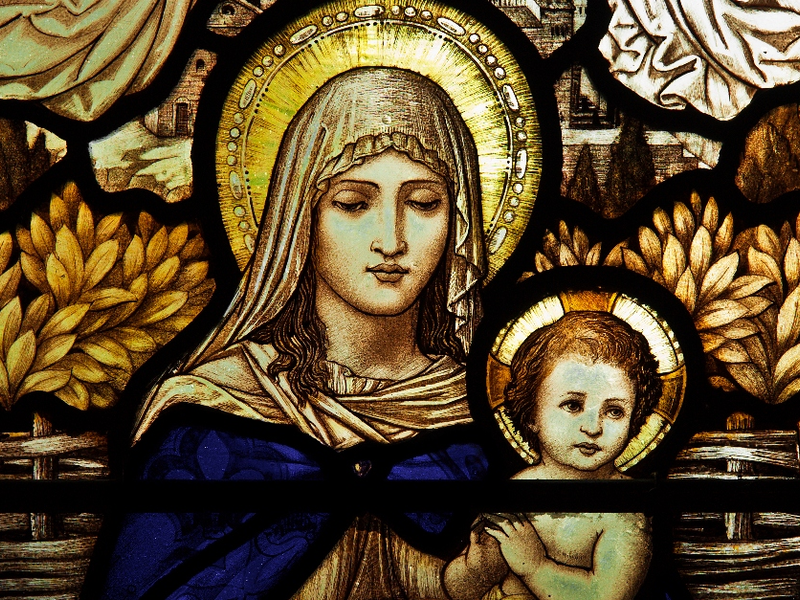
The Universality of Mary’s Wound

And Simeon blessed them and said to Mary his mother, “Behold, this child is set for the fall and rising of many in Israel, and for a sign that is spoken against and a sword will pierce through your own soul also, that thoughts out of many hearts may be…

by Garrett SoucyJanuary 4, 2022
heartierhymnals-stockimage
Music

An Argument for Heartier Hymnals

I was inspired to write this article after reading John Ahern’s The Case for Shorter Hymnals first published on Theopolis Institute’s website on November 16, 2021. Mr. Ahern and I are writing with different audiences and emphases in mind. I am thankful we both share a mutual desire to see…

by Jarrod RicheyDecember 30, 2021
tim-marshall-k2u71wv2ei4-unsplash-1
Biblical Studies

Image of God

If you’ve spent any time in the social-media galaxy of Christian cultural commentators, you have almost definitely run across the Latin phrase Imago Dei . It means image of God . Why they usually say it in Latin, I couldn’t tell you. We saw it in the wake of the…

by Daniel HoffmanDecember 28, 2021
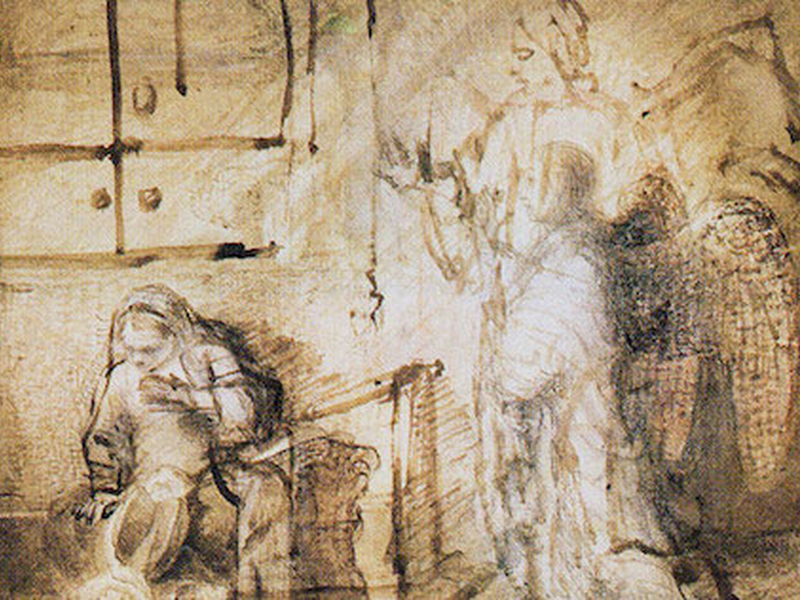
annunciation
Advent

He Comes to Make His Blessings Known: "Son of David" and "Son of Abraham" in Matthew 1:1

The Gospel of Matthew—indeed, the New Testament—begins with a list of names, and that list of names is introduced by this heading: “The book of the generations of Jesus Christ, the son of David, the son of Abraham.” Why start like this? Why “the son of David” and “the son…

by Josh JensenDecember 23, 2021
49980-nicolas_poussin_-_the_judgment_of_solomon_-_wga18330-800w-tn
Biblical Studies

On Not Needing to Cut the Baby in Half

A blade is raised. A child wails. But the brow under the crown is untroubled. Solomon knows that the raising of the sword will reveal the true parent and the identity of the son. But how did he know this? Abraham’s willingness to sacrifice Isaac certainly bears some of the…

by Jonathan WhiteDecember 21, 2021

Showing page 48 of 309

See all

Showing page 17 of 43

See all

Dante's Journey

In the course of a review of Vittorio Montemaggi's Reading Dante's Commedia as Theology , Rowan Williams offers these observations on Inferno and Purgatorio : "There is still a tendency among not very attentive readers – not to mention people who have read almost nothing of the work but have…

September 29, 2017
kelly-sikkema-ggs0_g6wi-i-unsplash
Liturgy

The World Needs the Liturgy

"God's work in history," writes Mark Searle ( Liturgy Made Simple ), "is to gather into one the scattered children of God, to overcome divisions, to provide a place for the homeless and the lonely, to give support to those whose burdens are heavy, and to create an oasis of…

September 29, 2017

Christian Historicism

John Milbank argues in his Beyond Secular Order that " historicism cannot straightforwardly be considered as something specifically modern" (8). In fact, it originates from a Christian insight: "the sense of estranged distance from the past is initially the fruit of the Christian contrast between old and new covenants and…

September 29, 2017

No Thucydides Trap

Last week, I wrote a Firstthings.com column summarizing the argument of Graham Allison's Destined for War , a study of Sino-American relations organized around the concept of the "Thucydides Trap." Allison says that the ancient Greek historian claimed that Athens and Sparta went to war because Sparta was fearful of…

September 29, 2017
Eucharist

Bodies Renewed by Christ's Body

Christine Chaillot has a fascinating summary of the liturgical traditions of the "Ancient Oriental Churches" (Egyptian, Ethiopian, Syrian, Assyrian, Indian) in The Oxford History of Christian Worship . She quotes this Eucharistic hymn from the fifth-century Saint Yazdin (p. 164): "Strengthen, O our Lord, the hands which reach out and…

September 29, 2017

Do Human Beings Create?

In ST I, 45, 5, Thomas Aquinas asks whether God alone creates. His sed contra cites Augustine’s de Trinitate (3.8), where Augustine says that angels cannot create anything. If angels cannot, Thomas reasons, neither can any other creature. He presents several arguments in favor of this conclusion. Creation is, Thomas…

September 28, 2017

Showing page 139 of 2212

Browse by Category

In Medias Res

Your weekly digest for all things Theopolis.

Donate

Theopolis is nearly 100% donor-supported. Consider joining us on our mission.