Theopolis Logo

Writing

Explore our collection of theological essays, biblical studies, and reflections on faith and culture.

See all
sixteen-miles-out-al48tflf4e8-unsplash
Food

Gluttony In The Bible (As Opposed To Gluttony In The American Church)

In the Bible, fatness is such a blessing, that it is especially hard to understand why wicked men are permitted to enjoy such a state. It requires a theodicy and faith in God. Thus: “For they have no pangs until death; their bodies are fat and sleek . They are…

by Mark HorneAugust 12, 2013

jeremy-yap-j39x2xx_8cq-unsplash
How to Worship

Biblical Worship (Video with James B. Jordan)

[fve]http://vimeo.com/71901553[/fve]

by Peter LeithartAugust 8, 2013
chris-bair-ndczc5739ck-unsplash
Deuteronomy

Holy Things for Holy People

The allusion to the Exodus story is contained in the first words of Deuteronomy 14:1 — “ye are the sons of Yahweh your God” — as well as in 14:2 in the use of the technical term translated “treasured possession,” “His own possession,” “peculiar people,” “precious people,” and so forth.…

by Ralph Allan SmithAugust 5, 2013
adam-and-eve-in-the-garden-of-eden-wenzel-peter
Deuteronomy

Forbidden Foods

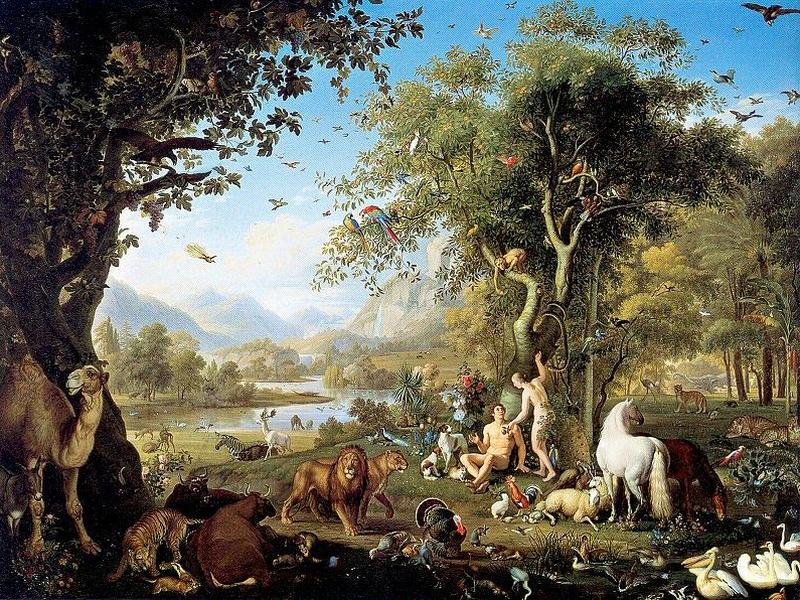
I have argued that Deuteronomy 14:1-21 is an independent literary unit that applies the Third Word to the lives of Israelites from the time of Moses and Joshua. In this short pericope, Moses suggests broad and deep meaning by means of literary allusion to the stories of the creation and…

by Ralph Allan SmithJuly 31, 2013
david-weber-fwuo_zluhnw-unsplash
How to Worship

Pro-Sacramental Reformation

In his recently republished The New Creation , the late, delightful Herbert McCabe defends the priesthood of the plebs as roundly as anyone could want. Citing Hebrews, he claims that "there is an essential difference between the Christian community and the community of the Old Law, or any other religious…

by Peter LeithartJuly 29, 2013
eric-ward-7kqe_8meex8-unsplash
Augustine

Sexual Idolatry

Augustine famously prayed, “Our hearts our restless until they rest in You.” True indeed. Being creatures, we inherently sense our ontological poverty—our innate condition of dependence—and are compelled to find a sense of security. And it is also true—as Augustine’s own narrative painfully illustrates—that one of the things we most…

by Gerald HiestandJuly 24, 2013

Showing page 190 of 309

See all

Showing page 17 of 43

See all
History

Barnum’s opera

Levine: “In 1853 Putnam’s Magazine had proposed that P. T. Barnum . . . be named the manager of New York’s Opera. ‘He understands what our public wants, and how to gratify that want. He has no foreign antecedents. He is not bullied by the remembrance that they manage so…

October 17, 2006
History

Barnum’s opera

Levine: “In 1853 Putnam’s Magazine had proposed that P. T. Barnum . . . be named the manager of New York’s Opera. ‘He understands what our public wants, and how to gratify that want. He has no foreign antecedents. He is not bullied by the remembrance that they manage so…

October 17, 2006
History

Popular opera

In his Highbrow/Lowbrow , Lawrence Levine writes that “it is hard to exaggerate the ubiquity of operatic music in nineteenth-century America. In 1861 a band played music from Rigoletto to accompany the inauguration of President Lincoln. In the midst of the Civil War a soldier in the Twenty-fourth Massachusetts Volunteer…

October 17, 2006

Musical and Poetic Rhythms

Victor Zuckerkandl points out that Western music since the 17th century has been measured music, that is, music in which beats are organized into groups, into measures. This innovation in musical organization creates a complex rhythmic situation. At one level, there is a recognizable beat running through a piece of…

October 17, 2006
Theology

Art and Necessity

Some quite random highlights from Milbank’s very rich essay review of Rowan Williams’s Art and Necessity , published in Modern Theology . 1) Milbank makes a numerb of illuminating points about Aquinas’s theory of knowledge, supporting some aspects of Maritain’s Thomism. Instead of addressing the strictly “epistemological” question of how…

October 16, 2006

Sermon outline

This overlaps considerably with previous posts. INTRODUCTION According to John’s description, the world is formed by various “lusts” or desires, and by “pride” and “boasting.” We can respond faithfully to the world only when we discern the desires that shape the world and the desires and boasting provoked by the…

October 16, 2006

Showing page 1775 of 2212

Browse by Category

In Medias Res

Your weekly digest for all things Theopolis.

Donate

Theopolis is nearly 100% donor-supported. Consider joining us on our mission.