
Theopolis Logo

Writing

Explore our collection of theological essays, biblical studies, and reflections on faith and culture.

See all
giammarco-zeh-ljawhtg-unsplash
Biblical Horizons

OPEN BOOK: Views and Reviews

Isaac E. Mozeson, The Word: The Dictionary that Reveals the Hebrew Sources of English (Northvale, NJ: Jacob Aaronson Inc., 1995), 310 pp. Reviewed by James B. Jordan. Once there was only one language in the world, the language God spoke to Adam. At the Tower of Babel, there came to…

by James B. JordanJune 28, 1996
tim-wildsmith-j6jv-mkdzqs-unsplash
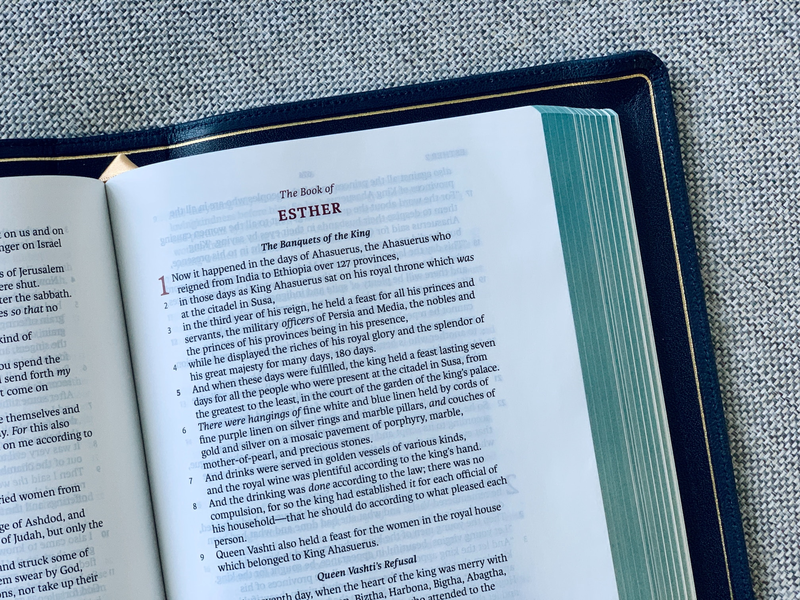
Esther

Esther: Historical & Chronological Comments (IV)

2. The Setting of the Book of Esther A. Xerxes (continued from previous issue) Ezra 6:14 says that the Jews finished building "according to the command of the God of Israel and the decree of Cyrus and Darius and Artaxerxes king of Persia." The problem with this verse is that…

by James B. JordanJune 28, 1996

ales-krivec-4mibe6zg5r0-unsplash
Acts

Jesus and Amalek

This essay goes with our previous study of the Amalek pattern back in Biblical Horizons No. 2. Since many do not have this essay, entitled "The Battle of Gog and Magog," let me cite the relevant paragraphs: Note in Genesis 12-15 that Abram moves into the land after escaping Pharaoh…

by James B. JordanJune 28, 1996

aaron-burden-1ebsmyrau-s-unsplash
Proverbs

The Strange Woman

Proverbs 7:6-23 is one of several passages early in the Proverbs in which Solomon warns his son about the wiles and dangers of the "strange woman." It is certainly quite proper to take these as straightforward warnings against sexual sins, and these are certainly warnings that need to be impressed…

by Peter LeithartJune 27, 1996
jan-kahanek-g3o5ztrk2e4-unsplash
Biblical Studies

Some Observations

1. In Luke 4:20 we read that after Jesus finished reading from Isaiah, "the eyes of all in the synagogue were fixed upon Him." This is usually taken in a psychological sense: They were amazed at Jesus somehow. I suggest that, as always, a merely psychological reading is a modern…

by James B. JordanMay 28, 1996
tim-wildsmith-j6jv-mkdzqs-unsplash
Esther

Esther: Historical & Chronological Comments (III)

2. The Setting of the Book of Esther Up to now we have assumed what we must prove, that the king in Esther is Darius the Great. While Biblical chronologists have usually taken this position, commentators on the book of Esther have often taken others as the king. One view,…

by James B. JordanMay 28, 1996

Showing page 265 of 309

See all

Showing page 17 of 43

See all
History

Pentecostalism

Philip Jenkins’ The Next Christendom is packed with stimulating historical insights. But this is one of the most striking: Most ?listings of major trends of the past century?Ehave ?rightly devoted much space to political movements like fascism and communism, but ignored vital religious currents like Pentecostalism. Yet today, Fascists or…

May 14, 2005

Fenrir’s bonds

The Edda records: “The unbreakable fetters which bound down the Great Wolf Fenrir had been cunningly forged by Loki from these: the footfall of a cat, the roots of a rock, the beard of a woman, the breath of a fish, the spittle of a bird.” Who knows what that…

May 13, 2005

Fenrir’s bonds

The Edda records: “The unbreakable fetters which bound down the Great Wolf Fenrir had been cunningly forged by Loki from these: the footfall of a cat, the roots of a rock, the beard of a woman, the breath of a fish, the spittle of a bird.” Who knows what that…

May 13, 2005
Philosophy

Literary Wittgenstein

Terry Eagleton reviews a new book on The Literary Wittgenstein (edited by John Gibson and Wolfgang Huemer) in the April 29 issue of the TLS. There are a number of highlights: 1) Eagleton sets Wittgenstein firmly in the glitzy, kitchy world of Vienna. “The place,” he writes, “was a cockpit…

May 13, 2005

Justification and eschatology

The notion of a “future justification” has come under criticism from some Reformed writers, though the idea has a fairly established place in Reformed thought (beginning at least with Vos). The opposition to the idea suggests that some Reformed soteriology is eschatologically schizophrenic. Consider: It seems clear that adoption is…

May 12, 2005
Theology

Infra/Supra and Narrative theology

Awhile back, I suggested some reasons for leaning toward supralapsarianism. Here’s some more: Infra seems to lack an eschatology. Creation is made, the fall is decreed, and then salvation is seen as a rescue from the fall. In supra, creation is never considered apart from a consummation. Salvation is not…

May 10, 2005

Showing page 1981 of 2212

Browse by Category

In Medias Res

Your weekly digest for all things Theopolis.

Donate

Theopolis is nearly 100% donor-supported. Consider joining us on our mission.