Theopolis Logo

Writing

Explore our collection of theological essays, biblical studies, and reflections on faith and culture.

See all
sinitta-leunen-dvibhmzsy8e-unsplash
Epistemology

A Cheer for the Mystics

Mystical theologians are often unguarded, extreme, un-nuanced, pressing to the edges of heresy, sometimes beyond. Still, the mystics are worthy of study. Why? Many reasons. Unlike some late medieval and post-Reformation dogmaticians, mystical theologians are often instinctively and richly Trinitarian. Historical-critical approaches to Scripture left mystical theologians virtually untouched; mystics…

by Peter LeithartSeptember 2, 2013
portrait-of-william-shakespeare-1564-1616-ca-1865
Literature

Shadow and Substance in Shakespeare's Venice

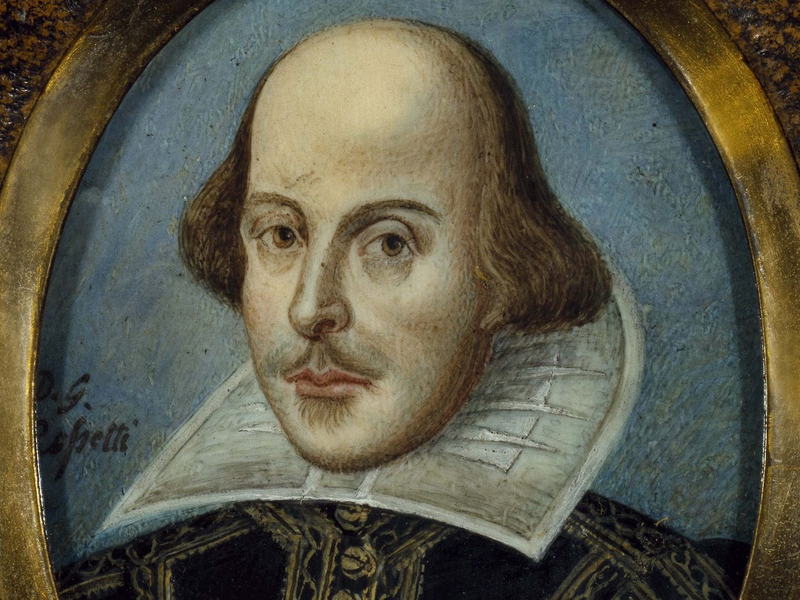
Portia of Belmont is a “lady richly left,” as Bassanio says of her in the first Act of The Merchant of Venice . Plus, she’s beautiful and wise. Suitors clamber to Belmont in hope. Her father knew it would be so, and in his will set up a fairy-tale test…

by Peter LeithartAugust 28, 2013
carlo-alberto-burato-smdx3gleu_m-unsplash
Liturgy

Liturgy Traps

[fve]http://vimeo.com/72195198[/fve]

by James B. JordanAugust 26, 2013
screen-shot-2022-05-12-at-12-07-23-pm
Deuteronomy

Victory Food

In the nature of the case, “the” Christian meditation on Deuteronomy 14:1-21 cannot be written. Meditation offers too many possibilities, opens too many doors. There is not one and only one correct set of associations for a Christian to consider when thinking of Deuteronomy 14:1-21. We could, for example, consider…

by Ralph Allan SmithAugust 21, 2013
aaron-burden-1ebsmyrau-s-unsplash
Romans

David's Sin and Israel's Salvation, Part I

Having retold the story of the cumulative sin of Israel leading to the great atonement on the cross, Paul then reemphasizes that, just as both Jew and Gentiles were locked into sin and judgment, now they are both justified by faith: Then what becomes of our boasting? It is excluded.…

by Mark HorneAugust 20, 2013
ben-white-w8qqn1pmqh0-unsplash
Deuteronomy

You are what you eat

Deuteronomy 14 is full of allusions to events of Israel’s history and other portions of Scripture. What would an Israelite learn by mediation on these allusions? The answer, I believe, is at least fourfold. Faith, Worship, War For the ancient Israelite first hearing Moses’ sermon, or perhaps hearing it read…

by Ralph Allan SmithAugust 15, 2013

Showing page 189 of 309

See all

Showing page 17 of 43

See all
Philosophy

Cinematic perception and Zeno’s arrow

Henri Bergson attempted to solve the paradox of Zeno’s arrow (which can never cover the infinite points between the bow and the target, and yet does) by calling attention to the implicit spatialization of time within the paradox. The space in which movement takes place is divisible, but the duration…

May 5, 2005
Philosophy

Cinematic perception and Zeno’s arrow

Henri Bergson attempted to solve the paradox of Zeno’s arrow (which can never cover the infinite points between the bow and the target, and yet does) by calling attention to the implicit spatialization of time within the paradox. The space in which movement takes place is divisible, but the duration…

May 5, 2005

Romans 8, continued

INTRODUCTION Paul is talking about the liberation of creation from bondage to decay and corruption into freedom. This raises the question of the time frame for the fulfillment of this prophecy. It is normally taken as a reference to the end of the world. The ?redemption of the body?E(v. 23)…

May 5, 2005

Osiander and the Reformed Tradition

Julie Canlis has a helpful article on Calvin’s response to Osiander in the International Journal of Systematic Theology (6:2 [2004]). A few points are worth highlighting: 1) She sees the response to Osiander as part of the reason why Reformed theologians tend to be skittish about talk of “participation.” Calvin,…

May 5, 2005

Justification and Reformation

In two older articles, Alister McGrath examines the sources for the Reformation doctrine of justification, covering ground also covered in his 2-volume Iustitia Dei. The first article, published in the Harvard Theological Review in 1982 (75:2, pp. 219-242) examines the evidence for claiming that the Reformation doctrine of justification was…

May 4, 2005
Theology

More on Hart, The Beauty of the Infinite

Covenant of Light. This section concludes Part I of The Beauty of the Infinite , entitled ?Dionysus Against the Crucified.?E With this section, Hart concludes his critique of classical, modern and postmodern thought, and the outlines of the Christian ontology that interrupted the history of metaphysics and that he develops…

May 4, 2005

Showing page 1984 of 2212

Browse by Category

In Medias Res

Your weekly digest for all things Theopolis.

Donate

Theopolis is nearly 100% donor-supported. Consider joining us on our mission.