Theopolis Logo

Writing

Explore our collection of theological essays, biblical studies, and reflections on faith and culture.

See all
screen-shot-2022-08-04-at-9-36-57-am
Matthew

Paul Doesn't Care About Universal Individual Sinfulness or General Revelation

One reason readers assume Paul is trying to prove that all human beings are sinful is that they understand him to be arguing that no one can keep the law. That means, they think, his opponents must believe that human nature is potentially sinless. Taking Paul’s statement that, if you…

by Mark HorneJune 17, 2013

karsten-wurth-imegmbunara-unsplash
Mission

Dreams and Visions

[Note: This post was written prior to our name changing to Theopolis Institute.] What is Trinity House for? Three things: We aim to advance the reformation of the church and, through the church, to promote the renewal of culture; in furthering reformation, we aspire to be a site of fraternal,…

by Peter LeithartJune 12, 2013
sixteen-miles-out-al48tflf4e8-unsplash
Deuteronomy

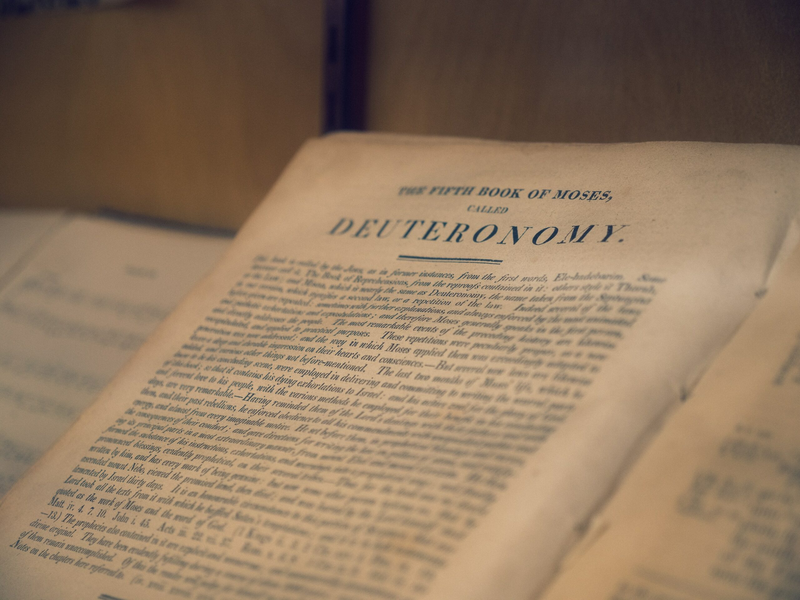
Sons to Yahweh your God!

This is the third in a series of studies of the Third Word, and especially of Deuteronomy 14. In 1979 Stephen Kaufman penned a groundbreaking essay on Deuteronomy, arguing that it was a meticulously structured and carefully composed book. In his view, chapters 12 to 26 in particular follow the…

by Ralph Allan SmithJune 10, 2013
kelly-sikkema-gpoh17dxqdm-unsplash
Romans

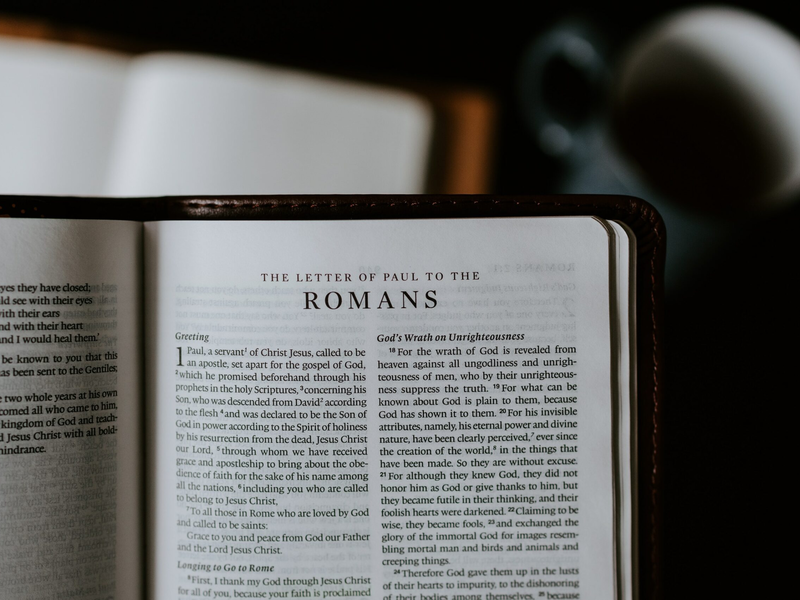
How is Wrath Revealed?

A large mistake is made in understanding Romans if one assumes that Paul is concerned with proving the fact that no one can ever live without sin—or that all attempts at obeying God’s commands are at least tainted with human sinfulness. The first problem with such an assumption is that…

by Mark HorneJune 5, 2013
chris-bair-ndczc5739ck-unsplash
Deuteronomy

The Third Word

This is the second in a series of studies on the Third Word, and especially on the food laws of Deuteronomy 14. In the second part of this series, I argue that Moses’ reworking of the Ten Words in Deuteronomy 5 includes adding nuance to the Third Word. This prepares…

by Ralph Allan SmithJune 3, 2013
yannis-papanastasopoulos-if_29sed7ta-unsplash
Culture

Turning Babel into a Beast

Recent months have brought a lively discussion of Christian participation in the culture war. On the one hand, the pro-life movement appears to be making some slow progress on the abortion issue. The trial of abortionist and serial murderer Kermit Gosnell has the potential to awaken those who are nominally…

by Joe RigneyMay 29, 2013

Showing page 193 of 309

See all

Showing page 17 of 43

See all

Guilt and Guilt-Bearing

B rad Littlejohn presents a number of criticisms of my account of penal substitution in Delivered from the Elements of the World . I won’t attempt to address all of them, but focus—at once too briefly and at tedious length—on Brad’s central substantive question, which concerns guilt and Jesus’ guilt-bearing.…

September 20, 2016

Atomizing and Abstraction

I ’ve been reading commentaries on Revelation 1:12–20, learning a great deal, but getting increasingly frustrated. Even the best commentators sometimes fall into the twin faults of contemporary interpretation—atomization and abstraction. Let’s take the “robe” that Jesus wears. Many have suggested that the robe designates Jesus as a priest, but…

September 20, 2016

Beyond Language?

I n his Anchor Bible commentary on Revelation , Craig Koester says this about John's initial vision of Jesus: “ The figure’s appearance defies easy description: hair that is white like wool or snow, eyes like a flame of fire, a voice like rushing water, a face like the sun.…

September 19, 2016

Macbeth’s Three Murders

I n a contribution to Harold Bloom’s collection of essays on Macbeth , Robert Lanier Reid observes that ” Interpreters of Macbeth have focused almost exclusively on the first murder, the killing of a king in Acts 1–2, as the basis for understanding the play—its social, psychological, and metaphysical meanings.…

September 16, 2016

Motiveless Malignity

“W hat purpose do the Weird Sisters have for confronting the hero—or what is their masters’ purpose, if they in fact have such masters?” asks Susan Snyder in her contribution to Macbeth . She doesn’t think the play gives a clear answer, and she adds that the play doesn’t explain…

September 16, 2016

Macbeth and the Bible

P eter Milward writes of “meta-drama” in Hamlet and Macbeth in his contribution Shakespeare’s Christianity . He argues (unconvincingly) that Shakespeare had in mind the situation of recusant Catholics in England. Milward’s analysis of the biblical features of the play is more compelling. He notes that “already from the opening…

September 16, 2016

Showing page 252 of 2212

Browse by Category

In Medias Res

Your weekly digest for all things Theopolis.

Donate

Theopolis is nearly 100% donor-supported. Consider joining us on our mission.