
Theopolis Logo

Writing

Explore our collection of theological essays, biblical studies, and reflections on faith and culture.

See all
giammarco-zeh-ljawhtg-unsplash
Biblical Horizons

OPEN BOOK: Views and Reviews

Isaac E. Mozeson, The Word: The Dictionary that Reveals the Hebrew Sources of English (Northvale, NJ: Jacob Aaronson Inc., 1995), 310 pp. Reviewed by James B. Jordan. Once there was only one language in the world, the language God spoke to Adam. At the Tower of Babel, there came to…

by James B. JordanJune 28, 1996
tim-wildsmith-j6jv-mkdzqs-unsplash
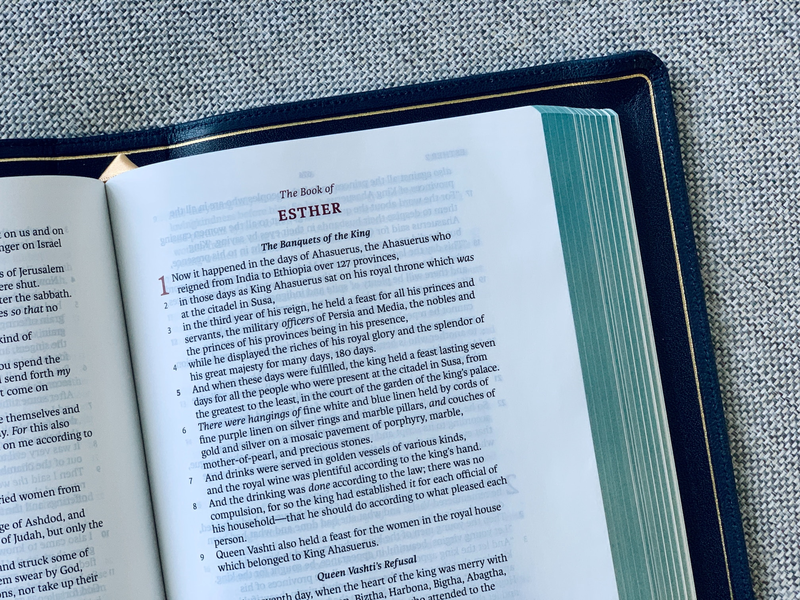
Esther

Esther: Historical & Chronological Comments (IV)

2. The Setting of the Book of Esther A. Xerxes (continued from previous issue) Ezra 6:14 says that the Jews finished building "according to the command of the God of Israel and the decree of Cyrus and Darius and Artaxerxes king of Persia." The problem with this verse is that…

by James B. JordanJune 28, 1996

ales-krivec-4mibe6zg5r0-unsplash
Acts

Jesus and Amalek

This essay goes with our previous study of the Amalek pattern back in Biblical Horizons No. 2. Since many do not have this essay, entitled "The Battle of Gog and Magog," let me cite the relevant paragraphs: Note in Genesis 12-15 that Abram moves into the land after escaping Pharaoh…

by James B. JordanJune 28, 1996

aaron-burden-1ebsmyrau-s-unsplash
Proverbs

The Strange Woman

Proverbs 7:6-23 is one of several passages early in the Proverbs in which Solomon warns his son about the wiles and dangers of the "strange woman." It is certainly quite proper to take these as straightforward warnings against sexual sins, and these are certainly warnings that need to be impressed…

by Peter LeithartJune 27, 1996
jan-kahanek-g3o5ztrk2e4-unsplash
Biblical Studies

Some Observations

1. In Luke 4:20 we read that after Jesus finished reading from Isaiah, "the eyes of all in the synagogue were fixed upon Him." This is usually taken in a psychological sense: They were amazed at Jesus somehow. I suggest that, as always, a merely psychological reading is a modern…

by James B. JordanMay 28, 1996
tim-wildsmith-j6jv-mkdzqs-unsplash
Esther

Esther: Historical & Chronological Comments (III)

2. The Setting of the Book of Esther Up to now we have assumed what we must prove, that the king in Esther is Darius the Great. While Biblical chronologists have usually taken this position, commentators on the book of Esther have often taken others as the king. One view,…

by James B. JordanMay 28, 1996

Showing page 265 of 309

See all

Showing page 17 of 43

See all

Belief in the Academy

In a spirited reply to Philip Davies' Whose Bible Is It Anyway? , Francis Watson takes aim at Davies “call for a strict separation between theological and academic modes of biblical interpretation” (3). Davies complains that believers study the Bible according to an insider approach (emic), while academic scholarship requires…

October 16, 2015
Jane Austen

Austen's Silent Characters

Jane Austen “did things with characerisation, with dialogue, with English sentences, that had never been done before,” writes John Mullan in What Matters in Jane Austen? (p. 2). That she wrote novels is not surprising. That she wrote in such utter isolation is more so. That she wrote with such…

October 15, 2015

Infant Faith

According to Kimberly Hope Belcher ( Efficacious Engagement , 77), “Augustine seems to have been the first commentator on baptism to seriously consider whether the rites of initiation he knew, which were used for both adults and children, applied equally well to both.” He concluded that they did apply, and…

October 15, 2015

Philosophical Luther

Brian Gregor's A Philosophical Anthropology of the Cross isn't “a specifically Lutheran anthropology,” but Gregor does think Luther “demands philosophical attention.” Luther influenced Kant, Hegel, Kierkegaard, and Heidegger, and these influenced Ricoeur and Bonhoeffer. Post-Heideggerian Lutheran theology also, of course, bears the marks of Luther's influence (8-9). Gregor's book is…

October 15, 2015

Helping Without Hurting

Steve Corbett and Brian Fikkert's Helping Without Hurting in Church Benevolence is a handbook to help churches give aid to low-income people. It explains how to create a policy and philosophy of benevolence, how to build the church's capacity, and offers training scenarios, questionnaires and lots of lists. It truly…

October 15, 2015

Unthought Axiomatics

Derrida is old hat these days, but he's still a thinker worth wrestling with, worthy of better than the dismissal he often gets from some writers. His deconstructive techniques can be put into the service of theology. In his crucial essay, “Plato's Pharmacy” he offers what he describes as a…

October 14, 2015

Showing page 363 of 2212

Browse by Category

In Medias Res

Your weekly digest for all things Theopolis.

Donate

Theopolis is nearly 100% donor-supported. Consider joining us on our mission.