Theopolis Logo

Writing

Explore our collection of theological essays, biblical studies, and reflections on faith and culture.

See all
max-kukurudziak-qbc3zmxw0g8-unsplash
History

Report from Ukraine

We lost Crimea. That is very clear. Putin proved he was not lying when he said he would place women and children ahead of his soldiers to storm Ukrainian military bases. Russian soldiers did exactly that with women (some who volunteered and some who were forced). Russia now occupies all…

by San SanychMarch 28, 2014

screenshot-2023-09-21-at-3-59-23-pm
Church Calendar

God Gone Silent

Sound is an indicator of life and energy. “Sound signals the present use of power, since sound must be in active production to exist at all.” Things don’t have to be alive to make themselves visible, and “a primitive hunter can see, feel, smell, and taste an elephant when the…

by Peter LeithartMarch 26, 2014
web-lead-image_final_dostoevsky
Books

Dostoevsky the Liberal

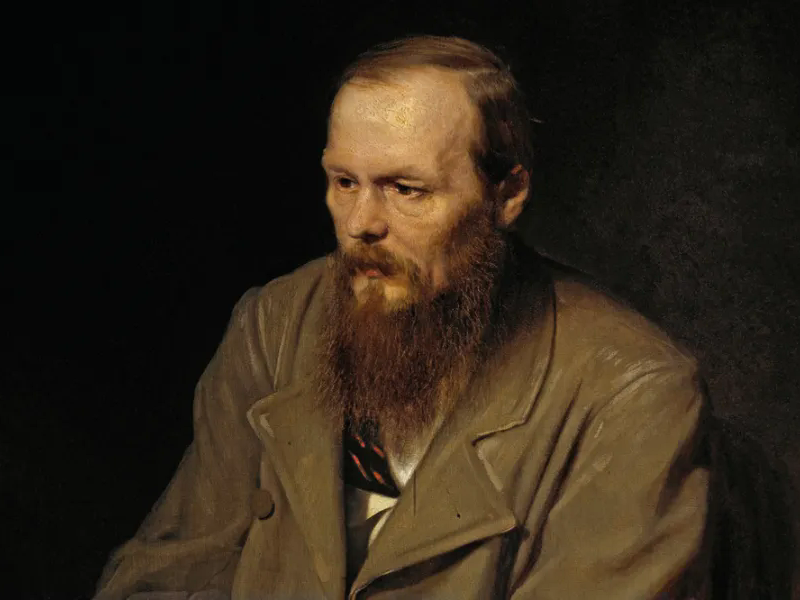
In the most famous section of his best-known novel, Dostoevsky’s Ivan Karamazov brings forward his case against God. He opens with a horrific litany of outrages against children. Turkish soldiers make a baby laugh and then shoot a pistol into his face. A little girl is beaten, thrashed, kicked by…

by Peter LeithartMarch 24, 2014
kelly-sikkema-ggs0_g6wi-i-unsplash
Epistemology

Subsidiary-Focal Integration and Liturgy

​At the heart of Esther Lightcap Meek's splendid ​Little Manual for Knowing is a concept she picked up from Michael Polanyi, "subsidiary-focal integration." The concept begins from the insight that all our knowing, all our experience, is double. We focus on something, but we are capable of "indwelling" that focal…

by Peter LeithartMarch 19, 2014
engin-akyurt-uz9qpvbol0e-unsplash
Revelation

White Stone

Jesus promises the overcomers of Pergamum "hidden manna" and a "white stone." The hidden manna is often linked with the manna stashed away in the ark of the covenant. The white stone has proved more elusive. Exodus tells us that manna was white (Exodus 16:31) and like bdellium (Numbers 11:7),…

by Peter LeithartMarch 17, 2014
226961fgsdl
Leviticus

A Theology of Festivity

Leviticus 23 begins with a reference to “Yahweh’s appointed times” ( mo’ade-YHWH ). Mo’ed is the common term for the feasts of Israel. A few dimensions to this term. First, it means “appointed time” or “designated time.” It is a time set by Yahweh. Yahweh has claimed certain times as…

by Peter LeithartMarch 12, 2014

Showing page 177 of 309

See all

Showing page 17 of 43

See all
Global Christianity

The Era of Christian Expansion

Protestants look back longingly to the Reformation as one of the great periods of church history, and it was in many respects. In terms of the global reach of Christianity, though, the sixteenth century was a low point. Since its beginning, Christianity has rarely been confined to so contracted an…

October 5, 2015

The One

Peter Adamson (P hilosophy in the Hellenistic and Roman Worlds ) claims that “A good case can be made for seeing Plotinus as the most in fluential Western philosopher of all time, apart from Plato and Aristotle themselves.” He fused Plato with some of Aristotle's ideas, added Stoic concepts, to…

October 5, 2015

Throne of the Beast

The fifth angel pours out his bowl on the “throne of the beast” (Revelation 16:10-110). There are a lot of beasts in Revelation. Which one is it? The fact that it is in the fifth slot gives us a clue. God created swarming things on earth and in the sea…

October 5, 2015

Mother in Israel

Deborah is the only female judge, and the only judge who does anything close to what we would recognizing as “judging.” She is a prophetess, and holds court sitting under a palm tree between Ramah and Bethel (Judges 4:5). She also does what the other Hebrew judges do - leads…

October 2, 2015
Philosophy

Autonomy or Theonomy

Peter Adamson finds some general trends in his forthcoming study of Philosophy in the Hellenistic and Roman Worlds . Hellenistic philosophy was broadly anti-Platonic, denying the existing of “immaterial entities” and devoted to physicalism. In one of his many moments of whimsy, Adamson suggests that the change is so sudden…

October 2, 2015

Egyptian Bees

The subtitle of Gene Kritsky's forthcoming Tears of Re is “Beekeeping in Ancient Egypt.” The linkage of deity, mourning, and beekeeping is too tantalizing to pass up. The title is based on a myth found in a papyrus from about 300 BC: “The god Re wept and the tears from…

October 2, 2015

Showing page 368 of 2212

Browse by Category

In Medias Res

Your weekly digest for all things Theopolis.

Donate

Theopolis is nearly 100% donor-supported. Consider joining us on our mission.