
Theopolis Logo

Writing

Explore our collection of theological essays, biblical studies, and reflections on faith and culture.

See all
giammarco-zeh-ljawhtg-unsplash
Biblical Horizons

OPEN BOOK: Views and Reviews

Isaac E. Mozeson, The Word: The Dictionary that Reveals the Hebrew Sources of English (Northvale, NJ: Jacob Aaronson Inc., 1995), 310 pp. Reviewed by James B. Jordan. Once there was only one language in the world, the language God spoke to Adam. At the Tower of Babel, there came to…

by James B. JordanJune 28, 1996
tim-wildsmith-j6jv-mkdzqs-unsplash
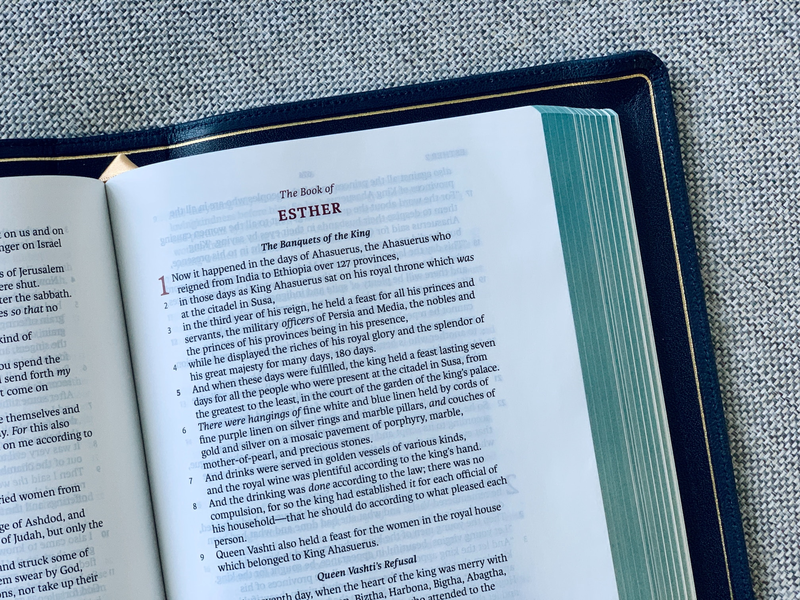
Esther

Esther: Historical & Chronological Comments (IV)

2. The Setting of the Book of Esther A. Xerxes (continued from previous issue) Ezra 6:14 says that the Jews finished building "according to the command of the God of Israel and the decree of Cyrus and Darius and Artaxerxes king of Persia." The problem with this verse is that…

by James B. JordanJune 28, 1996

ales-krivec-4mibe6zg5r0-unsplash
Acts

Jesus and Amalek

This essay goes with our previous study of the Amalek pattern back in Biblical Horizons No. 2. Since many do not have this essay, entitled "The Battle of Gog and Magog," let me cite the relevant paragraphs: Note in Genesis 12-15 that Abram moves into the land after escaping Pharaoh…

by James B. JordanJune 28, 1996

aaron-burden-1ebsmyrau-s-unsplash
Proverbs

The Strange Woman

Proverbs 7:6-23 is one of several passages early in the Proverbs in which Solomon warns his son about the wiles and dangers of the "strange woman." It is certainly quite proper to take these as straightforward warnings against sexual sins, and these are certainly warnings that need to be impressed…

by Peter LeithartJune 27, 1996
jan-kahanek-g3o5ztrk2e4-unsplash
Biblical Studies

Some Observations

1. In Luke 4:20 we read that after Jesus finished reading from Isaiah, "the eyes of all in the synagogue were fixed upon Him." This is usually taken in a psychological sense: They were amazed at Jesus somehow. I suggest that, as always, a merely psychological reading is a modern…

by James B. JordanMay 28, 1996
tim-wildsmith-j6jv-mkdzqs-unsplash
Esther

Esther: Historical & Chronological Comments (III)

2. The Setting of the Book of Esther Up to now we have assumed what we must prove, that the king in Esther is Darius the Great. While Biblical chronologists have usually taken this position, commentators on the book of Esther have often taken others as the king. One view,…

by James B. JordanMay 28, 1996

Showing page 265 of 309

See all

Showing page 17 of 43

See all

The Truth of Fiction

A fine statement from Iris Murdoch on the capacity of literature to seek and reveal truth: "I think that though they are so different, philosophy and literature are both truth-seeking and truth-revealing activities. They are cognitive activities, explanations. Literature, like other arts, involves exploration, classification, discrimination, organized vision. Of course…

February 9, 2018

Genealogy of Atheism

Gavin Hyman ( A Short History of Atheism ) doesn't think contemporary atheists are aware of the origins and cultural conditions of their own unfaith. They suffer from "a lack of awareness of atheism’s own origins, of the historical, philosophical and cultural matrix out of which it emerged, of its…

February 9, 2018

After Millman-Lord

In Literacy and Orality in Ancient Greece , Rosalind Thomas surveys the current state of Homeric studies. In the background is the Millman-Lord thesis that the epics are the product of oral improvisation. Thomas discerns two schools: “On the one hand, the formulaic theory of Parry and Lord is being…

February 9, 2018

Triune Worker

Thomas Schirrmacher ( God Want You to Learn, Labor, and Love ) outlines a Trinitarian conception of labor. Work, like all human activity, has its uncreated origin in God. We are able to work because we are made in the image of a God of labor: "In the Bible, man’s…

February 8, 2018

Is God an Object?

Robert Jenson addresses this perennial question ( Systematic Theology , 1.228-9) in a characteristically Jensonian fashion, by reminding us of the dynamics of discourse: "In all true mutual discourse . . . each must be both subject for and object of the other. As I am present to address you,…

February 8, 2018
Music

How the Church Lost Its Soundscape

The following was first published in 2011 at Firstthings.com . “By the twelfth century,” Christopher Page writes in his magisterial The Christian West and Its Singers (2010), “the Latin West could be imagined as a soundscape of Latin chant.” From the eighth-century alliance of Pope Stephen with the Frankish King…

February 7, 2018

Showing page 97 of 2212

Browse by Category

In Medias Res

Your weekly digest for all things Theopolis.

Donate

Theopolis is nearly 100% donor-supported. Consider joining us on our mission.