Theopolis Logo

Writing

Explore our collection of theological essays, biblical studies, and reflections on faith and culture.

See all
hebrew-manuscript-2
John

And the Holy of Holies Became Flesh

And the Word became flesh and tabernacled among us, and we beheld His glory...(John 1:14) Commentaries on John, discussing the Word or Logos in John 1, routinely turn to Greek philosophy and say that John is using a term and at least part of an idea familiar in the ancient…

by James B. JordanMarch 8, 2016

img_4660-2
Contentment

Defining Contentment

Jeremiah Burroughs defines contentment as “that sweet, inward, quiet, gracious frame of spirit, which freely submits to and delights in God’s wise and fatherly disposal in every condition” Contentment is one Christian virtue that Americans have an incredibly hard time understanding and applying. We have such comfortable lives that we…

by Lindsey TollefsonMarch 3, 2016
img_7652-2
Course Recap

Out of Exodus

"The goal I have for myself, my family, and my church is total bible saturation. I expected the Exodus Intensive class to help me with that, but I am shocked just how much it did," said Mark Balthrop, a pastor in Oklahoma City who attended Theopolis' recent course on the…

by Brian MoatsMarch 2, 2016
cross-2
Atonement

Gospel as Atonement Theory

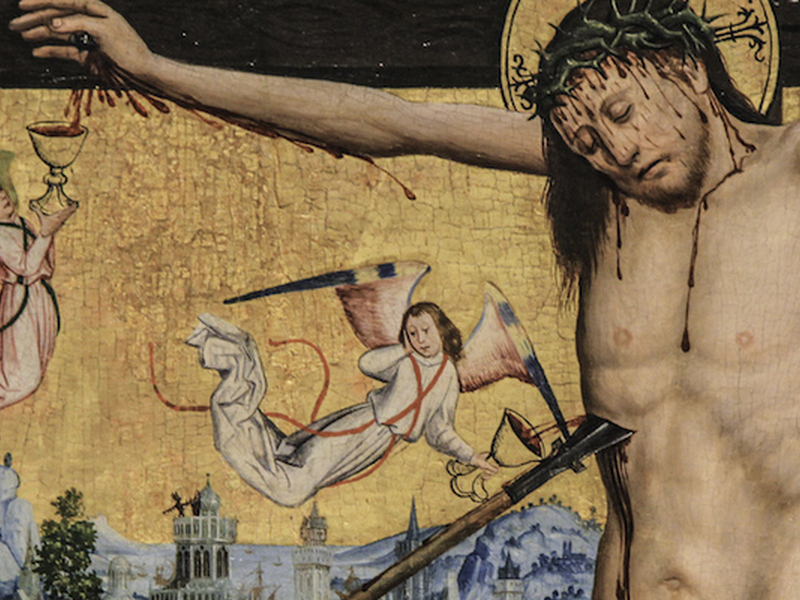
In a characteristically pithy essay, Robert Jenson has decried the “two paired errors” of traditional atonement theory. On the one hand, the cross is separated “from its future, in the resurrection” and, on the other, from “its past in the canonical history of Israel.” For the apostles, crucifixion is “anything…

by Peter LeithartMarch 1, 2016
sailing-shop-storm-crop
Biblical Theology

What is Systematic Typology? - Part One

The Historical-Grammatical Nanny State Typological interpretation is either abused or frowned upon, a domain relegated to mystics and charlatans, where the angels of modern academia fear to tread. But what if the Bible itself contained safeguards against irresponsible flights of fancy? And if it did, what would they look like?…

by Mike BullFebruary 25, 2016
sparkler
Contentment

Beginning Contentment

It is harsh advice for a suffering soul to be told to be content, to be happy, to be delighting in the rough circumstances. Is Christian contentment something we should automatically have as a result of being in Christ? Is it something we do? Is it an action or is…

by Lindsey TollefsonFebruary 23, 2016

Showing page 135 of 309

See all

Showing page 18 of 43

See all
History

Modernity of Postmodernism

Postmodern reading is characterized by a hermeneutics of suspicion, but in this postmodern critics are adopting a stance (sometimes quite consciously) rooted in Marxist and Freudian theory. Butler says, “in concentrating on the notion of hidden contradiction, many postmodernists allied themselves to two highly disputable, and certainly totalizing, 19th-century ideologies.”

August 9, 2006
History

On Getting it wrong

Butler argues that “many postmodern ideas” are “at best confused, and at worst simply untrue.” But he’s pretty sanguine about that: “the essential leading ideas of many cultural epochs are open to the same criticism” - he mentions the Romantic notion of Imagination or the fascination with mesmerism in medical…

August 9, 2006
History

Parochial Postmodernism

Butler points out that postmodernism’s claims that grand narratives are passe is very culturally specific, even parochial, and cannot be sustained as a sociological claim: “allegiances to large-scale, totalizing religious and naturalist beliefs are currently responsible for so much repression, violence, and war . . . . It is obvious…

August 9, 2006
History

Postmodern historiography

After reviewing some of the more radical proposals for a postmodern historiography, Christopher Butler, no friend to postmodernism, makes the sensible suggestion that “Postmodern relativism needn’t mean that anything goes, or that faction and fiction are the same as history. What it does mean is that we should be more…

August 9, 2006

Matthew’s genealogy

In his midrashic/lectionary treatment of Matthew, M. D. Goulder suggests that “The three fourteens are to a Jew who had read Daniel six weeks of generations; and if six, then looking forward to a seventh, to make a week of weeks . . . . This, then, is to be…

August 8, 2006

Matthew’s genealogy

In his midrashic/lectionary treatment of Matthew, M. D. Goulder suggests that “The three fourteens are to a Jew who had read Daniel six weeks of generations; and if six, then looking forward to a seventh, to make a week of weeks . . . . This, then, is to be…

August 8, 2006

Showing page 1816 of 2212

Browse by Category

In Medias Res

Your weekly digest for all things Theopolis.

Donate

Theopolis is nearly 100% donor-supported. Consider joining us on our mission.