Theopolis Logo

Writing

Explore our collection of theological essays, biblical studies, and reflections on faith and culture.

See all
tanner-mardis-xuxghzhibn4-unsplash-1-2
Biblical Studies

Tweets-turned-Notes on the Bible’s Chronology

Summary In what follows, I will consider the “year-stamps” employed in Scripture, i.e., statements of the form, “Such-and-such an event took place in the Xth year of Y.” In the process, I will suggest some ways in which the Biblical narrative might relate to events in the extra-Biblical world, though…

by James BejonJuly 16, 2019
durer-prodigal-son-2
Luke

Perspectives on the Prodigal, (Part 2)

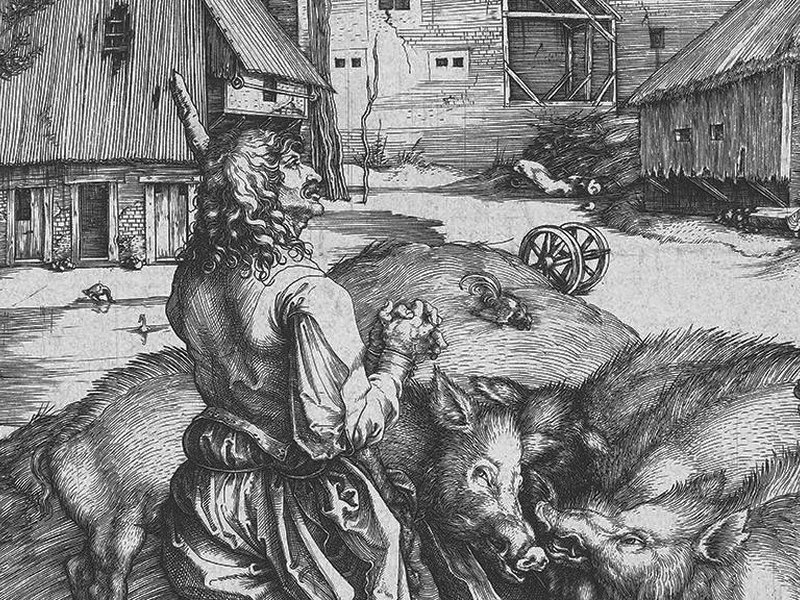
In the first essay on the parable of the Prodigal Son, I suggested that the problems commentators and others encounter in interpreting Jesus three-part parable are not accidental. These are not just problems in our ignorance of cultural background. They are intentional features of the stories —stories designed to poke…

by Ralph Allan SmithJuly 11, 2019
durer-prodigal-son-2
Luke

Perspectives on the Prodigal, (Part 1)

The story of the Prodigal Son is perhaps the most well-known story in the Bible. As others have observed, it may also be one of the most misunderstood. In two short essays, I will point out features of this story that are commonly neglected, aspects of Jesus’ parable that might…

by Ralph Allan SmithJuly 9, 2019
de-rijke-man-en-de-arme-lazarus-by-jacopo-da-ponte-16th-century
Luke

Lazarus and the Rich Man

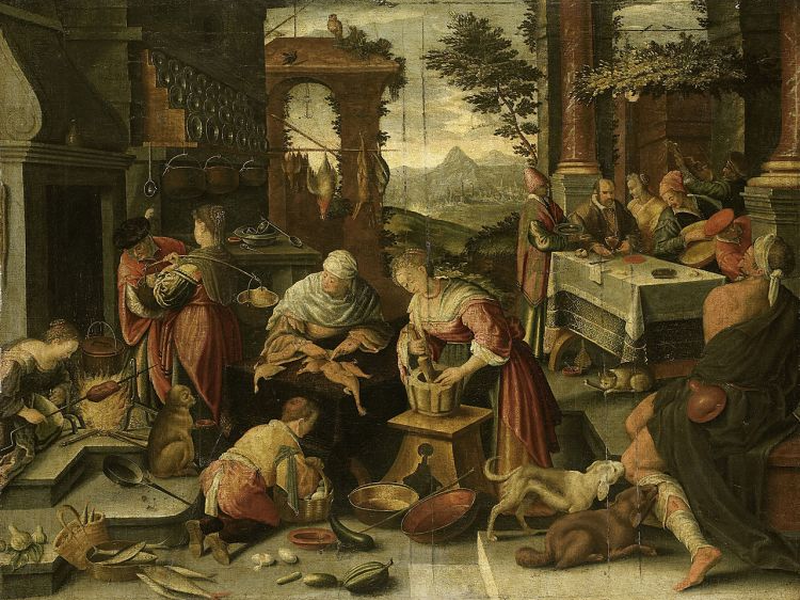
The parable of Lazarus and the nameless rich man is not an independent story. It is part of a long context that begins in Luke 15:1, where Jesus is eating with tax collectors and sinners and the scribes and Pharisees grumble. In response to their hardheartedness, Jesus tells a three-part…

by Ralph Allan SmithJuly 4, 2019
aaron-burden-uynrnfdkjwg-unsplash
Luke

Everybody has Dropsy - Luke 14:1-24

The Bible is written so that even when a reader cannot pick up on what might be deeper or more detailed aspects of a text, there is virtually always a message to be heard. In the ancient world, where the “reader” of Scripture would likely be a church official facing…

by Ralph Allan SmithJuly 2, 2019
communion
Biblical Theology

Fruit Trees and Grain Plants

The distinction between garden (or vineyard) and field begins in Genesis 2. This relates to the ordering of the formless world. Plants of the field are contrasted with the garden planted by God in Genesis 2:5&8. Later on, under the Old Covenant the Israelites will be required to keep their…

by James B. JordanJune 27, 2019

Showing page 77 of 309

See all

Showing page 18 of 43

See all

Putting the oikos into Oikonomy

Psalm 128 promises a fruitful home to the man who fears Yahweh. He will prosper from the labor of his hands, with no one plundering or taxing away his goods. The assumption is that productive work is part of family life. The family is an economic unit, among other things,…

February 11, 2016

Glory of Kings

God gave us the book of Proverbs to teach us wisdom. Partly, He does that by teaching us the content of Proverbs. But he is also teaching us wisdom by the way He communicates wisdom. Proverbs 25:2 says, “It is the glory of kings to conceal a matter, but the…

February 11, 2016

Grace, Judgment, Gospel

Atonement theories can be seen as efforts to synthesize the grace and judgment of God: How does He show grace to a race that deserves condemnation. Solutions are often sought systematic syntheses, and there is something to that: The cross proves God to be just and the justifier of those…

February 11, 2016

Finding Fixed Points in Revelation

Revelation is a confusing book for many readers, apparently endlessly, perhaps even drearily repetitive. The pyrotechnics and special effects might fascinate for a bit, but after a while it all blurs and blends and leaves us wandering in the bewilderness (David Sterritt's wonderful term). Can we find fixed points, coordinates…

February 10, 2016

Hope of the Hopeless

We do what we do because we hope to accomplish something by our actions. All our actions are directed at the future. We want things to be different than they are now, and we plan and act in hope that we can make things come out differently than they otherwise…

February 10, 2016
Political Theology

Theology, Civic or Natural

Modern theology has often been obsessively concerned to justify itself to cultured despisers, and this self-justification has often taken the form of “prolegomenon,” the technical name for an introduction to a theological treatise. To the extent that prolegomena represent efforts to describe the work of theology and its place in…

February 10, 2016

Showing page 322 of 2212

Browse by Category

In Medias Res

Your weekly digest for all things Theopolis.

Donate

Theopolis is nearly 100% donor-supported. Consider joining us on our mission.