Theopolis Logo

Writing

Explore our collection of theological essays, biblical studies, and reflections on faith and culture.

See all
tanner-mardis-xuxghzhibn4-unsplash-1-2
Biblical Studies

Tweets-turned-Notes on the Bible’s Chronology

Summary In what follows, I will consider the “year-stamps” employed in Scripture, i.e., statements of the form, “Such-and-such an event took place in the Xth year of Y.” In the process, I will suggest some ways in which the Biblical narrative might relate to events in the extra-Biblical world, though…

by James BejonJuly 16, 2019
durer-prodigal-son-2
Luke

Perspectives on the Prodigal, (Part 2)

In the first essay on the parable of the Prodigal Son, I suggested that the problems commentators and others encounter in interpreting Jesus three-part parable are not accidental. These are not just problems in our ignorance of cultural background. They are intentional features of the stories —stories designed to poke…

by Ralph Allan SmithJuly 11, 2019
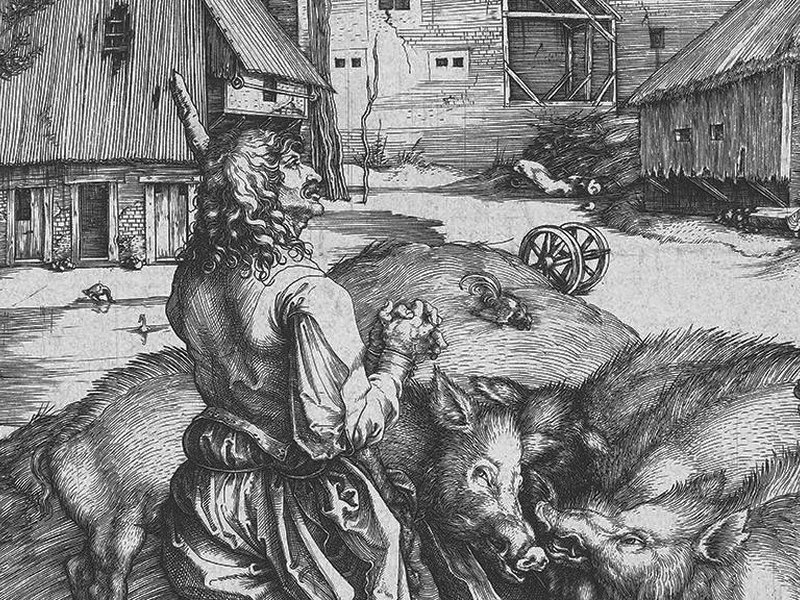
durer-prodigal-son-2
Luke

Perspectives on the Prodigal, (Part 1)

The story of the Prodigal Son is perhaps the most well-known story in the Bible. As others have observed, it may also be one of the most misunderstood. In two short essays, I will point out features of this story that are commonly neglected, aspects of Jesus’ parable that might…

by Ralph Allan SmithJuly 9, 2019
de-rijke-man-en-de-arme-lazarus-by-jacopo-da-ponte-16th-century
Luke

Lazarus and the Rich Man

The parable of Lazarus and the nameless rich man is not an independent story. It is part of a long context that begins in Luke 15:1, where Jesus is eating with tax collectors and sinners and the scribes and Pharisees grumble. In response to their hardheartedness, Jesus tells a three-part…

by Ralph Allan SmithJuly 4, 2019
aaron-burden-uynrnfdkjwg-unsplash
Luke

Everybody has Dropsy - Luke 14:1-24

The Bible is written so that even when a reader cannot pick up on what might be deeper or more detailed aspects of a text, there is virtually always a message to be heard. In the ancient world, where the “reader” of Scripture would likely be a church official facing…

by Ralph Allan SmithJuly 2, 2019
communion
Biblical Theology

Fruit Trees and Grain Plants

The distinction between garden (or vineyard) and field begins in Genesis 2. This relates to the ordering of the formless world. Plants of the field are contrasted with the garden planted by God in Genesis 2:5&8. Later on, under the Old Covenant the Israelites will be required to keep their…

by James B. JordanJune 27, 2019

Showing page 77 of 309

See all

Showing page 18 of 43

See all

Teaching Environment

Teaching and learning never take place in no-place. They are always in an environment. The issue is always which environment and whether it is coherent with what is taught or at cross-purposes with content. Attention to the teaching environment may sound trendily modern, but it's ancient wisdom. Deuteronomy 6 records…

April 23, 2015

Sanctifying the Dead

“The dead do not praise Yahweh, nor do any who do down into silence” (Psalm 115:17). It's a refrain in the Psalms: Death marks the end of the life of praise. The dead cannot give thanks to God. Sheol isn't just dark; it's silent. But then Revelation comes along and…

April 23, 2015

Epic to Romance

RW Southern ( Making of the Middle Ages ) sees a commonality between the romances of of the high middle ages and the theological and spiritual movements of the 11th-12th centuries. It's a shift from an epic mentality to the thought-world of romance. Southern argues that this movement is evident…

April 23, 2015
Biblical Studies

Prophet and Covenant

Prophets always initiate new covenants. They end one set of covenantal arrangements and bring in new ones. They are the hinges of history. Noah is a prophet who becomes an Adam in a new creation covenant. Abraham is the first man called a prophet, and is the recipient of covenant…

April 22, 2015
Middle Ages

Aping the Middle Ages

For medievals, allegory wasn’t simply a way of dealing with texts or a method of writing. It was science, a mode of understanding of the world as a whole. The world was a forest of symbols and allegories from which moral and theological lessons might be drawn. The great medieval…

April 22, 2015

Royalist Revolution

In his 2014 study of The Royalist Revolution , Eric Nelson presents the counter-intuitive case that the American revolutionaries were not revolting against monarchy but against a legislature: “It was, indeed, a rebellion in favor of royal power” (2). Nelson elaborates: “Colonial whigs who had long been ‘slumbering under the…

April 22, 2015

Showing page 436 of 2212

Browse by Category

In Medias Res

Your weekly digest for all things Theopolis.

Donate

Theopolis is nearly 100% donor-supported. Consider joining us on our mission.