Theopolis Logo

Writing

Explore our collection of theological essays, biblical studies, and reflections on faith and culture.

See all
tanner-mardis-xuxghzhibn4-unsplash-1-2
Biblical Studies

Tweets-turned-Notes on the Bible’s Chronology

Summary In what follows, I will consider the “year-stamps” employed in Scripture, i.e., statements of the form, “Such-and-such an event took place in the Xth year of Y.” In the process, I will suggest some ways in which the Biblical narrative might relate to events in the extra-Biblical world, though…

by James BejonJuly 16, 2019
durer-prodigal-son-2
Luke

Perspectives on the Prodigal, (Part 2)

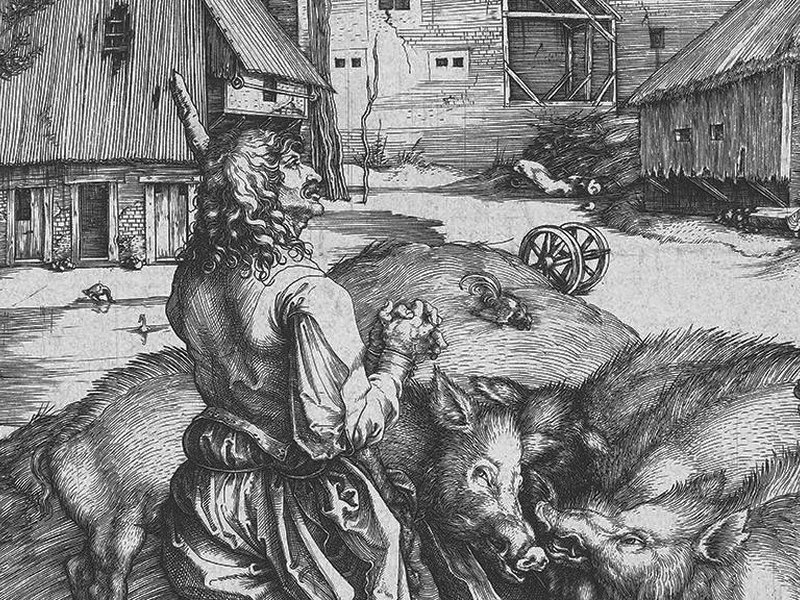
In the first essay on the parable of the Prodigal Son, I suggested that the problems commentators and others encounter in interpreting Jesus three-part parable are not accidental. These are not just problems in our ignorance of cultural background. They are intentional features of the stories —stories designed to poke…

by Ralph Allan SmithJuly 11, 2019
durer-prodigal-son-2
Luke

Perspectives on the Prodigal, (Part 1)

The story of the Prodigal Son is perhaps the most well-known story in the Bible. As others have observed, it may also be one of the most misunderstood. In two short essays, I will point out features of this story that are commonly neglected, aspects of Jesus’ parable that might…

by Ralph Allan SmithJuly 9, 2019
de-rijke-man-en-de-arme-lazarus-by-jacopo-da-ponte-16th-century
Luke

Lazarus and the Rich Man

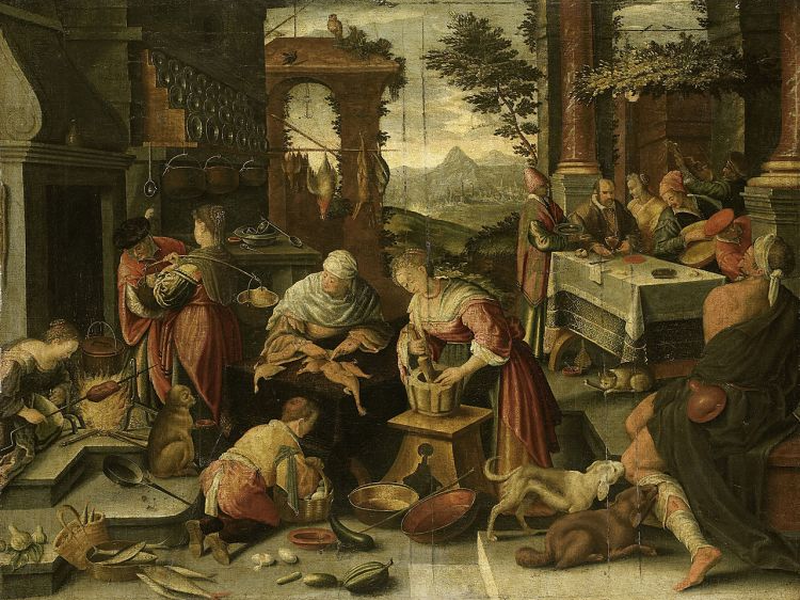
The parable of Lazarus and the nameless rich man is not an independent story. It is part of a long context that begins in Luke 15:1, where Jesus is eating with tax collectors and sinners and the scribes and Pharisees grumble. In response to their hardheartedness, Jesus tells a three-part…

by Ralph Allan SmithJuly 4, 2019
aaron-burden-uynrnfdkjwg-unsplash
Luke

Everybody has Dropsy - Luke 14:1-24

The Bible is written so that even when a reader cannot pick up on what might be deeper or more detailed aspects of a text, there is virtually always a message to be heard. In the ancient world, where the “reader” of Scripture would likely be a church official facing…

by Ralph Allan SmithJuly 2, 2019
communion
Biblical Theology

Fruit Trees and Grain Plants

The distinction between garden (or vineyard) and field begins in Genesis 2. This relates to the ordering of the formless world. Plants of the field are contrasted with the garden planted by God in Genesis 2:5&8. Later on, under the Old Covenant the Israelites will be required to keep their…

by James B. JordanJune 27, 2019

Showing page 77 of 309

See all

Showing page 18 of 43

See all

Wives and Daughters

Unpacking her patrilineal account of sacrifice, Nancy Jay notes offhandedly that the genealogy of Genesis 4-5 is “perfectly patrilineal. No women are named; wives are not even mentioned” ( Throughout Your Generations Forever , 96). It’s true. Women are pretty much invisible after Eve is named “Living one” and bears…

December 17, 2014

Reshuffling Sacraments

In a brilliant brief discussion of the Reformation revision of Christian sacramental theology, Philippe Buc ( Dangers of Ritual ) writes: “The Reformation’s success in sixteenth-century Europe can be explained partly by the skill with which its propagandists mustered against the Roman Church notions basic to the medieval definition of…

December 17, 2014

Impure Modernity

In his Inquiry into Modes of Existence , Bruno Latour imagines an anthropologist doing field work among the tribe of Science in their natural habitat, the lab. She has been told that the Modern world is separated into interrelated but distinct domains: “Law, Science, Politics, Religion, The Economy.” These must…

December 17, 2014
Economics

The Gods of Economics

Bruno Latour ( An Inquiry into Modes of Existence ) says that “the entire modern experience has stood up against living under the control of an indisputable metadispatcher. No one can make us believe the contrary: we know that it is false ” (469). Except when it comes to economy.…

December 17, 2014

Impurity - Thinking Makes It So

Paul continues to use the language of purity and impurity, but it seems radically altered in his hands. Foods are not unclean; there is no hint that bodily conditions (menstruation, childbirth, seminal emissions) cause uncleanness. Indeed, all things are pure (Romans 14:20). But Paul’s logic is a bit more complicated…

December 16, 2014

Hamann’s Hume

Johann Georg Hamann, the devout German philosopher of the Enlightenment age, argues that “a kind of ‘faith’ is involved in everyday life when we recognize the real.” In several places, Hamann attributed this insight to Hume. “The reasonings of a Hume ,” he wrote, “may be convincing and their refutations…

December 16, 2014

Showing page 485 of 2212

Browse by Category

In Medias Res

Your weekly digest for all things Theopolis.

Donate

Theopolis is nearly 100% donor-supported. Consider joining us on our mission.