
Theopolis Logo

Writing

Explore our collection of theological essays, biblical studies, and reflections on faith and culture.

See all
giammarco-zeh-ljawhtg-unsplash
Biblical Horizons

OPEN BOOK: Views and Reviews

Isaac E. Mozeson, The Word: The Dictionary that Reveals the Hebrew Sources of English (Northvale, NJ: Jacob Aaronson Inc., 1995), 310 pp. Reviewed by James B. Jordan. Once there was only one language in the world, the language God spoke to Adam. At the Tower of Babel, there came to…

by James B. JordanJune 28, 1996
tim-wildsmith-j6jv-mkdzqs-unsplash
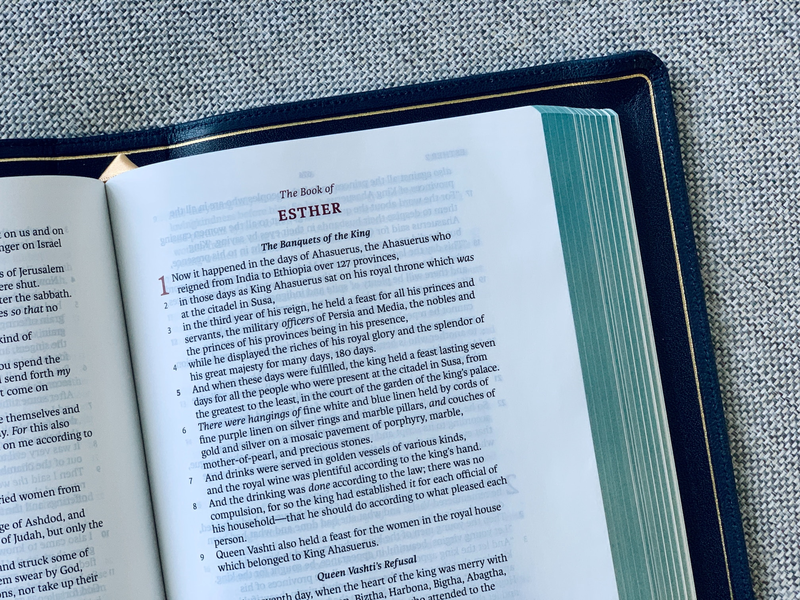
Esther

Esther: Historical & Chronological Comments (IV)

2. The Setting of the Book of Esther A. Xerxes (continued from previous issue) Ezra 6:14 says that the Jews finished building "according to the command of the God of Israel and the decree of Cyrus and Darius and Artaxerxes king of Persia." The problem with this verse is that…

by James B. JordanJune 28, 1996

ales-krivec-4mibe6zg5r0-unsplash
Acts

Jesus and Amalek

This essay goes with our previous study of the Amalek pattern back in Biblical Horizons No. 2. Since many do not have this essay, entitled "The Battle of Gog and Magog," let me cite the relevant paragraphs: Note in Genesis 12-15 that Abram moves into the land after escaping Pharaoh…

by James B. JordanJune 28, 1996

aaron-burden-1ebsmyrau-s-unsplash
Proverbs

The Strange Woman

Proverbs 7:6-23 is one of several passages early in the Proverbs in which Solomon warns his son about the wiles and dangers of the "strange woman." It is certainly quite proper to take these as straightforward warnings against sexual sins, and these are certainly warnings that need to be impressed…

by Peter LeithartJune 27, 1996
jan-kahanek-g3o5ztrk2e4-unsplash
Biblical Studies

Some Observations

1. In Luke 4:20 we read that after Jesus finished reading from Isaiah, "the eyes of all in the synagogue were fixed upon Him." This is usually taken in a psychological sense: They were amazed at Jesus somehow. I suggest that, as always, a merely psychological reading is a modern…

by James B. JordanMay 28, 1996
tim-wildsmith-j6jv-mkdzqs-unsplash
Esther

Esther: Historical & Chronological Comments (III)

2. The Setting of the Book of Esther Up to now we have assumed what we must prove, that the king in Esther is Darius the Great. While Biblical chronologists have usually taken this position, commentators on the book of Esther have often taken others as the king. One view,…

by James B. JordanMay 28, 1996

Showing page 265 of 309

See all

Showing page 18 of 43

See all
Body

No Natural Body

Bodies are objects, but beginning with Husserl philosophers, anthropologists and others have considered not the objective character of the body but the “live body” that is both a living object and a cultural artifact. In the sense that the lived body is a cultural artifact, writes John Dunnill in his…

December 9, 2014

Sacrificial economy

In Sacrifice and the Body , John Dunnill makes the simple observation that most of what ancient Israelites sacrificed was food. This means that “the elements of thanksgiving and tribute, which are always implicitly present in such meal offerings, not only attribute the harvest to God, and return a small…

December 9, 2014

Cosmic Sacrifice

John Dunnill’s summary of the interconnections of gift, creation, covenant, sacrifice, and Trinity is lovely ( Sacrifice and the Body , 29): “To say that the world is gift, and that human life fulfills itself when it responds by giving, is more than a perception or ungrounded assertion about the…

December 9, 2014

More Outward Sacrifice

Summarizing the prophetic critique of sacrifice, John Dunnill ( Sacrifice and the Body , 38) rebuts Roland de Vaux’s claim that “God demands first and foremost an interior religion” and that the prophets aimed their attacks as “outward religion” as such. Dunnill argues, on the contrary, that “the critique expresses…

December 9, 2014
Ritual

Ritual Theory

In their 1994 The Archetypal Actions of Ritual , Caroline Humphrey and James Laidlaw attempt a philosophically sophisticated definition of ritual. Through a survey of the existing literature on ritual, the authors seek to determine what kind of theory or ritual is needed. They reject theories that claim that ritual…

December 8, 2014

Child Sacrifice

In his study of circumcision, Marked in Your Flesh , Leonard Glick picks up a suggestion made by Jon Levenson that circumcision in ancient Israel might symbolize child sacrifice. The cutting of the foreskin would function as a substitute for the cutting of the child, a reenactment of the aqedah…

December 8, 2014

Showing page 489 of 2212

Browse by Category

In Medias Res

Your weekly digest for all things Theopolis.

Donate

Theopolis is nearly 100% donor-supported. Consider joining us on our mission.