Theopolis Logo

Writing

Explore our collection of theological essays, biblical studies, and reflections on faith and culture.

See all
31-03-0213
Hermeneutics

Apocalyptic Eyes

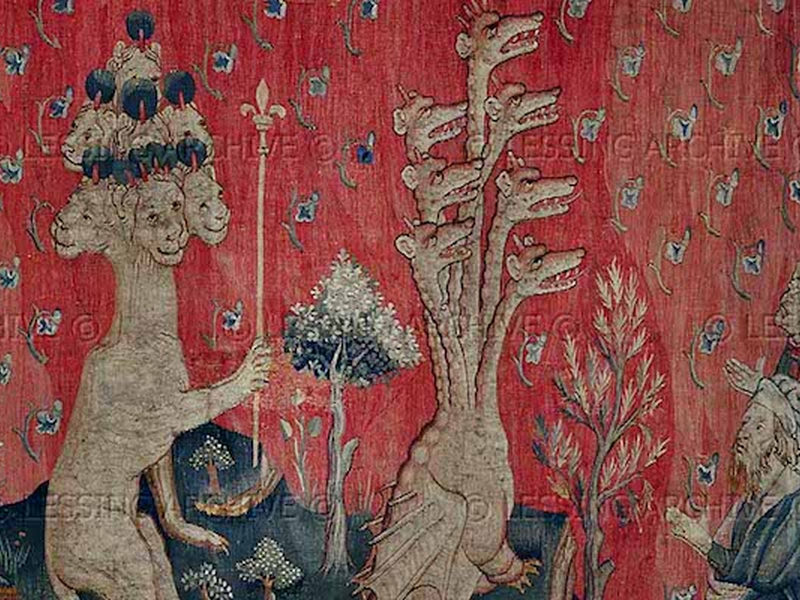
Flying scrolls. Red horses. Beasts coming out of the sea. Winged women. The list goes on. Apocalyptic literature in the Bible is like a cross between science fiction and Marvel comics. And the Bible has a fair bit of this sort of thing. Daniel sees visions in Babylon, Zechariah sees…

by Toby SumpterNovember 4, 2014

bhm-skyline-2
Theopolis News

New Name, New Look

Trinity House Institute has taken a new name, the Theopolis Institute. This striking new name expresses our unique vision and mission and captures the unified purpose behind all our specific programs and activities. We still have Bible, liturgy, and culture in our tagline. We still offer the same courses on…

by TheopolisNovember 4, 2014
istock_000012860926small
Atonement

Not Fearing the Devil

Adam Kotsko offers a socio-political variation on the Christus Victor atonement theory in his 2010 study, The Politics of Redemption: The Social Logic of Salvation . He does this by explaining "the devil" in terms of the Hegelian concept of "objective spirit," Geist . As Kotsko puts it, Geist "refers…

by Peter LeithartOctober 13, 2014
jez-timms-8muutamcwu4-unsplash
Leviticus

The Meaning of Sacrifice

Two factors keep Nahtali Meshel from discussing the meaning of sacrifice until late in his The "Grammar" of Sacrifice . The first has to do with the texts he draws from: "P says little about the meaning of its rituals" (174). The other has to do with the grammatical theory…

by Peter LeithartOctober 8, 2014
jez-timms-8muutamcwu4-unsplash
Leviticus

Praxemics

Chapter 5 of Naphtali Meshel's The "Grammar" of Sacrifice focuses on "praxemics," the physical actions of sacrificial ritual. Praxemes are constituted by six elements: an "atomact," an elementary physical act or gesture; an actor; an object that is acted up; a target for the action and often for the object…

by Peter LeithartOctober 6, 2014
markus-winkler-aid-xyrtlec-unsplash
Leviticus

Jugation and Hierarchy

Two chapters of Naphtali Meshel’s The “Grammar” of Sacrifice cover what he calls “jugation” and “hierarchies.” The first involves the addition of other materials to an animal offering. Jugates include wine, cereal, and oil that are added to the animals (zoemes) that are offered in sacrifice. Some jugates are coordinated…

by Peter LeithartOctober 1, 2014

Showing page 167 of 309

See all

Showing page 19 of 43

See all

Yahweh’s Field of Battle

In his commentary on 1 Kings 17-19, M. B. Van’t Veer has this insightful comment about the difference between OT and NT: “We could say that the Lord attacked the powers of darkness, the kingdom of satan on earth [in the old covenant] within the boundaries of Canaan. The land…

February 27, 2005

Yahweh’s Field of Battle

In his commentary on 1 Kings 17-19, M. B. Van’t Veer has this insightful comment about the difference between OT and NT: “We could say that the Lord attacked the powers of darkness, the kingdom of satan on earth [in the old covenant] within the boundaries of Canaan. The land…

February 27, 2005

Law

Perhaps the central dogmatic/systematic challenge raised by the New Perspective on Paul is the claim that Paul’s concerns about “Law” do not have to do with an eternal, unchanging expression of God’s righteousness but with the contingent and temporary institutions and regulations of the Mosaic order. This really does challenge…

February 25, 2005

Regeneration and Justification in Vermigli

Frank James, translator of Vermigli’s treatises on predestination and justification, has these intriguing comments on Vermigli’s views on the relation of justification and regeneration: “Vermigli’s understanding of forensic justification is not particularly unusual. Indeed, it corresponds generally with the Reformed branch of the Reformation. What is unusual is the inclusion…

February 25, 2005

Thick Description

Peter Vermigli offers this charming and helpful comment on the definition of faith as “substance” (Greek, hypostasis ) in Hebrews 11:1: The word “is derived from the verb hyphistamai , which signifies ‘to sustain, receive, not to yield to one rushing blindly.’ Hence, a soldier is called hypostatos if he…

February 25, 2005

Justification and Sacraments

Vermigli discusses the role of works in salvation, arguing that those who do not live uprightly and practice virtue “shall not come to eternal salvation,” yet these works are the “fruits of faith and effects of justification, not causes.” He understands the fathers’ references to “something more” than faith in…

February 24, 2005

Showing page 2002 of 2212

Browse by Category

In Medias Res

Your weekly digest for all things Theopolis.

Donate

Theopolis is nearly 100% donor-supported. Consider joining us on our mission.