Theopolis Logo

Writing

Explore our collection of theological essays, biblical studies, and reflections on faith and culture.

See all
sinitta-leunen-dvibhmzsy8e-unsplash
Epistemology

A Cheer for the Mystics

Mystical theologians are often unguarded, extreme, un-nuanced, pressing to the edges of heresy, sometimes beyond. Still, the mystics are worthy of study. Why? Many reasons. Unlike some late medieval and post-Reformation dogmaticians, mystical theologians are often instinctively and richly Trinitarian. Historical-critical approaches to Scripture left mystical theologians virtually untouched; mystics…

by Peter LeithartSeptember 2, 2013
portrait-of-william-shakespeare-1564-1616-ca-1865
Literature

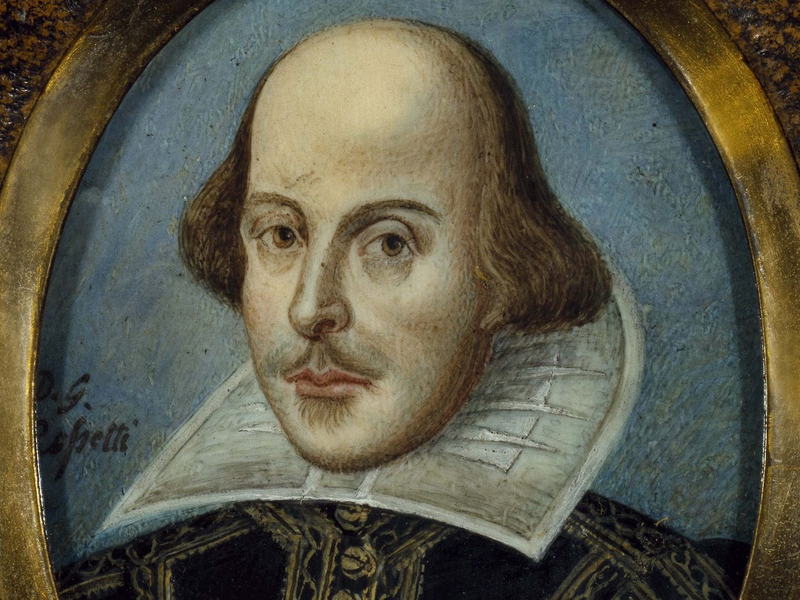
Shadow and Substance in Shakespeare's Venice

Portia of Belmont is a “lady richly left,” as Bassanio says of her in the first Act of The Merchant of Venice . Plus, she’s beautiful and wise. Suitors clamber to Belmont in hope. Her father knew it would be so, and in his will set up a fairy-tale test…

by Peter LeithartAugust 28, 2013
carlo-alberto-burato-smdx3gleu_m-unsplash
Liturgy

Liturgy Traps

[fve]http://vimeo.com/72195198[/fve]

by James B. JordanAugust 26, 2013
screen-shot-2022-05-12-at-12-07-23-pm
Deuteronomy

Victory Food

In the nature of the case, “the” Christian meditation on Deuteronomy 14:1-21 cannot be written. Meditation offers too many possibilities, opens too many doors. There is not one and only one correct set of associations for a Christian to consider when thinking of Deuteronomy 14:1-21. We could, for example, consider…

by Ralph Allan SmithAugust 21, 2013
aaron-burden-1ebsmyrau-s-unsplash
Romans

David's Sin and Israel's Salvation, Part I

Having retold the story of the cumulative sin of Israel leading to the great atonement on the cross, Paul then reemphasizes that, just as both Jew and Gentiles were locked into sin and judgment, now they are both justified by faith: Then what becomes of our boasting? It is excluded.…

by Mark HorneAugust 20, 2013
ben-white-w8qqn1pmqh0-unsplash
Deuteronomy

You are what you eat

Deuteronomy 14 is full of allusions to events of Israel’s history and other portions of Scripture. What would an Israelite learn by mediation on these allusions? The answer, I believe, is at least fourfold. Faith, Worship, War For the ancient Israelite first hearing Moses’ sermon, or perhaps hearing it read…

by Ralph Allan SmithAugust 15, 2013

Showing page 189 of 309

See all

Showing page 19 of 43

See all

Idolatry After Idols

During the Second Temple period, the Talmud says, "the temptation for idolatry was slaughtered" (quoted in Haberthal and Margalit, Idolatry , 2). Then the fight returned, with Maimonides. Now, though, idolatry was a contrast-concept to a new conception of God. Halberthal and Margalit summarize: "The central effort of philosophical religion…

May 9, 2018
sixteen-miles-out-al48tflf4e8-unsplash
Exodus

No Graven Images

The First of the Ten Words speaks to the question of whom we worship: We are to have no other gods before the face of Yahweh. The Second Word had to do with how we worship: We are to approach God as He commands us to approach Him. The Second…

May 9, 2018

Text Patterns in Exodus 20

There are Ten Words, but they are grouped in several different ways. The first two commandments stand out from the rest. Only in the first three commandments does the Lord speak in the first person (FW Farrar): “I am Yahweh your God . . . thou shalt have no other…

May 8, 2018

Patterned by Idols

A little over a year ago, I wrote the following in a post reflecting on the Hebrew term tabnit, used in Exodus and Chronicles to describe the heavenly "pattern" of the sanctuary: "Deuteronomy 4:16-18 uses the word five times, not of a 'model' or 'plan' but of likenesses made according…

May 7, 2018

Rosenzweig on Anthropomorphism

Franz Rosenzweig didn't buy Maimonides philosophical critique of the Bible's anthropomorphism. In 1928, he wrote a short essay on the topic and, in the summary of Leora Batnitzky ( Idolatry and Representation ) he "argues that the tendency to rationalize away biblical anthropomorphisms . . . is both dishonest and…

May 4, 2018

Secularizing Sacrifice

In Theology and the First Theory of Sacrifice , Ivan Strenski recounts an epochal shift in the study of religion, and of sacrifice in particular, that took place in the France of the late 19th and early 20th centuries. At the time, the "lions" of the field of religion were…

May 4, 2018

Showing page 71 of 2212

Browse by Category

In Medias Res

Your weekly digest for all things Theopolis.

Donate

Theopolis is nearly 100% donor-supported. Consider joining us on our mission.