Theopolis Logo

Writing

Explore our collection of theological essays, biblical studies, and reflections on faith and culture.

See all
screenshot-2024-06-06-at-8-49-49-am
Biblical Theology

Incarnation, Church, & the New Heart

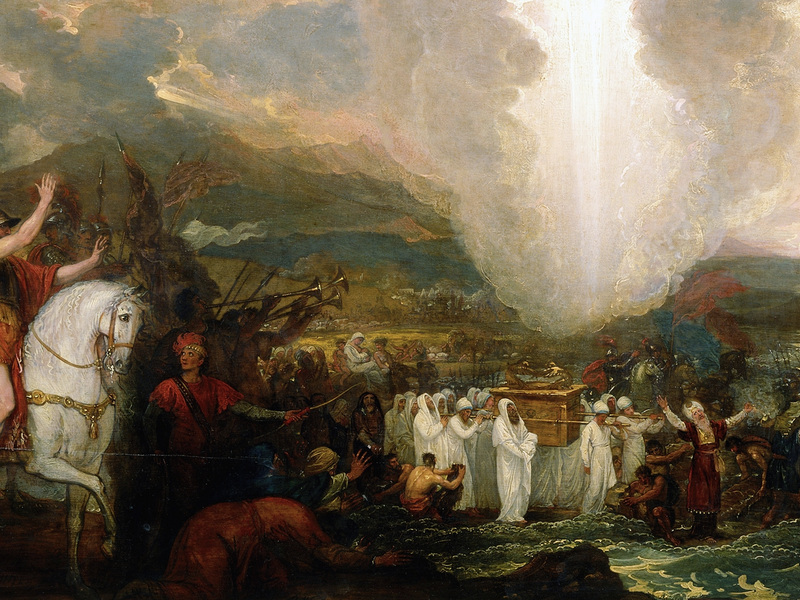
“And it shall be in those days when you are multiplied and increased in the land,” declares the Lord, “they shall say no more, ‘The Ark of the Covenant of the Lord.’ And it shall not come to mind, nor shall they remember it, nor shall they miss it, nor…

by Mark HorneJune 6, 2004
e99a4713
Grace

Grace & Justice in Unexpected Places

Elsewhere, I have argued that there is grace in the so-called covenant of works (see, e.g., my colloquium essay, “A Response to ‘The Biblical Plan of Salvation,’” in The Auburn Avenue Theology: Pros and Cons , edited by Calvin Beisner (pages 118-148). It may be equally surprising to find justice…

by Rich LuskJune 6, 2004
amjd-rdwan-erymmvvsy1y-unsplash-1
Theologia

Trust & Obey

Years ago, as a layman, I had the privilege of attending a Bible study led by a gifted teacher. His story was interesting: back when he was a student he had been severely sanctioned for affirming that one must repent in order to be saved, that one must trust Jesus…

by Mark HorneJune 5, 2004
daniel-born-yw_qx-i8ln4-unsplash
Theologia

The World is Built on Faith

Believing that God really exists Defining “faith” is sometimes made too complicated. The theologian, Louis Berkhof, for example, distinguishes “faith in general” from “faith in the religious sense and particularly saving faith.” Berkhof’s core definition of saving faith is not so bad. He says that it is “a certain conviction,…

by Mark HorneJune 5, 2004
ben-white-qdy9ahp0mto-unsplash
Apostasy

The Children of Christians Are Christians

It is generally acknowledged that when Paul wrote letters to churches, he expected his letters to be read in the worship service to the congregation. It is interesting, then, that when Paul wrote letters to a congregation he could feel free to address children and tell them to obey their…

by Mark HorneJune 5, 2004
24542-cropped-john-calvin
Ecclesiology

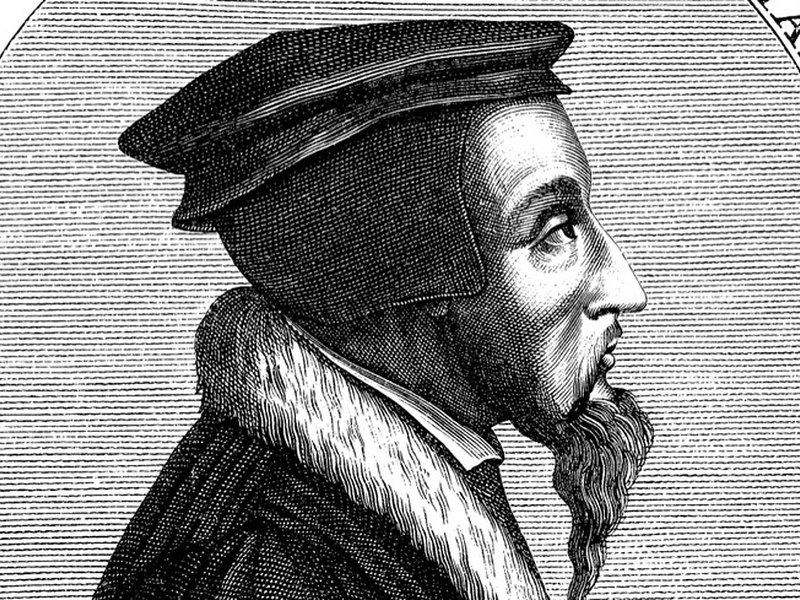
Calvin on the Pastor and Community

Book 4 of Calvin’s Institutes of the Christian Religion is a classic work of ecclesiology. This book is the longest section of the Institutes , showing Calvin’s deep interest in and love for the church. Among its many salutary features is a full scale exposition of those ecclesiastical leaders Calvin…

by Rich LuskJune 5, 2004

Showing page 224 of 309

See all
See all

German Reforvolution

Eugen Rosenstock-Huessy claims that the German Reformation qualifies for inclusion as one of the epochal revolutions of Western history ( Out of Revolution ). This is so partly because the German Reformation gave to Europe a new social role, the civil servant: “In the German revolution the drab, grey life…

October 25, 2017

Preaching, An Art of Division

The following is an excerpt from Peter Leithart's forthcoming two-volume commentary on Revelation (T&T Clark). Y ou must prophesy again concerning many peoples and nations and tongues and kings,” a voice tells John (Rev. 10:11). Then someone gives him a “reed like a rod” and instructs him to measure (11:1).…

October 24, 2017

Deep Comedy

The following is an excerpt from the introduction to my Deep Comedy (Canon, 2006). Viewed as a whole, the Christian account of history is eschatological not only in the sense that it comes to a definitive and everlasting end, but in the sense that the end is a glorified beginning,…

October 24, 2017

Time, Natural and Social

"To date," writes Norbert Elias in his Essay on Time , "enquiries into the sociology of time are almost non-existent” (38). This deficit, he suggests, is due to a dichotomy of the natural and human worlds, a dichotomy reflected in academic specializations (71). He blames the “conventional tendency to explore…

October 23, 2017

Two Kingdoms, Two Christs?

David VanDrunen, has worked out an understanding of natural law and the “two kingdoms” Christologically. He writes, “The Son of God rules the temporal kingdom as an eternal member of the Divine Trinity but does not rule it in his capacity as the incarnate mediator/redeemer” ( Natural Law and the…

October 20, 2017

Love Uber Alles

Benedict rejects the notion that Catholic social theory treats social and political institutions – the state, the economy, civil society, for instance – as – autonomous, extrinsically-related “subjects” with different logics. On this view, the economy would be the sphere of wealth-generation, politics the sphere of power, and civil society…

October 20, 2017

Showing page 130 of 2212

Browse by Category

In Medias Res

Your weekly digest for all things Theopolis.

Donate

Theopolis is nearly 100% donor-supported. Consider joining us on our mission.