
Theopolis Logo

Writing

Explore our collection of theological essays, biblical studies, and reflections on faith and culture.

See all
giammarco-zeh-ljawhtg-unsplash
Biblical Horizons

OPEN BOOK: Views and Reviews

Isaac E. Mozeson, The Word: The Dictionary that Reveals the Hebrew Sources of English (Northvale, NJ: Jacob Aaronson Inc., 1995), 310 pp. Reviewed by James B. Jordan. Once there was only one language in the world, the language God spoke to Adam. At the Tower of Babel, there came to…

by James B. JordanJune 28, 1996
tim-wildsmith-j6jv-mkdzqs-unsplash
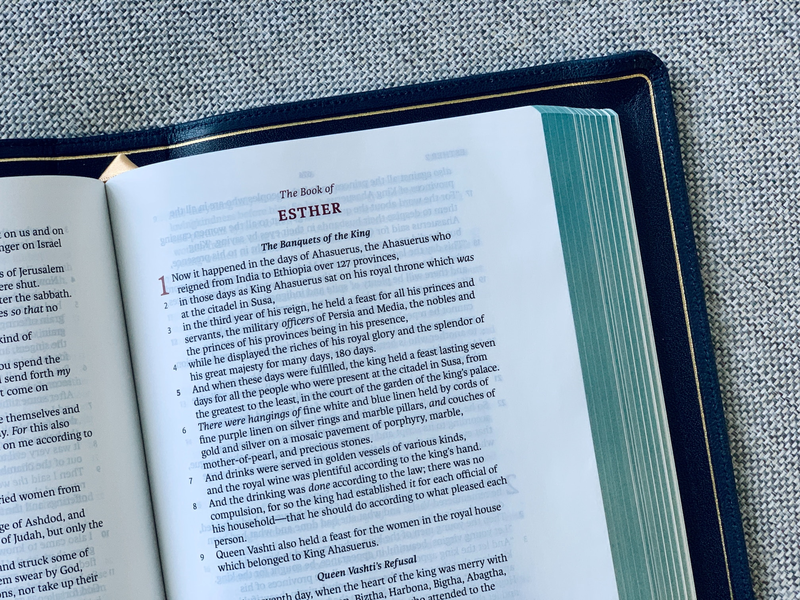
Esther

Esther: Historical & Chronological Comments (IV)

2. The Setting of the Book of Esther A. Xerxes (continued from previous issue) Ezra 6:14 says that the Jews finished building "according to the command of the God of Israel and the decree of Cyrus and Darius and Artaxerxes king of Persia." The problem with this verse is that…

by James B. JordanJune 28, 1996

ales-krivec-4mibe6zg5r0-unsplash
Acts

Jesus and Amalek

This essay goes with our previous study of the Amalek pattern back in Biblical Horizons No. 2. Since many do not have this essay, entitled "The Battle of Gog and Magog," let me cite the relevant paragraphs: Note in Genesis 12-15 that Abram moves into the land after escaping Pharaoh…

by James B. JordanJune 28, 1996

aaron-burden-1ebsmyrau-s-unsplash
Proverbs

The Strange Woman

Proverbs 7:6-23 is one of several passages early in the Proverbs in which Solomon warns his son about the wiles and dangers of the "strange woman." It is certainly quite proper to take these as straightforward warnings against sexual sins, and these are certainly warnings that need to be impressed…

by Peter LeithartJune 27, 1996
jan-kahanek-g3o5ztrk2e4-unsplash
Biblical Studies

Some Observations

1. In Luke 4:20 we read that after Jesus finished reading from Isaiah, "the eyes of all in the synagogue were fixed upon Him." This is usually taken in a psychological sense: They were amazed at Jesus somehow. I suggest that, as always, a merely psychological reading is a modern…

by James B. JordanMay 28, 1996
tim-wildsmith-j6jv-mkdzqs-unsplash
Esther

Esther: Historical & Chronological Comments (III)

2. The Setting of the Book of Esther Up to now we have assumed what we must prove, that the king in Esther is Darius the Great. While Biblical chronologists have usually taken this position, commentators on the book of Esther have often taken others as the king. One view,…

by James B. JordanMay 28, 1996

Showing page 265 of 309

See all
See all

Reconciling Reason and Faith

In Truth and Tolerance , Benedict XVI argues that the Western world is in a crisis that can only be solved if "reason and religion . . . come together again, without merging into each other" (144). He insists this isn't a matter of protecting the interests of religion, Rather,…

October 20, 2017

Future and the Christian Era

Dead time, Rosenstock-Huessy says, is entirely a product of the past, a result of a cause. That conception of time works for physics, but it fails to account for the reality of human time, which always involves surprise and a break with the past. Through speech, we initiate new times,…

October 19, 2017
timothy-eberly-djj49s6ud2o-unsplash

God Is Love

According to the doctrine of the Trinity, the ultimate source of all things, the God in whom we live, move and have our being, is both one and plural, one God in three persons. This has enormous implications for how we think of the world. In ancient philosophy, the highest…

October 19, 2017

God, Time, Eternity

Rosenstock-Huessy believes that God has a unique relationship to time that no human being has, but he describes this unique relationship in ways that are unusual for the Christian tradition. Instead of saying that God is “timeless,” he says that God is “pure time.” This suggestion is based on the…

October 18, 2017

Calendars and Cultural Memory

Modernity’s reduction of time to clock-time is not socially or psychically healthy. As Rosenstock-Huessy puts it: "We need the intersecting of many rhythms of time. Our stomach and our consciousness respond to a 24-hour rhythm. Our faith and our hopes respond to centuries. Our noble passions like the love of…

October 17, 2017

Freedom To Unfreedom

Enlightenment secularism is committed to “freedom” as its overarching value. In an address on “Freedom and Truth” (published in The Essential Pope Benedict XVI ), Benedict XVI describes the Enlightenment as a “will to emancipation” (citing Kant’s sapere aude ). Kant’s plea for philosophical freedom has political dimensions. According to…

October 17, 2017

Showing page 132 of 2212

Browse by Category

In Medias Res

Your weekly digest for all things Theopolis.

Donate

Theopolis is nearly 100% donor-supported. Consider joining us on our mission.