Theopolis Logo

Writing

Explore our collection of theological essays, biblical studies, and reflections on faith and culture.

See all
little-girl
Children

Honor God With Your Body

I am making a new rule in our house! We are actually kind of skimpy on the house rules. I try very hard to keep things simple: love God, love others, be joyful. It’s not complicated to avoid discipline here. But I have found myself repeating this new rule over…

by Lindsey TollefsonApril 9, 2015

giotto-noli-me-3
John

The Gardener and the Beloved, (Part 3)

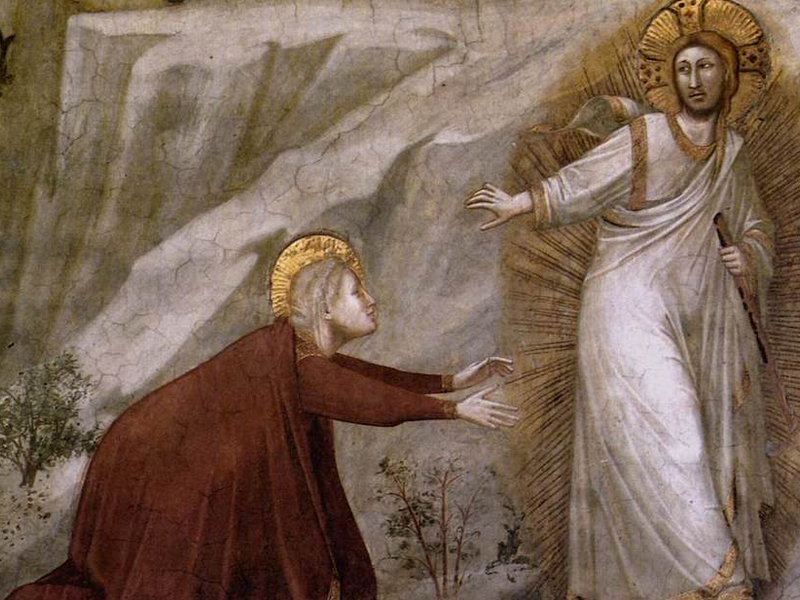
Click HERE for Part 2 The voice of Jesus transforms and changes Mary when she hears him speak her name. This is her last “turning.” So also the woman in the Song of Songs longs to hear the voice of her beloved. Let me see your face, let me hear…

by Jeff MeyersApril 6, 2015
giotto-noli-me-2
John

The Gardener and the Beloved, (Part 2)

Click HERE for Part 1. The details of this story call the attentive reader back to the drama of Solomon’s Song of Songs. And the Song of Song’s alludes to, ties us into the story of Adam and Eve in the Garden and the promise of a coming Messiah that…

by Jeff MeyersApril 4, 2015
easter-term-2015-2
Theopolis News

Easter Term, 2015

“The course was a paradigm shift for me,” said Jonathan Sedlak, a Milwaukee electrical contractor who attended Theopolis’s course on Revelation. “I am left with a book that is far more practical than it has ever seemed before.” Jonathan Anderson of Louisville, Kentucky found the course “refreshing.” “I finished with…

by TheopolisApril 2, 2015
psalm-singing
Genesis

Worship as Response: Liturgical Logic, (Part 1)

“It is only by participation in a rational, practice-based community that one becomes rational.” – Alasdair MacIntyre It may be perfectly clear to a chef why adding unsifted powdered sugar to a hot frosting is a bad idea. But for an amateur cook, this may be the kind of rule…

by Jonathan BarlowApril 2, 2015
giotto-noli-me
John

The Gardener and the Beloved, (Part 1)

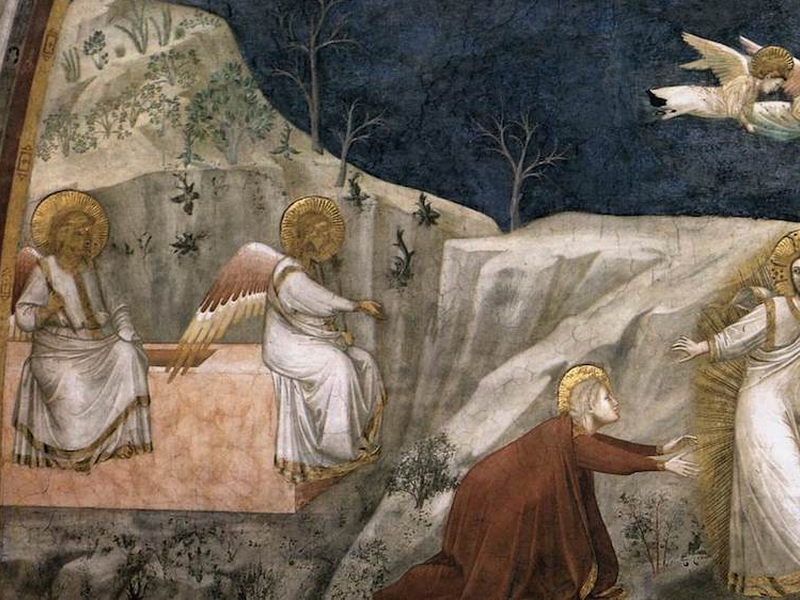
On a fresco in a chapel in Padua, Italy, there is a famous painting depicting the dramatic post-resurrection scene in John 20 with Mary and Jesus outside of the garden tomb. Giotto di Bondone painted it in the early 14th century. Jesus is striding from the tomb with a victor’s…

by Jeff MeyersApril 1, 2015

Showing page 156 of 309

See all
See all

Mirror of the Soul, II

Athanasius points out to Marcellinus that the Psalms cover every “eventuality.”  They are a mirror of the soul because they are a mirror of human experience - of suffering, of desperation, of exultation, of thanksgiving, of prosperity, of adversity, of garden and wilderness, of isolation and communion, and on and…

October 28, 2009

Mirror of the Soul

No one would dare, Athanasius writes to Marcellinus, to take the words of the patriarchs, or Moses, or the prophets as his own.  No one would dare imitate the prophets by saying “As the Lord lives, before whom I stand today.” The Psalms are different.  When someone reads, hears, chants,…

October 28, 2009

Maranatha

Paul ends 1 Corinthians (16:22) with a neat chiastic sign-off.  Anyone who does not love the Lord is declared “accursed” ( anathema ) and Paul follows this with the cry of maranatha (“the Lord comes”).  Anath-ma/mar-anatha . Substantively, it is a striking phrase.   Anathema speaks a harsh word of…

October 28, 2009

Augustinian chiasm

In his superb introduction to the New City Press edition of  Augustine’s de Trinitate ( Trinity, The (Works of Saint Augustine A Translation for the 21st Century) ), Edmund Hill offers a chiastic outline of the treatise: 1. Introduction, 1 2. Divine missions: exegetical, 2-4 3. Trinitarian language: philosophical, 5-7…

October 27, 2009

Trinitarian substance

In Epistle 11, Augustine attempts to explain an apparent contradiction in the Catholic faith.  On the one hand, all of God does all that God does, since the Persons of the Trinity are inseparable and act inseparably: “For the union of Persons in the Trinity is in the Catholic faith set forth and believed, and…

October 27, 2009

New Creation

David Garland comments that the first part of Matthew’s Passion narrative (26:2-56) begins with the plot of the priests and elders and then is divided into six scenes: 1. Anointing for burial, 26:6-13 2. Judas’ betrayal, 26:14-15 3. Preparation for Passover, 26:17-19 4. Last Supper, 26:20-30 5. Prediction that the…

October 26, 2009

Showing page 1334 of 2212

Browse by Category

In Medias Res

Your weekly digest for all things Theopolis.

Donate

Theopolis is nearly 100% donor-supported. Consider joining us on our mission.