Theopolis Logo

Writing

Explore our collection of theological essays, biblical studies, and reflections on faith and culture.

See all
max-kukurudziak-qbc3zmxw0g8-unsplash
History

Report from Ukraine

We lost Crimea. That is very clear. Putin proved he was not lying when he said he would place women and children ahead of his soldiers to storm Ukrainian military bases. Russian soldiers did exactly that with women (some who volunteered and some who were forced). Russia now occupies all…

by San SanychMarch 28, 2014

screenshot-2023-09-21-at-3-59-23-pm
Church Calendar

God Gone Silent

Sound is an indicator of life and energy. “Sound signals the present use of power, since sound must be in active production to exist at all.” Things don’t have to be alive to make themselves visible, and “a primitive hunter can see, feel, smell, and taste an elephant when the…

by Peter LeithartMarch 26, 2014
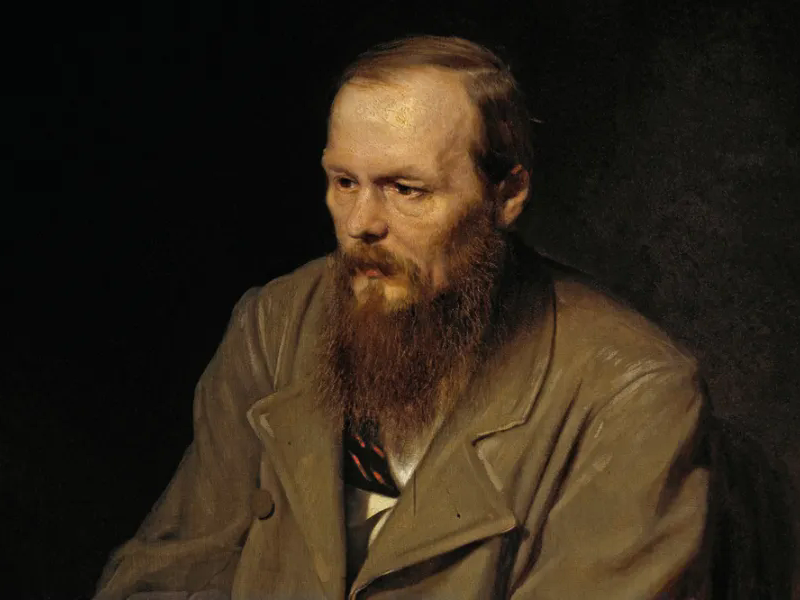
web-lead-image_final_dostoevsky
Books

Dostoevsky the Liberal

In the most famous section of his best-known novel, Dostoevsky’s Ivan Karamazov brings forward his case against God. He opens with a horrific litany of outrages against children. Turkish soldiers make a baby laugh and then shoot a pistol into his face. A little girl is beaten, thrashed, kicked by…

by Peter LeithartMarch 24, 2014
kelly-sikkema-ggs0_g6wi-i-unsplash
Epistemology

Subsidiary-Focal Integration and Liturgy

​At the heart of Esther Lightcap Meek's splendid ​Little Manual for Knowing is a concept she picked up from Michael Polanyi, "subsidiary-focal integration." The concept begins from the insight that all our knowing, all our experience, is double. We focus on something, but we are capable of "indwelling" that focal…

by Peter LeithartMarch 19, 2014
engin-akyurt-uz9qpvbol0e-unsplash
Revelation

White Stone

Jesus promises the overcomers of Pergamum "hidden manna" and a "white stone." The hidden manna is often linked with the manna stashed away in the ark of the covenant. The white stone has proved more elusive. Exodus tells us that manna was white (Exodus 16:31) and like bdellium (Numbers 11:7),…

by Peter LeithartMarch 17, 2014
226961fgsdl
Leviticus

A Theology of Festivity

Leviticus 23 begins with a reference to “Yahweh’s appointed times” ( mo’ade-YHWH ). Mo’ed is the common term for the feasts of Israel. A few dimensions to this term. First, it means “appointed time” or “designated time.” It is a time set by Yahweh. Yahweh has claimed certain times as…

by Peter LeithartMarch 12, 2014

Showing page 177 of 309

See all
See all
Art

Aesthetic enjoyment

Adorno writes that enjoyment is not the be-all of art.  Certainly it isn’t for the producers of art: “If you ask a musician if he enjoys playing his instrument, he will probably reply: ‘I hate it’ . . . People who have a genuine relation to art would rather immerse…

September 24, 2009

Soteriology in time

Soteriology is eschatology, and that means soteriology  has to have an already/not yet structure.  Rejecting either justification by faith or judgment according to works breaks the bond of eschatology and soteriology.  Another way to say this is soteriology is about what happens in time . The alternatives are: 1) Antinomian:…

September 23, 2009

God acknowledging God

Commenting on the “seal” in Song of Songs 4:12, Luther writes, “In the same way we Christians are now sealed by the Word, Baptism, and the Sacramental of the Altar, by which we are distinguished from all other races, not just before the world, but rather in God’s own judgment.”…

September 23, 2009

Film, actors and audience

In his classic essay on the “work of art in the age of mechanical reproduction,” Walter Benjamin made some trenchant observations on the way film affects actors and audiences.   Importantly, he believes these effects are not the result of some perversion of the medium of film, but inherent in…

September 23, 2009

Adam and Elohim

Paul Niskanen has an insightful analysis of Genesis 1:27 in the latest JBL .  He starts with the question of whether Barth’s view that the image of God is found in relationality and specifically in sexual difference has any exegetical support.  He reviews the current discussion, and notes that there…

September 23, 2009

Heidegger’s hermeneutics

Ouch!  Schaeffer again, this time on Heidegger’s interpretive methods: “Paraphrase, translation, dismantling of the syntax, making the text autonomous with regard to the concrete subject who utters it, absolute silence regarding the poetic form: to these five characteristics we must add hermeneutic authoritarianism,” the last of which “postulates an opposition…

September 22, 2009

Showing page 1346 of 2212

Browse by Category

In Medias Res

Your weekly digest for all things Theopolis.

Donate

Theopolis is nearly 100% donor-supported. Consider joining us on our mission.