Theopolis Logo

Writing

Explore our collection of theological essays, biblical studies, and reflections on faith and culture.

See all
trinity-1
Theology

Trinity and History

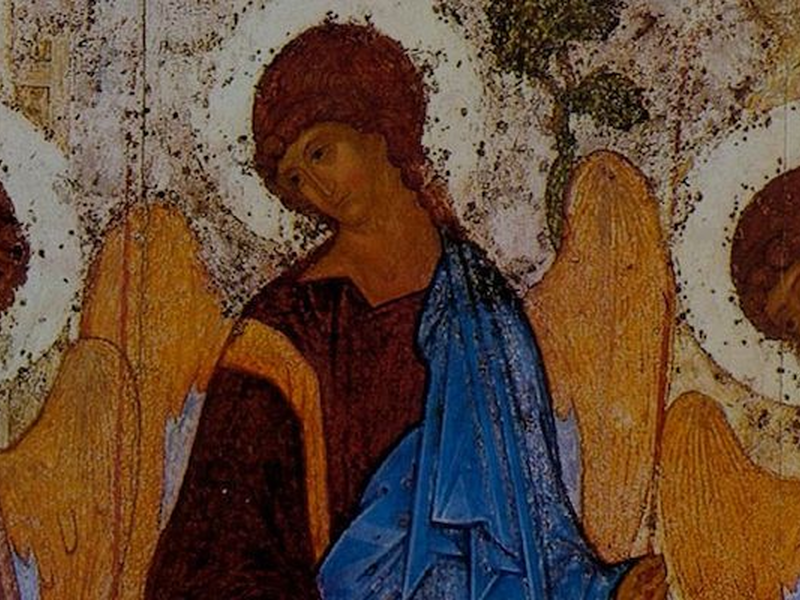
In The Meaning of History , Nikolai Berdyaev argues that the ancient Greeks had no concept of history and no philosophy of history because their concept of God and the world did not allow for it. “They conceived the world aesthetically, as a finite and harmonious cosmos. The most representative…

by Bogumil JarmulakNovember 20, 2014

preston-goff-xncifslw0jw-unsplash
Revelation

Liturgy: A Parable

You know how the curtain parts at the beginning of a play, and you see a new scene, with characters and sets and incidents that had remained hidden up til then? Church last week was like that. Except the curtain was made up of all the things I thought were…

by Peter LeithartNovember 18, 2014
pedestrians
Genesis

Human Trafficking in God's World

Genesis 3 records the terrible day when humanity fell into sin and shalom was violated. This was a moment of cosmic treason, when Adam and Eve violated their relationship with God by rebelling against His command and fell into the severe ignobility we all experience. The entrance of sin wrecked…

by Justin HolcombNovember 13, 2014
medievalilluminatedmanuscript
Biblical Studies

Bible.

One of the most important contributions of twentieth-century Catholic nouvelle théologie , and of Henri de Lubac and Jean Danielou in particular, was its rehabilitation of the typological interpretation of the Bible practiced by patristic and medieval theologians. Typological interpretation assumes that events and institutions of the Old Testament present…

by Peter LeithartNovember 11, 2014
pope-francis
Biblical Law

Capital Punishment and Rules of Evidence

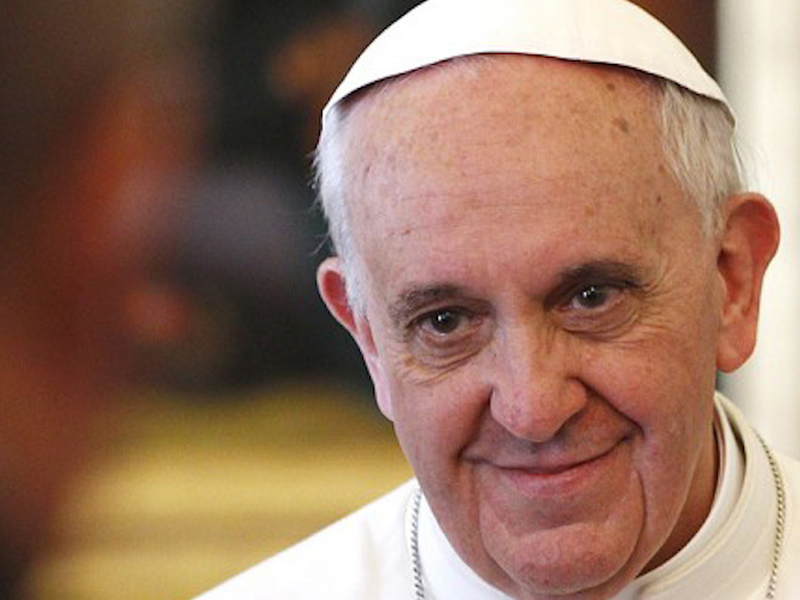
The Catholic News Service has reported that Pope Francis has called for the abolition of not only the death penalty, but also of life in prison. In a meeting with representatives of the International Association of Penal Law, the pontiff called for all “Christians and people of good will” to…

by Gregory LaughlinNovember 6, 2014
olympus-digital-camera
Culture

Violence Against Women

Each year, the United Nations designates November 25 as the International Day for the Elimination of Violence against Women. U.N. Secretary-General Ban Ki-moon explains, “Violence against women and girls takes many forms and is widespread throughout the globe. It includes rape, domestic violence, harassment at work, abuse in school, female…

by Justin HolcombNovember 4, 2014

Showing page 166 of 309

See all
See all

Articulated time

According to Pickstock, Augustine’s musical ontology is not a mere subordination of space to time, or a univocal “Dionysian flow”: “just as important as the priority of time, for Augustine, is the insistence on articulation into distinct musical units or phrases, the very move which allows a stress upon the simultaneity…

September 14, 2009

Creation ex nihilo

Nothing comes from nothing.  That seems obvious, and Christians have traditionally had some difficulty explaining why creatio ex nihilo is a defensible violation of that basic principle. According to Catherine Pickstock, Augustine viewed creation ex nihilo as the most rational position.  All around us, “things are continuously coming to be…

September 14, 2009
Politics

Secular

In responding to Milbank’s analysis of Augustine on the secular, RA Markus ( Christianity And the Secular (Blessed Pope John XXIII Lecture Series in Theology and Culture) ) borrows MJ Hollerich’s summary of Milbank that there is no “neutral public sphere in which people can act politically without reference to…

September 14, 2009
Art

Kantradictions

Jean-Marie Schaeffer ( Art of the Modern Age: Philosophy of Art from Kant to Heidegger (New French Thought Series) has a blast pointing out the contradictions in Kant’s aesthetics. Most of them arise from Kant’s insistence that the judgment of taste is founded on “the form of a finality” that…

September 12, 2009
Philosophy

Effects and Causes

Can effects double as causes? Kant, still working with some form of final causality, thinks so: There are cases when “the thing that for the moment is designated effect deserves none the less, if we take the series regressively, to be called the cause of the thing of which it…

September 12, 2009
Art

Gnostikant

Evidence that Hamann had Kant right: In explaining taste as a common sense, he notes that this common sense of beauty can be arrived at by a process of stripping off whatever belongs to our perception and prejudice. That is, we put “ourselves in the position of every one else,…

September 12, 2009

Showing page 1351 of 2212

Browse by Category

In Medias Res

Your weekly digest for all things Theopolis.

Donate

Theopolis is nearly 100% donor-supported. Consider joining us on our mission.