Theopolis Logo

Writing

Explore our collection of theological essays, biblical studies, and reflections on faith and culture.

See all
screen-shot-2018-02-08-at-9-58-52-am
Epistemology

Seeking Integration in a Fragmented World: Indwelling Polanyian Integration

So far I have claimed that, especially in this era of fragmentation, we seek some way to integrate our lives. I have suggested that the view that modernity holds of what knowledge is has actually been a critical source of the fragmentation we sense in the modern West. Imagining knowledge…

by Esther Lightcap MeekMay 1, 2018

e99a8370-2
Theopolis News

Theopolis Names New Executive Director

The Theopolis Institute has appointed John Crawford as Executive Director. John has been a student in the Junior Fellows Program this year, and proven to be an enthusiastic and articulate advocate of Theopolis's vision. "Theopolis brings a unique, comprehensive paradigm to cultural change - with the Church at the center,"…

by TheopolisApril 30, 2018
screen-shot-2018-02-08-at-9-58-52-am
Art

Artist-Priests in God’s Poetic World

Metaphor is already intrinsic to the Trinity. Jesus is not the Father. And then again, He is indwelt by the Father, and He in turn indwells the Father. “He who has seen Me,” Jesus said, “has seen the Father.” This fundamental is/is not relationship is the relationship of metaphor. A…

by Tim NicholsApril 26, 2018
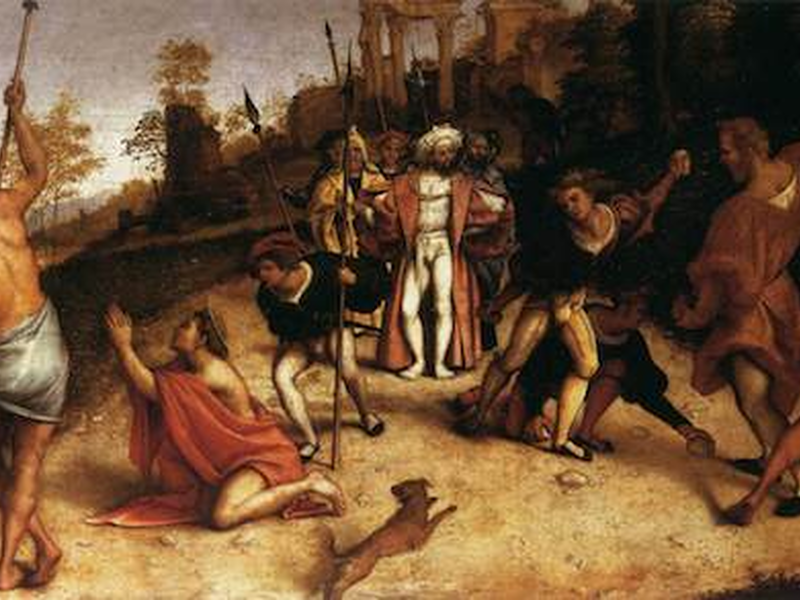
stephen-martyr-lotto
James

Addressees and Author of James

James, a bond-servant of God and of the Lord Jesus Christ, to the twelve tribes in the diaspora, greetings (James 1:1). Though the epistle of James is considered a "general" epistle, the letter originated from particular circumstances that can be discerned from the New Testament. In order to sketch its…

by Peter LeithartApril 24, 2018
sixteen-miles-out-al48tflf4e8-unsplash
Leviticus

Introduction to the Ascensions

Before considering the details of the Leviticus, we must have before us certain matters that have been established in Genesis and Exodus. These are things that we as Israelites already know when we first hear Moses report what God dictated to him in Leviticus. Adam Let us begin with Adam.…

by James B. JordanApril 19, 2018
img_1456
Culture

The Principalities and Powers, (Part 2)

For Part 1 of this series, click HERE . The great question for the emerging East, Asia and other awakening third world areas, for an emerging nation like China is, “what fate awaits them?” They are now emerging from an analogous paganism that the West emerged from centuries ago. Here…

by Richard BledsoeApril 17, 2018

Showing page 95 of 309

See all
See all

Articulated time

According to Pickstock, Augustine’s musical ontology is not a mere subordination of space to time, or a univocal “Dionysian flow”: “just as important as the priority of time, for Augustine, is the insistence on articulation into distinct musical units or phrases, the very move which allows a stress upon the simultaneity…

September 14, 2009

Creation ex nihilo

Nothing comes from nothing.  That seems obvious, and Christians have traditionally had some difficulty explaining why creatio ex nihilo is a defensible violation of that basic principle. According to Catherine Pickstock, Augustine viewed creation ex nihilo as the most rational position.  All around us, “things are continuously coming to be…

September 14, 2009
Politics

Secular

In responding to Milbank’s analysis of Augustine on the secular, RA Markus ( Christianity And the Secular (Blessed Pope John XXIII Lecture Series in Theology and Culture) ) borrows MJ Hollerich’s summary of Milbank that there is no “neutral public sphere in which people can act politically without reference to…

September 14, 2009
Art

Kantradictions

Jean-Marie Schaeffer ( Art of the Modern Age: Philosophy of Art from Kant to Heidegger (New French Thought Series) has a blast pointing out the contradictions in Kant’s aesthetics. Most of them arise from Kant’s insistence that the judgment of taste is founded on “the form of a finality” that…

September 12, 2009
Philosophy

Effects and Causes

Can effects double as causes? Kant, still working with some form of final causality, thinks so: There are cases when “the thing that for the moment is designated effect deserves none the less, if we take the series regressively, to be called the cause of the thing of which it…

September 12, 2009
Art

Gnostikant

Evidence that Hamann had Kant right: In explaining taste as a common sense, he notes that this common sense of beauty can be arrived at by a process of stripping off whatever belongs to our perception and prejudice. That is, we put “ourselves in the position of every one else,…

September 12, 2009

Showing page 1351 of 2212

Browse by Category

In Medias Res

Your weekly digest for all things Theopolis.

Donate

Theopolis is nearly 100% donor-supported. Consider joining us on our mission.