Theopolis Logo

Writing

Explore our collection of theological essays, biblical studies, and reflections on faith and culture.

See all
kiwihug-l4gw27xzn1i-unsplash
Hermeneutics

Hermeneutical Polytheism

A couple of decades ago, when I was a young Reconstructionist (instead of a middle-aged post-Reconstructionist), I coined the phrase "political polytheism" to describe how modern evangelical Christians approach matters of social law and politics. Christians want the Bible for Church and family life, but turn to other gods for…

by James B. JordanJanuary 28, 1996

jan-kahanek-g3o5ztrk2e4-unsplash
Biblical Horizons

Concerning Contracts and Covenants

Gary North has from time to time taken note of some of the differences between contracts and covenants. For him, one of the most important is the oath-character of a covenant. Naturally, the English terms "contract" and "covenant" can be used with varying nuances by different writers, and their zone…

by James B. JordanJanuary 5, 1996
hebrew-manuscript-6
Biblical Studies

Rethinking the Order of the Old Testament

The Book of Chronicles is the last book in the Hebrew Canon of the Old Testament. The word "canon" means "authoritative list" when used in connection with the Bible. What we call the Hebrew Canon consists of 24 books arranged in three major divisions: the Law, the Prophets, and the…

by James B. JordanDecember 28, 1995
skyler-gerald-akljfvj5ym4-unsplash
Biblical Studies

At The Center of the Book of Kings

by: Peter Leithart and James Jordan The Book of Kings is structured chiastically, or concentrically. To see this clearly, we start in the middle and work our way outward. 2 Kings 3–7 record the central events of the ministry of Elisha. Elisha makes his first appearance in 1 Kings 19:19-21,…

by Peter LeithartNovember 5, 1995
lili-popper-lu15z1m_kfm-unsplash
Judges

Dynastic Aspirations in the Book of Judges

(The following is a supplement to my book, God’s War Against Humanism , a study of the book of Judges, available from Biblical Horizons for $20.00 – a photocopy of the original book, which is now out of print). The turning point in the book of Judges is 8:22-28. Here…

by James B. JordanNovember 5, 1995
james-coleman-orks2dpueo0-unsplash
Biblical Horizons

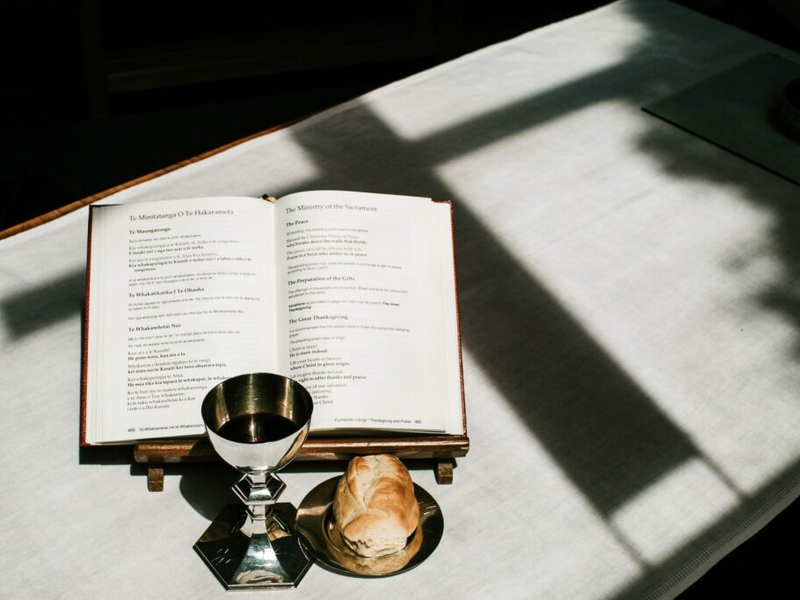
Doing the Lord’s Supper

From time to time I am asked how I think the Lord’s Supper should be done. This essay is my response to that question. To start with, we should agree that the Lord’s Supper is the only ritual we are obligated to do in the New Covenant on a routine…

by James B. JordanNovember 5, 1995

Showing page 268 of 309

See all
See all

Hebrew and Hellenist

Yoder argues that from the time of the Babylonian captivity, the Jews developed a proto-“free church” model of community life. True in some respects. Jews didn’t have their own polity. But I’ve got doubts if that’s a fair characterization of Jews in and after the exile. Why? The Bible for…

June 26, 2009
Politics

Maximilian the martyr

Maximilian of Tebessa is often cited as an example of early Christian pacifism. When Roman officials pressured him to accept a military seal and swear the sacramentum by reminding him that other Christians served without qualms, he still refued, saying “They know what is expedient for them; but I am…

June 26, 2009
History

Orientalizing revolution

Warwick Ball’s Rome in the East is a treasure trove. Instead of telling the story of Rome from an occidental standpoint, he goes east and looks back. What does Roman history look like from Arabia, Syria, Edessa, India? One of his remarkable conclusions is that before the triumph of the…

June 26, 2009
History

Monastic conformism

In reaction to the lax respectability of the majority church, many hardy souls retreated to the desert or the frontier. So the story goes. Only the monastery was another form of cultural conformity. RA Markus ( The End of Ancient Christianity ) says that “the ideal of the philosophical life…

June 25, 2009
History

Linguistic Girardianism

Florence Dupont points out in her Daily Life in Ancient Rome that in Latin enemy ( hostis ) andguest ( hospes ) “were formed from the same root, which had the meaning ‘the other who is similar to you.’”

June 25, 2009
History

Carthaginian Tophet

In her study of Roman gladiatorial combat and arenas ( Blood in the Arena: The Spectacle of Roman Power ) Alison Futrell describes the Phoenician practice of human sacrifice transplanted to Carthage: “The young victim was placed in the arms of the bronze image of Ba’al Hammon, arms that sloped…

June 25, 2009

Showing page 1366 of 2212

Browse by Category

In Medias Res

Your weekly digest for all things Theopolis.

Donate

Theopolis is nearly 100% donor-supported. Consider joining us on our mission.