Theopolis Logo

Writing

Explore our collection of theological essays, biblical studies, and reflections on faith and culture.

See all
screen-shot-2021-03-02-at-10-31-45-am
Marriage

Eating the Meat, or Inviting Colonization?

One common trope which is regularly invoked in current debates about the defensibility versus the danger of Christian engagement with critical theories (or, species of Critical Theory) is the idea of “ eating the meat but spitting out the bones .” Usually not far behind is a nod to the…

by James WoodMarch 2, 2021

screen-shot-2021-02-25-at-10-59-54-am
Proverbs

Proverbial Eschatology

I am writing about the book of Proverbs in the Bible and “Eschatology.” I don’t refer only to the end of time, or “last things” that will happen in history before it ends as we know it. I am referring to all times of God’s judgment wherein He ends an…

by Mark HorneFebruary 25, 2021
maxresdefault
Augustine

Primacy of Worship for Political Unity

“Unity” is the word of the day. In his inaugural address, Joe Biden invoked St. Augustine to inspire Americans to come together around certain shared values. As others have recently argued, Biden misreads Augustine in important ways. My argument here is that if we seek political unity and civic health…

by James WoodFebruary 23, 2021
arseny-togulev-apq9q5pkits-unsplash
Matthew

Jesus, the Temple Tax and Four-Fold Atonement

This is part two of a series which began here ( The Half Shekel Temple Tax ) in which I answer back, hoping not to rebut but to glorify, some observations Peter Leithart made in a thought-provoking piece about the Temple Tax as atonement ( Atonement Money ). Adding economic…

by Jerry BowyerFebruary 16, 2021
simple-frame-photography-studio-facebook-cover
American Culture

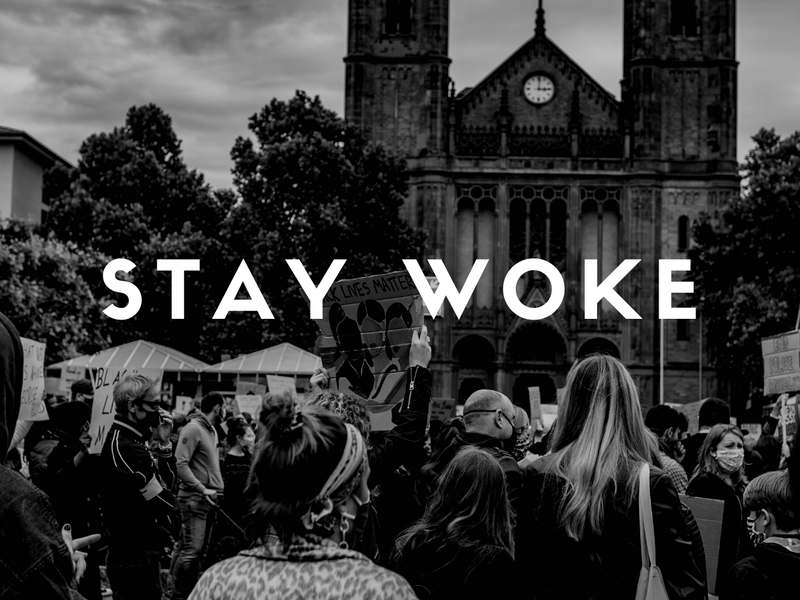
Wokeness as Post-Protestant Neopaganism

It is now commonplace to characterize Wokeness (or “ Wokeism ”) as a religion , or at least religion-like . What I would like to explore is an elaboration on this emergent consensus, supplementing it with some theological analysis. Wokeness, I propose, is a form of post-Protestant neopaganism. It resembles…

by James WoodFebruary 9, 2021
960x0
Movies

Alien 3: Through New Eyes

Science Fiction movies often retell old stories and myths with greater impact for modern people. A being from another world or a technologically advanced human can embody an ancient god or demon and viewers are suddenly unwittingly enthralled by Ur tales that emerged from hundreds of years of human experience.…

by Jacob GuckerFebruary 2, 2021

Showing page 58 of 309

See all
See all

Hebrew and Hellenist

Yoder argues that from the time of the Babylonian captivity, the Jews developed a proto-“free church” model of community life. True in some respects. Jews didn’t have their own polity. But I’ve got doubts if that’s a fair characterization of Jews in and after the exile. Why? The Bible for…

June 26, 2009
Politics

Maximilian the martyr

Maximilian of Tebessa is often cited as an example of early Christian pacifism. When Roman officials pressured him to accept a military seal and swear the sacramentum by reminding him that other Christians served without qualms, he still refued, saying “They know what is expedient for them; but I am…

June 26, 2009
History

Orientalizing revolution

Warwick Ball’s Rome in the East is a treasure trove. Instead of telling the story of Rome from an occidental standpoint, he goes east and looks back. What does Roman history look like from Arabia, Syria, Edessa, India? One of his remarkable conclusions is that before the triumph of the…

June 26, 2009
History

Monastic conformism

In reaction to the lax respectability of the majority church, many hardy souls retreated to the desert or the frontier. So the story goes. Only the monastery was another form of cultural conformity. RA Markus ( The End of Ancient Christianity ) says that “the ideal of the philosophical life…

June 25, 2009
History

Linguistic Girardianism

Florence Dupont points out in her Daily Life in Ancient Rome that in Latin enemy ( hostis ) andguest ( hospes ) “were formed from the same root, which had the meaning ‘the other who is similar to you.’”

June 25, 2009
History

Carthaginian Tophet

In her study of Roman gladiatorial combat and arenas ( Blood in the Arena: The Spectacle of Roman Power ) Alison Futrell describes the Phoenician practice of human sacrifice transplanted to Carthage: “The young victim was placed in the arms of the bronze image of Ba’al Hammon, arms that sloped…

June 25, 2009

Showing page 1366 of 2212

Browse by Category

In Medias Res

Your weekly digest for all things Theopolis.

Donate

Theopolis is nearly 100% donor-supported. Consider joining us on our mission.