Theopolis Logo

Writing

Explore our collection of theological essays, biblical studies, and reflections on faith and culture.

See all
elijah-1200x630-min
Biblical Horizons

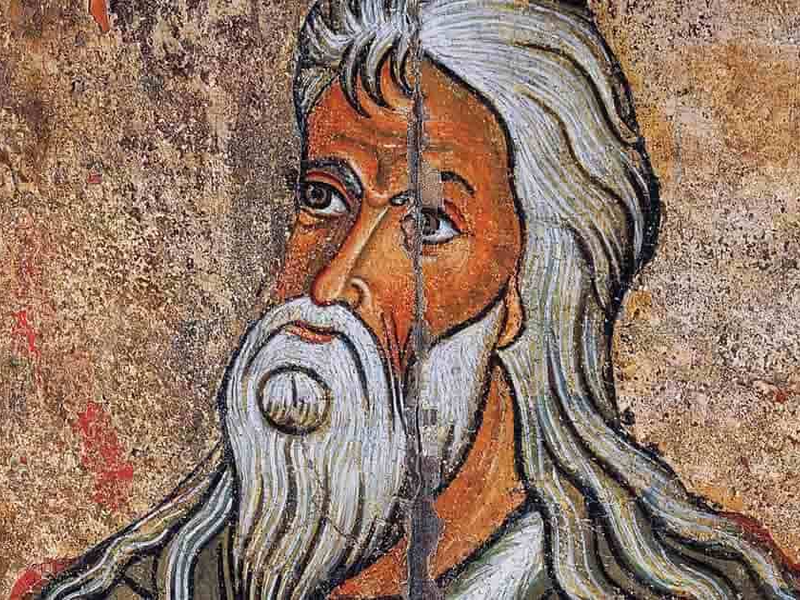
Elijah’s Exodus

1 Kings 17, which abruptly introduces Elijah into the history of the northern kingdom, is a carefully constructed literary unit. In its basic structure, it follows a clear exodus-return pattern. Like Jacob and his sons, Elijah was driven out of the land by a famine (vv. 1-4). In exile, Elijah…

by Peter LeithartJune 17, 1992

ales-krivec-4mibe6zg5r0-unsplash
Biblical Studies

All Things New

Now the Pharisees, who were lovers of money, were listening to all these things and they were scoffing at Him. And He said to them, "You are those who justify yourselves in the sight of men, but God knows your hearts; for that which is highly esteemed among men is…

by Mark HorneJune 6, 1992
aaron-burden-h8s0pf2rcqs-unsplash
Biblical Chronology

Chronologies and Kings, Part 11: The Knots of 2 Kings 11-14

In the year 3119, Ahaziah of Judah and Jehoram of Israel were both slain by Jehu as he carried out his God-appointed task of eliminating the seed and house of Ahab (2 Kings 9:13-33). Since the kings of Israel are usually counted as beginning their reign in the same year…

by James B. JordanMay 24, 1992
trnava-university-beeyeib-am8-unsplash
Biblical Studies

Gleanings from Robert Alter’s "Art of Biblical Narrative"

One of the most important developments in Biblical studies in recent years has been a movement of scholars devoted to studying the literary techniques of the Biblical writers. Tremper Longman, III of Westminster Theological Seminary has treated this movement from a Reformed perspective in his Literary Approaches to Biblical Interpretation…

by Peter LeithartMay 17, 1992
ian-schneider-iqbc4vu4ypq-unsplash
Biblical Horizons

Tentmaking

And because [Paul] was of the same trade, he stayed with [Aquila and Priscilla] and they were working; for by trade they were tentmakers (Acts 18:3). The fact that Paul was by trade a tentmaker has usually been taken as the springboard for a discussion of whether pastors should have…

by James B. JordanApril 24, 1992
screen-shot-2022-05-12-at-12-07-23-pm
Biblical Studies

Chronologies and Kings, Part 10: Jehoram of Judah

I pointed out in Chronologies and Kings Part 9 that the years of Judah’s kings are given in chronological fashion. "When we read of a Judahite king’s reign as lasting 4 years, it means that 4 years of the chronology have been given to him, and there is no chronological…

by James B. JordanApril 24, 1992

Showing page 290 of 309

See all
See all
History

Martyrs and after

Bowersock contrasts the stance of Christians and Jews toward the Greco-Roman world: “it was precisely the Christians’ vigorous participation in the civic life and intellectual traditions of the Graeco-Roman world that grounded their martyrdoms in the life of the great cities. The Jews, by contrast, had conspicuously chosen a different…

June 13, 2009
History

Master of Spectacles

GW Bowersock ( Martyrdom and Rome (Wiles Lectures) ) cites an article by Louis Robert to explain Perpetua’s vision at her martyrdom. She saw “a man of enormous height, whose head rises above the very top of the amphitheater itself, and whose clothes show purple garments not only falling from…

June 13, 2009

Why We Needed Nietzsch

Jane Harrison begins her Prolegomena to the Study of Greek Religion (Mythos Books) with a quotation from Ruskin regarding the “genius of the Greeks”: “there is no dread in their hearts; pensiveness, amazement, often deepest grief and desolation, but terror never. Everlasting calm in the presence of all Fate, and…

June 13, 2009

Cult of the Greeks

David Gress’s excellent From Plato to NATO: The Idea of the West and Its Opponents shows that classics programs, the discipline of classics, great books programs, are founded on a highly questionable “grand narrative” of Western civilization. According to this narrative, Western history is a series of magic moments, beginning…

June 13, 2009
History

Alexander Reincarnate

Dio Cassius ( Roman History , 77.7) describes how Caracalla modelsed himself after Alexander the Great: “He was so enthusiastic about Alexander that he used certain weapons and cups which he believed had once been his, and he also set up many likenesses of him both in the camps and…

June 13, 2009
Art

Art and love

Kenneth Clark: “Facts become art through love, which unifies them and lifts them to a higher plane of reality.” Almost right, that. Right on the link between artifice (poetry, courtesy, ornamentation) and love. Right too on the unifying metaphoricity of art. Right too on the link of fact and art.…

June 13, 2009

Showing page 1370 of 2212

Browse by Category

In Medias Res

Your weekly digest for all things Theopolis.

Donate

Theopolis is nearly 100% donor-supported. Consider joining us on our mission.