Theopolis Logo

Writing

Explore our collection of theological essays, biblical studies, and reflections on faith and culture.

See all
little-girl
Children

Honor God With Your Body

I am making a new rule in our house! We are actually kind of skimpy on the house rules. I try very hard to keep things simple: love God, love others, be joyful. It’s not complicated to avoid discipline here. But I have found myself repeating this new rule over…

by Lindsey TollefsonApril 9, 2015

giotto-noli-me-3
John

The Gardener and the Beloved, (Part 3)

Click HERE for Part 2 The voice of Jesus transforms and changes Mary when she hears him speak her name. This is her last “turning.” So also the woman in the Song of Songs longs to hear the voice of her beloved. Let me see your face, let me hear…

by Jeff MeyersApril 6, 2015
giotto-noli-me-2
John

The Gardener and the Beloved, (Part 2)

Click HERE for Part 1. The details of this story call the attentive reader back to the drama of Solomon’s Song of Songs. And the Song of Song’s alludes to, ties us into the story of Adam and Eve in the Garden and the promise of a coming Messiah that…

by Jeff MeyersApril 4, 2015
easter-term-2015-2
Theopolis News

Easter Term, 2015

“The course was a paradigm shift for me,” said Jonathan Sedlak, a Milwaukee electrical contractor who attended Theopolis’s course on Revelation. “I am left with a book that is far more practical than it has ever seemed before.” Jonathan Anderson of Louisville, Kentucky found the course “refreshing.” “I finished with…

by TheopolisApril 2, 2015
psalm-singing
Genesis

Worship as Response: Liturgical Logic, (Part 1)

“It is only by participation in a rational, practice-based community that one becomes rational.” – Alasdair MacIntyre It may be perfectly clear to a chef why adding unsifted powdered sugar to a hot frosting is a bad idea. But for an amateur cook, this may be the kind of rule…

by Jonathan BarlowApril 2, 2015
giotto-noli-me
John

The Gardener and the Beloved, (Part 1)

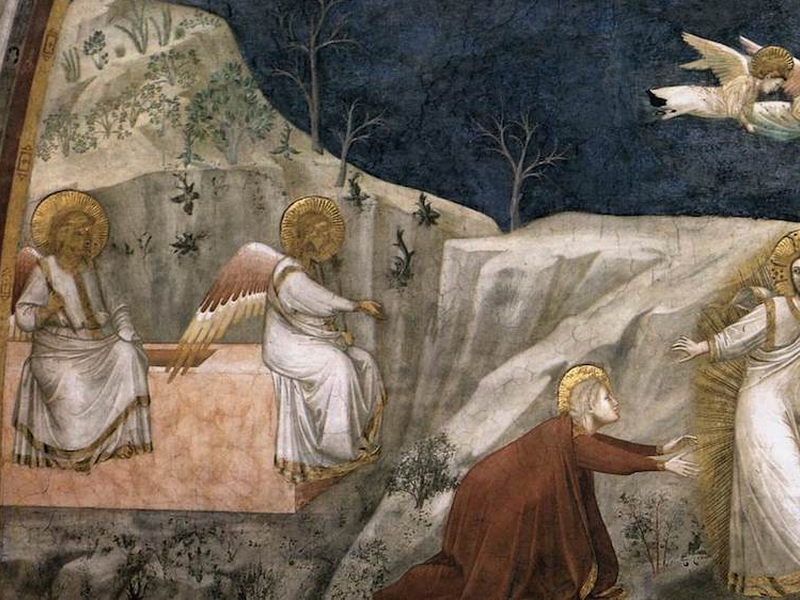
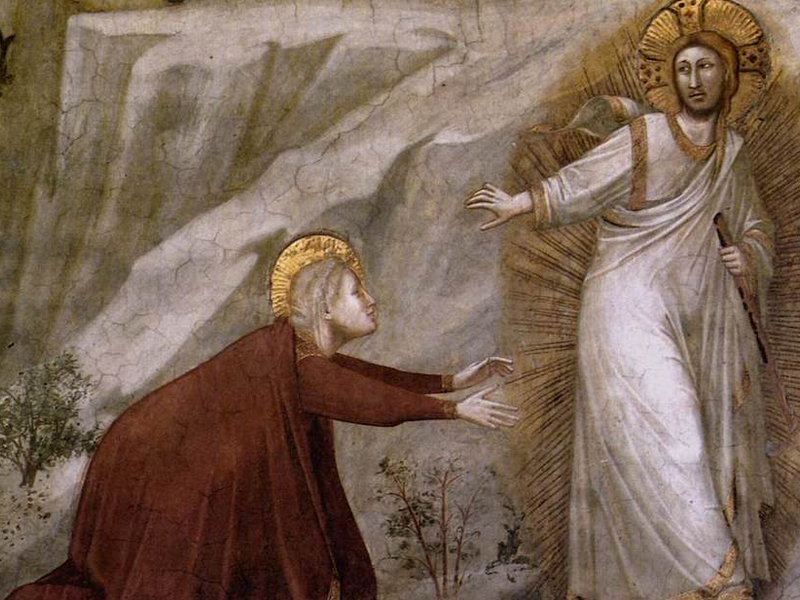
On a fresco in a chapel in Padua, Italy, there is a famous painting depicting the dramatic post-resurrection scene in John 20 with Mary and Jesus outside of the garden tomb. Giotto di Bondone painted it in the early 14th century. Jesus is striding from the tomb with a victor’s…

by Jeff MeyersApril 1, 2015

Showing page 156 of 309

See all
See all
History

Constantine, Feminist

Mathew Kuefler ( The Manly Eunuch: Masculinity, Gender Ambiguity, and Christian Ideology in Late Antiquity (The Chicago Series on Sexuality, History, and Society) ) notes that the traditional Roman patria potestas , and the male sexual privileges associated with it, were already waning in the early empire. But Constantine gave…

June 3, 2009

Words and Word

Radner has these final comments on the hermeneutics of the “holiness code”: “The difference between the sexual laws of Lev. 18 and the laws of clean and unclean flesh in Lev. 11 cannot simply lie in their respective relation to teh category of ceremonial character. The difference lies in the…

June 3, 2009

Way of God’s Arrival

Radner finds part of the fulfillment of the figures of Leviticus 18 in the genealoty of Jesus. On the one hand, Jesus’ own genealogy includes sexually illicit acts (Tamar, Rahab, Bathsheba) and the various sins (not only sexual, but idolatry and oppression) represented in the genealogy eventually lead to Israel’s…

June 3, 2009

Figures of sex

In dealing with the sexual legislation of Leviticus 18, Ephraim Radner ( Leviticus (Brazos Theological Commentary on the Bible) ) employs a figural/prophetic framework rather than a more traditional ceremonial/moral one. The results are intriguing. The prohibition of adultery, for instance, is “fulfilled by means of confession, self-recognition, forgiveness, and…

June 3, 2009
Politics

Democracy fulfilled

Drake notes the unique “democratic” flavor of the churcfh in the fourth century: “Christianity restored to common people an outlet for popular participation which they were denied in imperial politics. Eusebius [of Caesarea’s] awkward letter to his confregation from Nicaea, Constantine’s frequent letters to the Christians of Nicomedia, Alexandria, or…

June 2, 2009
History

Cyrus and Civilizing Process

Xenophon’s Cyrus provides a good illustration of Elias’s theory: “He trained his associates also not to spit or to wipe the nose in public, and not to turn round to look at anything, as being men who wondered at nothing. All this he thought contributed, in some measure, to their…

June 2, 2009

Showing page 1374 of 2212

Browse by Category

In Medias Res

Your weekly digest for all things Theopolis.

Donate

Theopolis is nearly 100% donor-supported. Consider joining us on our mission.