Theopolis Logo

Writing

Explore our collection of theological essays, biblical studies, and reflections on faith and culture.

See all
max-kukurudziak-qbc3zmxw0g8-unsplash
History

Report from Ukraine

We lost Crimea. That is very clear. Putin proved he was not lying when he said he would place women and children ahead of his soldiers to storm Ukrainian military bases. Russian soldiers did exactly that with women (some who volunteered and some who were forced). Russia now occupies all…

by San SanychMarch 28, 2014

screenshot-2023-09-21-at-3-59-23-pm
Church Calendar

God Gone Silent

Sound is an indicator of life and energy. “Sound signals the present use of power, since sound must be in active production to exist at all.” Things don’t have to be alive to make themselves visible, and “a primitive hunter can see, feel, smell, and taste an elephant when the…

by Peter LeithartMarch 26, 2014
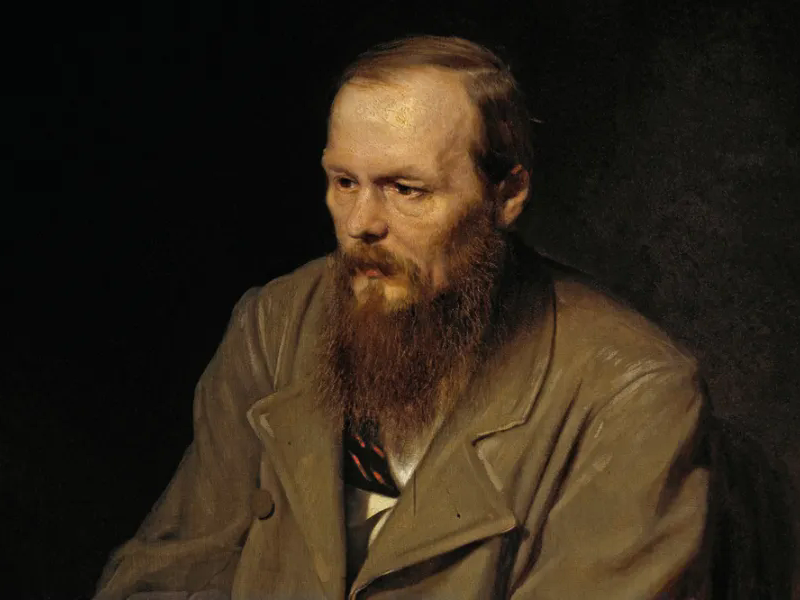
web-lead-image_final_dostoevsky
Books

Dostoevsky the Liberal

In the most famous section of his best-known novel, Dostoevsky’s Ivan Karamazov brings forward his case against God. He opens with a horrific litany of outrages against children. Turkish soldiers make a baby laugh and then shoot a pistol into his face. A little girl is beaten, thrashed, kicked by…

by Peter LeithartMarch 24, 2014
kelly-sikkema-ggs0_g6wi-i-unsplash
Epistemology

Subsidiary-Focal Integration and Liturgy

​At the heart of Esther Lightcap Meek's splendid ​Little Manual for Knowing is a concept she picked up from Michael Polanyi, "subsidiary-focal integration." The concept begins from the insight that all our knowing, all our experience, is double. We focus on something, but we are capable of "indwelling" that focal…

by Peter LeithartMarch 19, 2014
engin-akyurt-uz9qpvbol0e-unsplash
Revelation

White Stone

Jesus promises the overcomers of Pergamum "hidden manna" and a "white stone." The hidden manna is often linked with the manna stashed away in the ark of the covenant. The white stone has proved more elusive. Exodus tells us that manna was white (Exodus 16:31) and like bdellium (Numbers 11:7),…

by Peter LeithartMarch 17, 2014
226961fgsdl
Leviticus

A Theology of Festivity

Leviticus 23 begins with a reference to “Yahweh’s appointed times” ( mo’ade-YHWH ). Mo’ed is the common term for the feasts of Israel. A few dimensions to this term. First, it means “appointed time” or “designated time.” It is a time set by Yahweh. Yahweh has claimed certain times as…

by Peter LeithartMarch 12, 2014

Showing page 177 of 309

See all
See all
History

Constantine, Feminist

Mathew Kuefler ( The Manly Eunuch: Masculinity, Gender Ambiguity, and Christian Ideology in Late Antiquity (The Chicago Series on Sexuality, History, and Society) ) notes that the traditional Roman patria potestas , and the male sexual privileges associated with it, were already waning in the early empire. But Constantine gave…

June 3, 2009

Words and Word

Radner has these final comments on the hermeneutics of the “holiness code”: “The difference between the sexual laws of Lev. 18 and the laws of clean and unclean flesh in Lev. 11 cannot simply lie in their respective relation to teh category of ceremonial character. The difference lies in the…

June 3, 2009

Way of God’s Arrival

Radner finds part of the fulfillment of the figures of Leviticus 18 in the genealoty of Jesus. On the one hand, Jesus’ own genealogy includes sexually illicit acts (Tamar, Rahab, Bathsheba) and the various sins (not only sexual, but idolatry and oppression) represented in the genealogy eventually lead to Israel’s…

June 3, 2009

Figures of sex

In dealing with the sexual legislation of Leviticus 18, Ephraim Radner ( Leviticus (Brazos Theological Commentary on the Bible) ) employs a figural/prophetic framework rather than a more traditional ceremonial/moral one. The results are intriguing. The prohibition of adultery, for instance, is “fulfilled by means of confession, self-recognition, forgiveness, and…

June 3, 2009
Politics

Democracy fulfilled

Drake notes the unique “democratic” flavor of the churcfh in the fourth century: “Christianity restored to common people an outlet for popular participation which they were denied in imperial politics. Eusebius [of Caesarea’s] awkward letter to his confregation from Nicaea, Constantine’s frequent letters to the Christians of Nicomedia, Alexandria, or…

June 2, 2009
History

Cyrus and Civilizing Process

Xenophon’s Cyrus provides a good illustration of Elias’s theory: “He trained his associates also not to spit or to wipe the nose in public, and not to turn round to look at anything, as being men who wondered at nothing. All this he thought contributed, in some measure, to their…

June 2, 2009

Showing page 1374 of 2212

Browse by Category

In Medias Res

Your weekly digest for all things Theopolis.

Donate

Theopolis is nearly 100% donor-supported. Consider joining us on our mission.