
Theopolis Logo

Writing

Explore our collection of theological essays, biblical studies, and reflections on faith and culture.

See all
emmanuel-phaeton-1bwmfmvybi8-unsplash
Federal Vision

The Righteous Judge

God is a righteous judge, And a God who has indignation every day. If a man does not repent, He will sharpen His sword; He has bent His bow and made it ready (Psalm 7.11, 12). David’s inspired lyrics do not sound very encouraging to modern ears–especially to modern Christian…

by Mark HorneJune 7, 2003
screenshot-2024-06-07-at-11-46-17-am
Luke

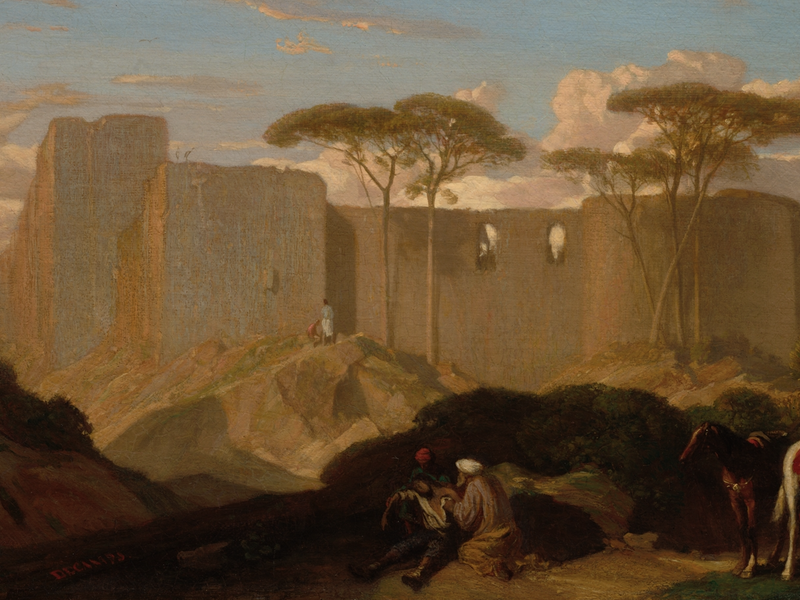
The Justification of the Good Samaritan

The story of the Good Samaritan (Lk. 10:25-37) is one of the best known and most loved of Jesus’ parables. I am not going to attempt to exegete the passage, as that has been done admirably and ably by others. Rather, I want to briefly examine what bearing the passage…

by Rich LuskJune 7, 2003
kelly-sikkema-gpoh17dxqdm-unsplash
1 Corinthians

The Grace of Judgment According to Works

In Romans 2.6-16, Paul writes, He will render to each one according to his works: to those who by patience in well-doing seek for glory and honor and immortality, he will give eternal life; but for those who are self-seeking and do not obey the truth, but obey unrighteousness, there…

by Mark HorneJune 7, 2003
karsten-wurth-imegmbunara-unsplash
Matthew

The Extra Mile: Matthew 5:38-42

It was still dark as David approached the crest of the little ridge. The eastern horizon was not even gray. It was early. But he knew this trail well. Every morning before dawn and every evening before dark, he would walk down to the well and carry water back to…

by Jeff MeyersJune 7, 2003
briana-tozour-mrfapsuyy8a-unsplash
Romans

Romans and God's Covenant Loyalty

The theme of Romans is the righteousness of God (Rom. 1:16-17). That is to say, Romans is something of a theodicy. Paul is defending God’s covenant faithfulness, particularly in light of Jewish unfaithfulness. How does it work? Without getting into exegetical details, we can still sketch out the big picture.…

by Rich LuskJune 6, 2003
jan-kahanek-g3o5ztrk2e4-unsplash
Federal Vision

Putting the New Perspective into Perspective: Some Thoughts on Second Temple Judaism

The New Perspective on Paul (NPP) is a loosely defined movement held together primarily by a common understanding of Second Temple Judaism. All NPP theologians basically adhere, with varying degrees of intensity and consistency, to Ed Sanders’ claims with regard to the nature of pre-70 A.D. Judaism. Sanders has sought…

by Rich LuskJune 6, 2003

Showing page 229 of 309

See all
See all

Biting again

Philip Esler draws on the anthropological work of Anthony Cohen to suggest that Paul’s reference to “biting” and “devouring” may describe the actual internal life of Paul’s churches: “Anthony Cohen’s argument about the persistence of liminality among persons once they have crossed a boundary to join a new group raises…

February 24, 2009

Biting

Paul contrasts fulfilling the law of loving neighbor with biting, devouring, and consuming. Love for neighbor is human behavior; anything else is feral. The verb “bite” ( dakno ) is used only in Galatians 5:15 in the NT, and only twice in the LXX (Genesis 49:17; Deuteronomy 8:15), both references…

February 24, 2009

Linguistic reversal

Galatians 5-6 turns a number of Pauline terms inside out. After spending most of the letter polemicizing against seeking justification form the “works of the law,” Paul rehabilitates both “work” (5:6) and “law” (5:14; 6:2). After announcing that in Christ we have been freed from the Egypt of Judaic managers…

February 24, 2009

Chiasm upon Chiasm in Galatians 5-6

Galatians 5-6 is organized as a chiasm, with the exhortation to bear one another’s burdens, and fulfill the law of Christ, at the center. The structure suggests that that the freedom that the Spirit grants is precisely freedom to bear the burdens of others as Christ as done for us.…

February 24, 2009
History

Neutral

Freeman again: He claims that Constantine employed the image of the sun, used in both Christianity and paganism, to maintain “his neutral position between opposing faiths.” In part, his interpretation is based on HA Drake. But the neutrality that Drake talks about is a neutrality in “public space” that enabled…

February 24, 2009
History

Not so shrewd

Freeman says that Constantine’s “conversion” was a shrewd political act, basing this conclusion, he claims, on “recent research.” (Burckhardt is recent??) One sign of his shrewdness was his ability to satisfy both Christian and pagan: “Some very careful political manoeuvring was necessary if Constantine was to avoid offending either Christian…

February 23, 2009

Showing page 1412 of 2212

Browse by Category

In Medias Res

Your weekly digest for all things Theopolis.

Donate

Theopolis is nearly 100% donor-supported. Consider joining us on our mission.









