Theopolis Logo

Writing

Explore our collection of theological essays, biblical studies, and reflections on faith and culture.

See all
timothy-eberly-djj49s6ud2o-unsplash
Leviticus

Yahweh's War Against Death

Stories, frankly all human stories are practically always about one thing aren’t they? Death. The inevitability of death. . . . “There is no such thing as a natural death. Nothing that happens to man is ever natural, since his presence calls the whole world into question. All men must…

by Brian MarrApril 14, 2014

screenshot-2023-09-21-at-4-52-42-pm
Matthew

Inescapable Blood

Matthew is organized around 5 discourses, which trace out the history of Jesus as a recapitulation of the history of God and Israel in the Old Testament. Jesus first speaks as a new Moses, instructing His disciples on a mountain about a righteousness that surpasses the righteousness of the scribes…

by Peter LeithartApril 10, 2014
screen-shot-2022-05-12-at-12-07-23-pm
Angels

Did Angels Marry People? The Sin of Cultural Intermarriage

The fall of the Sethites in Genesis 6 is the third fall of mankind, or the third degree of Adam’s original fall. Adam sinned in a Garden against his Father by stealing something he was supposed to wait to obtain. (“Every tree shall be food for you” Genesis 1:29.) Cain…

by James B. JordanApril 7, 2014
sixteen-miles-out-al48tflf4e8-unsplash
Angels

Did Angels Marry People? The Sons of God in Genesis 6

The recent fantasy film Noah and a slightly related blog comment by my friend Douglas Wilson have stirred up again the question of whether the “sons of God” in Genesis 6 who married the “daughters of men” were fallen angels or the priestly line of Seth. Doug argues for angels,…

by James B. JordanApril 4, 2014
kiwihug-l4gw27xzn1i-unsplash
Angels

The Angels of Jude

The prophecy of Jude concerns apostasy. An illustration of apostasy and its consequences is found in verse 6, which the New American Standard Bible translates this way: "And angels who did not keep their own domain, but abandoned their proper abode, He has kept in eternal bonds under darkness for…

by James B. JordanApril 3, 2014
screenshot-2023-09-21-at-4-22-42-pm
Matthew

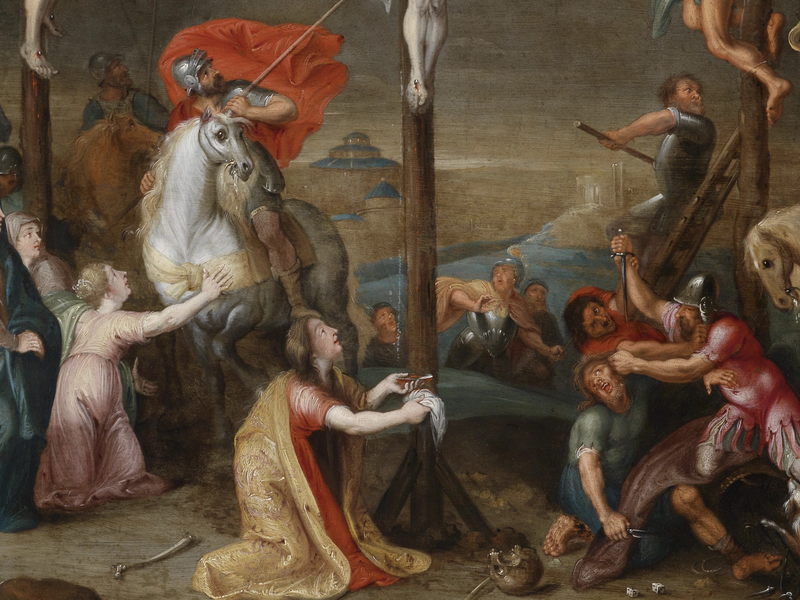
Women at the Cross

At His death, Jesus is surrounded by a Roman centurion and his cohort of Gentile solders. Matthew doesn't say that any disciples are there. But women are, and so is Joseph of Arimathea, identified as a “disciple” but, as John tells us, a “secret disciple for fear of the Jews,”…

by Peter LeithartMarch 31, 2014

Showing page 176 of 309

See all
See all
History

Infallible Constantine?

The epigram to chapter 11 of Charles Freeman’s Closing of the Western Mind is from a letter of Constantine to the churches in Alexandria: “We have received from Divine Providence the supreme favor of being relieved of all error.” The footnote leads to Ramsay Macmullen’s Christianity and Paganism in the…

February 23, 2009

China

Yesterday, Hillary Clinton disappointed human rights activists by degrading the role of human rights issues in her discussions with Chinese. Differences on human rights will not, she said, interfere with the common interests of the US and China. Today, she commends the Chinese for bailing out the US by continuing…

February 22, 2009
History

Barbarians

Momigliano again, pointing out that the church had ways of dealing with the barbarian threat that were not available to pagans: “The educated pagan was by definition afraid of barbarians. There was no bridge between the aristocratic ideals of a pagan and the primitive violence of the German invader.” At…

February 21, 2009
History

Follow the money

Not not did the church draw the best men, men who otherwise would have been, Momigliano says, “generals, governors or provinces, advisers to the emperors,” but it drew popular enthusiasm and loyalty, and money: “Money which would have gone to the building of a theatre or of an aqueduct now…

February 21, 2009
History

Ecclesial aristocracy

Arnaldo Momigliano suggests that one of the key ways that Christianity contributed to the decline of Rome was by siphoning off the best and brightest to the church. The “central feature of the fourth century” was “the emergence of the Church as an organization competing with the State itself and…

February 21, 2009
History

Idolatry in the light

Constantine’s legislation in the Theodosian Code includes several odd decrees that prohibit soothsayers and other magicians from “crossing the threshold” of a house under the pretext of friendship. Private soothsaying is prohibited. At the same time, Constantine says that soothsayers will be consulted if lightning strikes the palace, and also…

February 21, 2009

Showing page 1413 of 2212

Browse by Category

In Medias Res

Your weekly digest for all things Theopolis.

Donate

Theopolis is nearly 100% donor-supported. Consider joining us on our mission.