Theopolis Logo

Writing

Explore our collection of theological essays, biblical studies, and reflections on faith and culture.

See all
andriy-nestruiev-gdbrwwh6doc-unsplash
Biblical Studies

Funerals and Flutes

Matthew 8-9 records three clusters of miracles, interspersed with snatches of Jesus’ teaching about various aspects of discipleship. Just as the Sermon on the Mount displays the authority of Jesus’ Word in teaching, these chapters display the authority of Jesus’ Word over sickness, uncleanness, the creation, demons, and death. In…

by Peter LeithartApril 17, 1992

michal-parzuchowski-w9uljjwg2fa-unsplash
Baptism

Daddy, Why Was I Excommunicated?

Since the early 1980s, several of the conservative Reformed Churches have debated and wrestled with the issue of paedocommunion (infant communion). The PCA and the OPC assigned study committees to examine the question, both of which produced useful reports both in support of and against the position. Though the debate…

by Peter LeithartApril 13, 1992
skyler-gerald-akljfvj5ym4-unsplash
Biblical Chronology

Chronologies and Kings, Part 9: Jehu, Hazael, and Assyria

(This issue of Biblical Chronology concludes a discussion of the Biblical and Assyrian chronologies, begun in previous posts. Click on the category link of "Biblical Chronology" above to see previous issues. Did Shalmaneser Know Jehu? Allis writes: "The Black Obelisk of Shalmaneser contains, in addition to brief accounts of the…

by James B. JordanMarch 23, 1992
denise-jans-dpemksg59la-unsplash
American Culture

Arts and Play, Part 4

Movies Movies as an art form have a powerful impact because they take place in a dark room, on a large screen, with no distractions, and because they entail many of the arts: music, acting, choreography, design and color, etc. A movie can be an overwhelming experience for a young…

by James B. JordanMarch 23, 1992
sincerely-media-bhaswrjttzw-unsplash-2
Leviticus

The Ecology of the Tribute Offering

The Hebrew word translated as "grain offering" or "cereal offering" is minchah . Like the translation of `olah as "burnt offering," the translation of minchah as "grain offering" is somewhat deceiving, since minchah does not refer to grain or cereal. In liturgical contexts outside of Leviticus, in fact, the word…

by Peter LeithartMarch 13, 1992
sincerely-media-bhaswrjttzw-unsplash-2
Ascension

Skinned and Cut

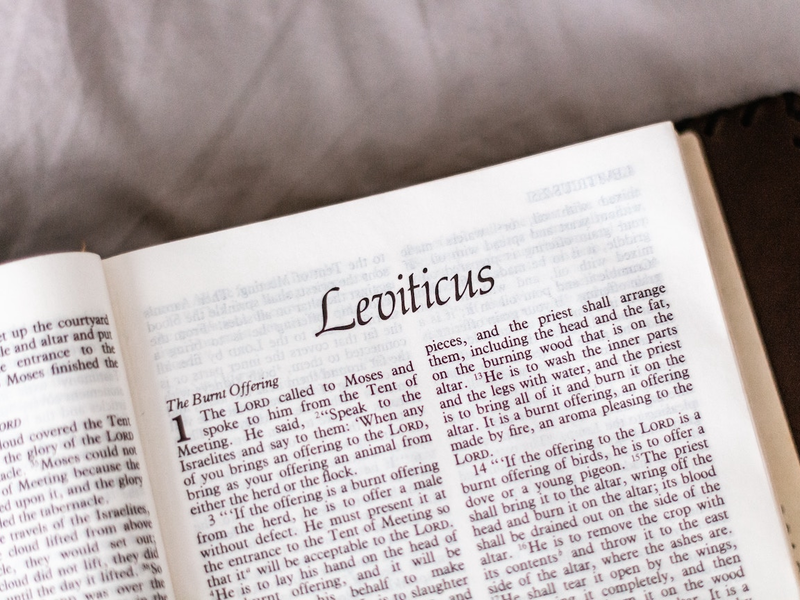
"He shall then skin the burnt offering and cut it into its pieces" (Leviticus 1:6). The normal word ( `olah ) that is translated as "burnt offering" and "whole burnt offering" has nothing to do with either burning or wholeness. It is the noun form of a verb meaning "to…

by Peter LeithartMarch 13, 1992

Showing page 291 of 309

See all
See all
History

Infallible Constantine?

The epigram to chapter 11 of Charles Freeman’s Closing of the Western Mind is from a letter of Constantine to the churches in Alexandria: “We have received from Divine Providence the supreme favor of being relieved of all error.” The footnote leads to Ramsay Macmullen’s Christianity and Paganism in the…

February 23, 2009

China

Yesterday, Hillary Clinton disappointed human rights activists by degrading the role of human rights issues in her discussions with Chinese. Differences on human rights will not, she said, interfere with the common interests of the US and China. Today, she commends the Chinese for bailing out the US by continuing…

February 22, 2009
History

Barbarians

Momigliano again, pointing out that the church had ways of dealing with the barbarian threat that were not available to pagans: “The educated pagan was by definition afraid of barbarians. There was no bridge between the aristocratic ideals of a pagan and the primitive violence of the German invader.” At…

February 21, 2009
History

Follow the money

Not not did the church draw the best men, men who otherwise would have been, Momigliano says, “generals, governors or provinces, advisers to the emperors,” but it drew popular enthusiasm and loyalty, and money: “Money which would have gone to the building of a theatre or of an aqueduct now…

February 21, 2009
History

Ecclesial aristocracy

Arnaldo Momigliano suggests that one of the key ways that Christianity contributed to the decline of Rome was by siphoning off the best and brightest to the church. The “central feature of the fourth century” was “the emergence of the Church as an organization competing with the State itself and…

February 21, 2009
History

Idolatry in the light

Constantine’s legislation in the Theodosian Code includes several odd decrees that prohibit soothsayers and other magicians from “crossing the threshold” of a house under the pretext of friendship. Private soothsaying is prohibited. At the same time, Constantine says that soothsayers will be consulted if lightning strikes the palace, and also…

February 21, 2009

Showing page 1413 of 2212

Browse by Category

In Medias Res

Your weekly digest for all things Theopolis.

Donate

Theopolis is nearly 100% donor-supported. Consider joining us on our mission.