Theopolis Logo

Writing

Explore our collection of theological essays, biblical studies, and reflections on faith and culture.

See all
tanner-mardis-xuxghzhibn4-unsplash-1-2
Deuteronomy

The Second Word II: Seeing & Hearing; Exposition

Hearing, Seeing, and History God is Word, not picture. He speaks, but He is not visible in Himself. Thus, God initiates history through language. He speaks the world into existence, and speaks to us to bring us out of formlessness and emptiness into the fullness of being His Bride. Similarly,…

by James B. JordanAugust 10, 1994
tim-wildsmith-jyculofqjak-unsplash-1
Biblical Studies

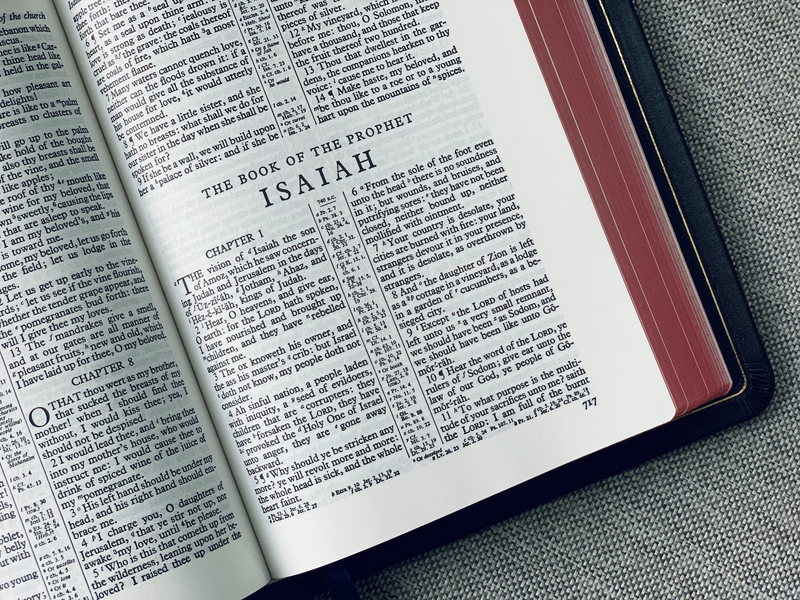
Passover and Exodus in Isaiah

The consensus of modern critical scholarship is that the book assigned to Isaiah was in fact composed by several different hands. "Deutero-Isaiah" supposedly begins with Isaiah 40:1. There are many good reasons for rejecting this conclusion. Among these, the narrative pattern of chapters 36-39 is a neglected piece of evidence.…

by Peter LeithartJuly 23, 1994
davide-ragusa-slgtmf8ejye-unsplash
Biblical Horizons

Human Life in Four Directions

Eugen Rosenstock-Huessy has pointed out throughout his many fascinating and occasionally quixotic writings and lectures that human life exists in four directions. These four directions are inward, outward, backward, and forward. In this article I want to explore these as they relate to the work of the Church. Each of…

by James B. JordanJuly 10, 1994
jan-kahanek-g3o5ztrk2e4-unsplash
Biblical Chronology

The Chronology of the Pentateuch (Part 5)

14. Joseph and Judah Genesis 38 tells us about Judah’s sons and grandsons, and if we try to get these events into the time before the descent of the Hebrews into Goshen, it is very difficult to do so. But this passage is almost certainly dischronologized. Thematically Genesis 38 is…

by James B. JordanJuly 10, 1994
trnava-university-sd8ujsf4xm4-unsplash
Art

A Short Survey of Good Fantasy and Science Fiction for Christian Schools and Home Schools

From time to time I am asked what is good SF and fantasy that teenagers in Christian and home schools might enjoy. The following brief discussion is my answer that question. I’ve tried to point out authors and stories that are not widely known, and therefore have set aside G.…

by James B. JordanJuly 10, 1994
whichbooksbelongintheot
Hermeneutics

Daniel 12:2

"And many of those who sleep in the dust of the ground will awaken, some to life everlasting and others to disgrace, to contempt everlasting." This verse is often cited as proof that there was a belief in the resurrection of the body in the Old Testament times. In fact,…

by James B. JordanJune 10, 1994

Showing page 277 of 309

See all
See all
Politics

Against Rawls

John Gray begins his Enlightenment’s Wake with a breathtaking dismissal of neo-liberal political philosophy (the chapter is “Against the new liberalism”). I found it thrilling, and not just because I have a weakness for titles that begin with “Against.” A few highlights: “It is arguable that the traditional of liberal…

December 24, 2008
History

Cities of God

In the introduction to his 2005 book, Cities of God , Augustine Thompson complains that medievalists have paid too little attention to the religious lives of orthodox laymen: “Heretics, popes, theologians, Franciscans, and saints. Where is everyone else?” His book studies the communes of medieval Italian cities partly to redress…

December 23, 2008

Days of John

Reacting to my earlier post on the week of John 1-2, John Barach offers a (needed) lesson in counting: It seems to me that the wedding at Cana has to be taken as the eighth day for two reasons. First, the parallels with the seven days of creation make it…

December 23, 2008

Lots Again

A friend and former student, Aaron Cummings. offers more thoughts on the lot-scapegoat connection: 1) Saul cast lots for Jonathan when we he sinned. Saul sinfully saw Jonathan as a new Achan, a man whose sin affected the congregation. Saul like Joshua uses lots to root out the sin. 2)…

December 23, 2008
History

City of Commerce

Cities dominated by commerce are offensive to many today, but historically a city of commerce is a city of peace, a city that has escaped the domination of military elites and interest. Weber wrote: “While in Antiquity the hoplite army and its training and military interests moved to the center…

December 22, 2008
Politics

Gifts of power

Power and gift seem to be opposed to each other, but Milbank argues that true rule is always donative, always a gift of ruling. This is partly a matter of power-sharing, and obvious once the point is made: A ruler who does not share rule is, by definition, a tyrant;…

December 22, 2008

Showing page 1433 of 2212

Browse by Category

In Medias Res

Your weekly digest for all things Theopolis.

Donate

Theopolis is nearly 100% donor-supported. Consider joining us on our mission.