Theopolis Logo

Writing

Explore our collection of theological essays, biblical studies, and reflections on faith and culture.

See all
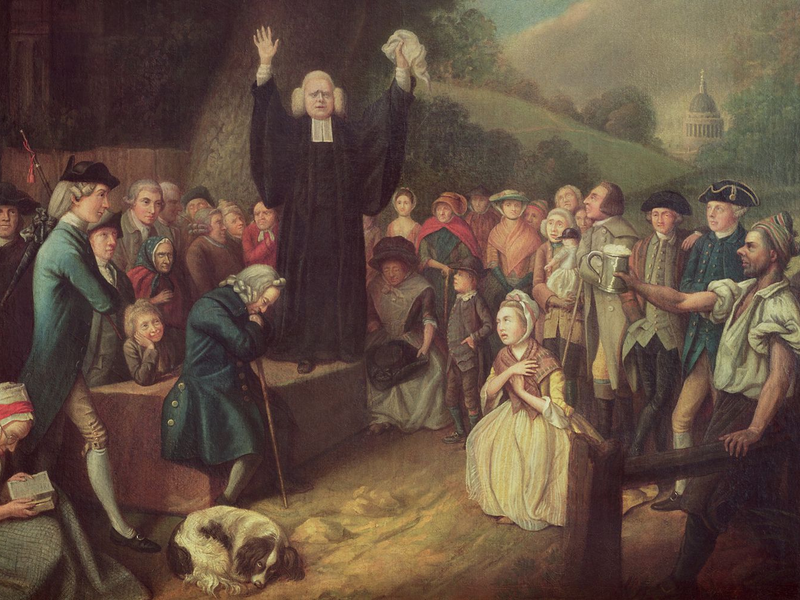
georgewhitefield-71901184-de237affa7764d6e95818a589190adf7
Biblical Horizons

The Great Awakening: A Critique

The following material was published in 1984 in Christianity and Civilization No. 4: The Reconstruction of the Church, pages 6-9, and are reprinted here as grist for the mill of the discussion of “evangelicalism.” Footnotes have not come through, of course. Though this material is offered in connection with a…

by James B. JordanJune 19, 2012

aaron-burden-1ebsmyrau-s-unsplash
Biblical Horizons

Concerning Regeneration

I wrote my beef about “regeneration” a decade ago, and I don’t really see the need to reopen what I think now. (Jordan, Thoughts on Sovereign Grace and Regeneration: Some Tentative Explorations. Biblical Horizons Occasional Paper No. 32) But. My pal Doug Wilson has been writing a series of essays…

by James B. JordanJune 19, 2012

jelleke-vanooteghem-gnxb59lgu1m-unsplash
John

Born From Above: Some Notes on John 3

Nicodemus’s conversation with Jesus in John 3:1-15 is sometimes regarded as an illustration of the tremendous stupidity of the Jews of our Lord’s day. Nicodemus is treated as just some guy who comes to Jesus at night because he doesn’t want to get into trouble by being seen with Him.…

by James B. JordanJune 18, 2012
screen-shot-2020-12-03-at-1-47-33-pm
Biblical Horizons

Is James B. Jordan an “Evangelical”?

During the last couple of weeks, Douglas Wilson has issued several posts over on his Blog and Mablog blog that deal with “evangelicalism” and who is and who is not an “evangelical.” In the course of these postings, Doug has written that while I am a fine Christian who has…

by James B. JordanJune 18, 2012
karsten-wurth-imegmbunara-unsplash
Biblical Horizons

Three Issues in Regard to Eastern Orthodoxy

Here are three issues in regard to the Eastern Church. First, here is the quote from Bavinck’s The Doctrine of God, page 317, Banner of Truth edition (1977) under the heading of Inter-Personal Relations. The Greeks derived the unity of God’s essence and the unity of the persons not from…

by Richard BledsoeJune 14, 2012
screen-shot-2020-12-03-at-1-47-33-pm
Biblical Horizons

Clerical Garb

Elsewhere on the blogosphere men are mocking the wearing of collars and albs to lead in worship. When it is pointed out that historically Reformed ministers have worn daily uniforms and robes in worship, it is replied that that was then and this is now. We ought to conform to…

by James B. JordanJune 9, 2012

Showing page 200 of 309

See all
See all
History

Purity and objectivity

Proctor again, summarizing a 1938 article on “Science and the Social Order” from Robert Merton: “the ideal of ‘pure science’ serves a dual function in modern society. On the one hand, the exaltation of pure science represents ‘a defense against the invasion of norms that limit directions of potential advance…

October 28, 2008
History

Revival of purity

Proctor yet again, describing the division of political economy into separate disciplines of sociology and economics in the nineteenth century: “Social theory in the eyes of the young sociologists might strive to become scientific, but to do so it must abandon its craft or practical-political origins and restrict itself to…

October 28, 2008
Philosophy

Artifice and nature

Proctor again, speaking of Renaissance science: “In the science of the moderns, there arises a curious reversal of the order of art and nature. Art becomes the standard against which nature is judged. Francis Bacon’s ‘nature in distress’ - nature distraught by experiment - is as genuine as nature left…

October 28, 2008
Philosophy

Pure knowledge

The drive for purity in knowledge is an ancient one. Robert Proctor ( Value-Free Science? ) sees this impulse in Plato and Aristotle. For the former, knowledge is pure “in the degree to which it makes no appeal to practical arts. Thus Plato criticized Eudoxus, Archytas, and Menaechmus for trying…

October 28, 2008

Anarthrous God

CK Barrett argues in his John commentary that the anarthrous theos of John 1:1 (emphasized by Arians everywhere and at all times) shows that “the Word is God, but is not the only being of whom this is true; if ho theos had been written it would have been implied…

October 28, 2008
Uncategorized

Word came, saying

After Genesis 15, the next time the “word of God came . . . saying” is in Samuel. The word of God comes to Samuel, saying that Saul is rejected (1 Samuel 15:10), and again comes to Nathan to deliver the promise to David (2 Samuel 7:4). The connection of…

October 27, 2008

Showing page 1456 of 2212

Browse by Category

In Medias Res

Your weekly digest for all things Theopolis.

Donate

Theopolis is nearly 100% donor-supported. Consider joining us on our mission.